
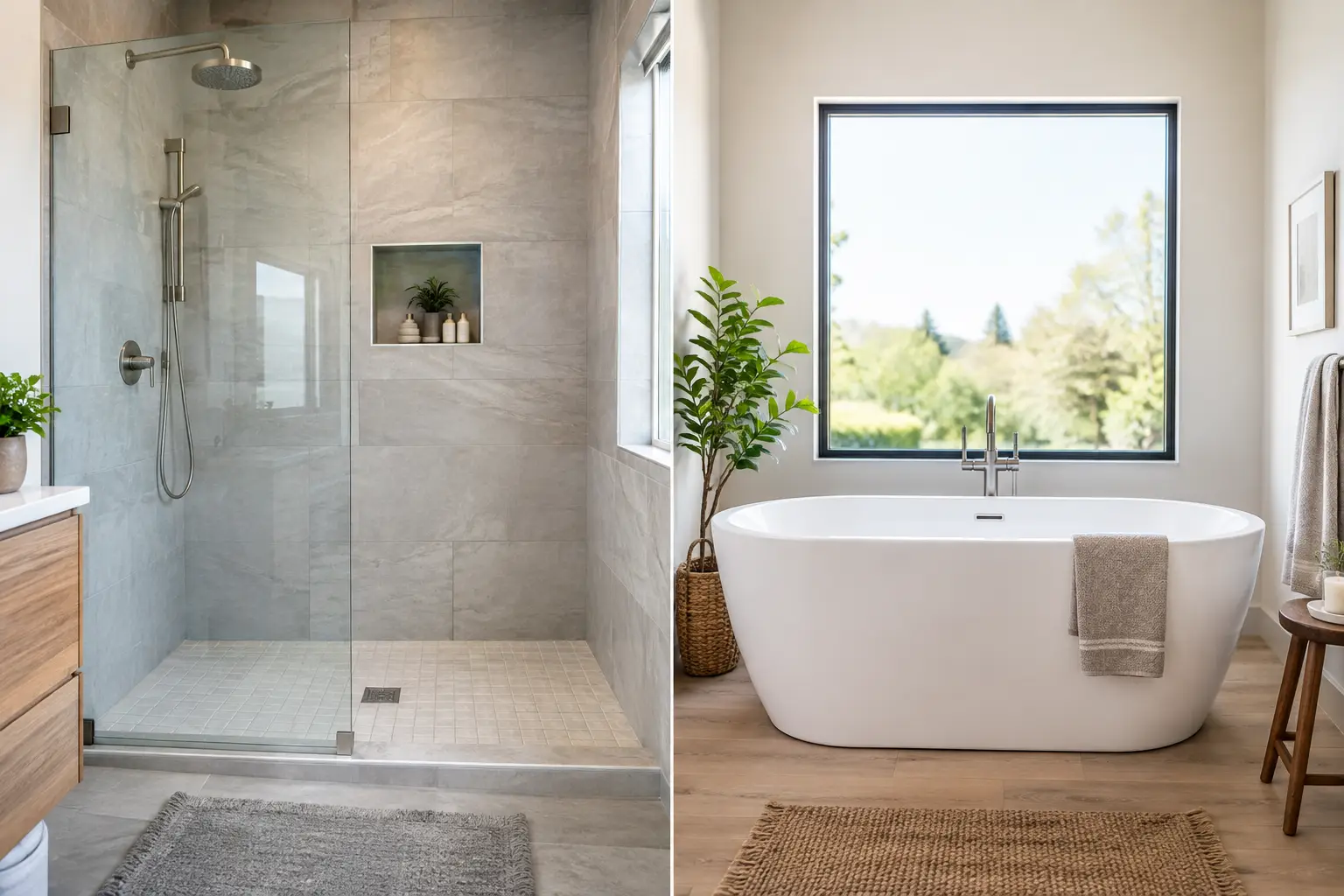
A bathroom remodel forces a real-life decision, not just a design choice. The walk in shower versus bathtub question comes down to how your household uses the room now, what may change over time, and whether you want to spend Saturday cleaning a deep basin or step into a shower that is ready when you are.
Forget the old sales pitch that says one choice is always better. A walk-in shower can make a dated bathroom feel larger, safer, and easier to maintain. A bathtub can be the right call for young children, dedicated bath lovers, or a home that does not have another tub. The best answer is the one that fits your life without forcing you into a renovation you will second-guess later.
Walk In Shower Versus Bathtub: Start With Daily Life
Think about the last month, not the fantasy version of your bathroom. How often has anyone actually taken a bath? How often has someone stepped over the tub wall to shower? Those answers carry more weight than a display-room photo.
A walk-in shower is usually the practical winner for households that shower almost exclusively. It offers a wider entry, more room to move, and a layout that can accommodate a bench, handheld showerhead, shelves, and grab bars without feeling crowded. It also removes the high tub wall that makes a standard tub-shower combination awkward for many adults.
A bathtub earns its space when it is genuinely used. Parents with babies and young children often appreciate having one. So do people who use baths for relaxation, sore muscles, or recovery. If a tub is used several times a week, removing it just because a walk-in shower looks current may create a daily annoyance that is far more memorable than the new tile color.
There is also a middle ground. Keeping a tub in one bathroom while converting another to a walk-in shower gives a household flexibility. For many homeowners, that is the smartest way to get the convenience of a shower-focused primary bath without giving up a tub altogether.
Safety and Comfort Change the Math
A low-threshold walk-in shower is one of the clearest upgrades you can make for long-term comfort. Climbing over a tub wall gets harder after an injury, during pregnancy, or simply as knees and balance change with age. A shower with a low entry reduces that barrier while still looking polished and intentional.
The details matter. A properly planned shower can include slip-resistant flooring, a sturdy grab bar, a handheld showerhead, and a built-in or fold-down seat. These are not just aging-in-place features. They make shaving, bathing kids or pets, and recovering from a temporary injury easier for nearly anyone.
That said, not every walk-in shower has a completely barrier-free entry. The floor slope, drain placement, bathroom structure, and local installation requirements all affect what is possible. Be skeptical of any remodeler who promises a universal solution before understanding your space. A good plan starts with the actual bathroom, not a rehearsed pitch in your living room.
Cleaning Is More Than a Chore List
A standard bathtub tends to collect the kind of grime nobody wants to discuss: soap residue along the basin, bottles around the ledge, mildew at the caulk line, and buildup on a shower curtain. It is also physically harder to clean because you are reaching over and down into a deep enclosure.
A walk-in shower can be easier to maintain, especially when it uses smooth, nonporous wall panels instead of grout-heavy tile. Fewer grout lines mean fewer places for moisture and soap residue to settle. Built-in shelving can also eliminate the clutter of wire caddies and product bottles balanced along a tub edge.
But a larger shower is not maintenance-free. Glass doors show water spots, and textured floors need regular cleaning to stay looking sharp. If low maintenance is a priority, choose finishes with that in mind. Clear glass, darker fixtures, practical storage, and easy-clean wall systems can make a bigger difference than chasing the trendiest look.
Space, Layout, and Budget Matter More Than You Think
A walk-in shower often makes a small bathroom feel more open because it removes the visual bulk of a tub. A clear glass enclosure can preserve sightlines, while a well-designed shower can use the same footprint as an existing tub. In some bathrooms, though, a larger shower can crowd the vanity or leave too little clearance around the toilet.
The cost is not determined by shower versus tub alone. Plumbing changes, drain relocation, structural repairs, the condition of the subfloor, wall materials, and fixture selections all affect the final price. A simple tub-to-shower conversion that works within the existing footprint is usually more straightforward than moving everything across the room. The same is true in reverse when adding a tub where a shower once stood.
This is where the remodeling industry often loses trust. Homeowners are shown a low starting number, then the real price appears after a long appointment, a manager call, or a supposedly limited-time discount. You should be able to see how choices affect pricing before you commit, not after you have spent an afternoon listening to a sales presentation.
ModernDayBath takes a different approach by letting homeowners design a shower online, see pricing as selections change, and schedule certified installation without the traditional in-home pressure campaign. Whether you choose a walk-in shower or keep a tub, clarity should be part of the product.
Will Removing a Bathtub Hurt Resale Value?
The honest answer is: it depends on your home.
If your house has only one bathroom and that bathroom has the only tub, removing it can narrow the appeal for buyers with small children or those who specifically want a bath. In that situation, keeping the tub or choosing a high-quality tub-shower combination is often the safer resale move.
If your home has two or more bathrooms and another tub remains available, converting an underused tub into a modern walk-in shower is less likely to be a problem. In fact, buyers often respond well to a clean, spacious shower in a primary bathroom, particularly when the existing tub was dated, cramped, or difficult to access.
Neighborhood expectations matter too. A family-oriented neighborhood may place more value on at least one bathtub. A condo, ranch home, or property aimed at downsizing buyers may benefit more from an accessible shower. Do not remodel solely for a hypothetical buyer five or ten years from now, but do avoid choices that make your home needlessly less functional for the people most likely to buy it.
Choose the Option You Will Use, Not the One You Were Sold
A bathtub is not outdated just because social media is full of oversized showers. And a walk-in shower is not an automatic upgrade if it removes the only bathing option your family needs. The right project respects the room, your budget, and the routines that happen behind a closed bathroom door.
Before deciding, picture an ordinary weekday morning. Who uses this bathroom first? Is anyone struggling with the tub step? Are bath toys, shower products, or cleaning supplies taking over the room? Does the current layout make the room feel tight? Clear answers to those questions will get you further than a contractor’s high-pressure recommendation.
A remodel should give you more control over your home, not less. Choose the fixture that makes your daily routine easier, insist on straightforward pricing, and build a bathroom that works well long after the sales pitch is gone.