
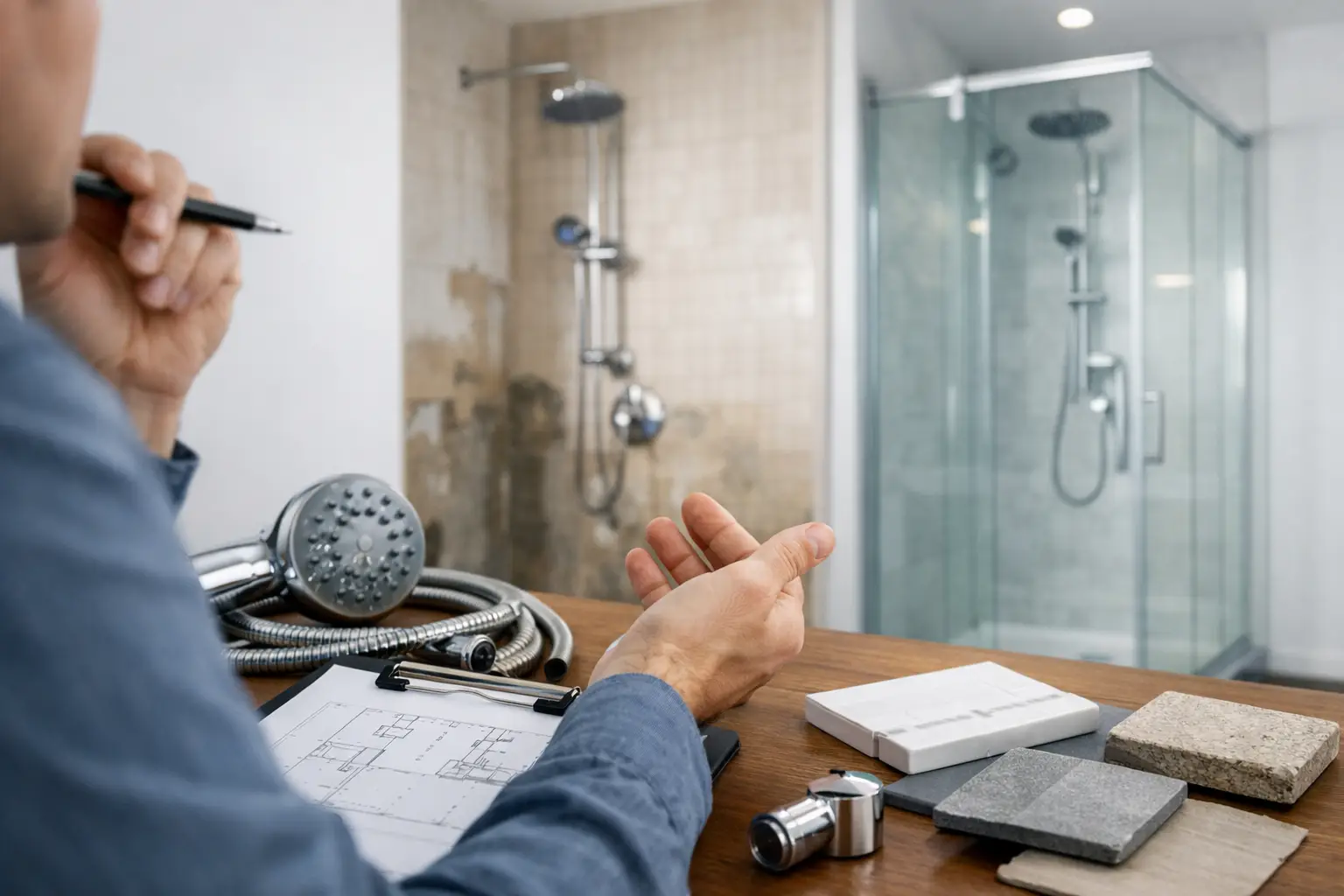
A shower replacement should not begin with a stranger sitting at your kitchen table for three hours, circling a price and claiming the discount disappears when they leave. The top questions before shower replacement are the ones that put you back in control: what you are buying, what it will cost, who will install it, and what happens if something goes wrong.
A good remodeler should answer these questions plainly. If pricing is vague, the scope keeps changing, or the conversation turns into pressure, that is useful information too.
Top Questions Before Shower Replacement: Start With the Real Problem
Are we replacing the shower for looks, function, or safety?
The answer shapes every decision that follows. If your current shower is stained, dated, or impossible to keep clean, a new wall system and fixtures may solve the issue without changing the layout. If you are dealing with leaks, soft flooring, mold, poor drainage, or damaged framing, the project may require more work behind the walls.
Safety is another major reason to replace a shower. A low-entry base, built-in seating, grab bars, and easier-to-reach controls can make daily bathing safer without making the bathroom feel clinical. Be honest about how the shower needs to work now and five or ten years from now. A beautiful shower that is difficult to step into is not a long-term upgrade.
Is a replacement enough, or do I need a full bathroom remodel?
These projects are not the same, and the price difference can be significant. A shower replacement generally focuses on the wet area: the base, walls, doors, fixtures, and accessories. A full bathroom remodel can include moving plumbing, replacing flooring, changing the vanity, rewiring lighting, and altering the room layout.
If the shower footprint works and the plumbing is in good condition, keeping the layout is usually the faster, more cost-conscious choice. Moving a drain or plumbing wall can be worthwhile when the layout is truly failing you, but it adds cost, time, and construction complexity. Do not let a contractor sell a full gut renovation when a targeted shower replacement does the job.
What Is Included in the Price?
This is the question that separates a clear quote from a number designed to get a salesperson in the door. Ask for a written scope that identifies the shower base, wall material, fixture package, glass or curtain option, demolition, installation, cleanup, and warranty coverage.
You should also ask what can change the final price. Hidden water damage, rotten subflooring, plumbing repairs, and code-required updates are legitimate unknowns in an older home. What matters is how the company handles them. Will they show you the issue? Explain the options? Provide the added cost before doing the work? Or will you get a surprise bill after the walls are open?
A transparent buying process lets you see how your selections affect the price before you commit. That is a better model than a vague “starting at” offer followed by a stack of add-ons and a so-called one-day-only discount.
Does the quote include removal and disposal?
It should. Removing the old shower, hauling away debris, protecting nearby areas, and cleaning up afterward are part of a professional installation. Confirm whether permits are needed in your municipality and whether permit costs are included or separate.
Also ask whether the installer will repair any wall or floor damage discovered during demolition. There is no universal answer because every home is different, but there should be a clear process. “We’ll figure it out later” is not a process.
Which Materials Will Hold Up Best?
A shower is exposed to water, soap residue, body oils, and daily temperature swings. Material selection is not just a design choice. It determines how much time you will spend cleaning and how the shower will look years from now.
Tile can be beautiful and highly customizable, but grout needs regular maintenance and can become a trouble spot if installation is poor. Solid-surface and high-quality acrylic wall systems typically offer fewer seams, easier cleaning, and a more predictable installation timeline. They are especially practical for homeowners who want a polished look without committing to grout scrubbing.
Ask what the walls are made of, how panels are joined, how corners are sealed, and whether the material resists cracking, fading, and staining. A premium-looking surface is only a good value if it stays that way.
What fixtures and accessibility features can I choose?
Fixtures change the everyday experience. Consider a handheld showerhead for cleaning and flexibility, a rainfall head for comfort, or a combination system if you want both. Think about shelving too. One tiny corner shelf rarely works for a household with multiple bottles and products.
For accessibility, ask about low-threshold bases, built-in or fold-down seats, grab bars installed with proper backing, and anti-slip surfaces. These additions are easiest and often most affordable when included during the replacement rather than retrofitted later.
Who Will Install the Shower?
The product matters, but installation is where a shower replacement succeeds or fails. Ask whether the company uses employees, subcontractors, or both. Ask how installers are trained, insured, and vetted. You do not need a polished sales answer. You need a direct one.
Find out who is responsible if an installation issue appears after the crew leaves. One company should own the entire experience, from product selection through final service. When the seller blames the installer and the installer blames the manufacturer, the homeowner is the one stuck in the middle.
ModernDayBath is built around a simpler alternative: choose your shower online, see pricing as you design, then work with certified installers instead of navigating the traditional in-home sales circus.
How long will installation take?
Many straightforward shower replacements can be completed quickly, sometimes in as little as a day or two. But fast should not mean rushed. The timeline depends on demolition, the condition behind existing walls, plumbing changes, curing requirements, custom glass, and permit inspections.
Ask for the expected installation window and the factors that could extend it. If you have only one full bathroom, ask whether the shower will be usable at the end of each day. Planning around a temporary loss of bathing access is much easier when you know what to expect upfront.
What Warranty Actually Protects Me?
“Lifetime warranty” sounds reassuring, but homeowners should still ask what it covers. Does it apply to materials, labor, installation leaks, fixtures, or all of the above? Is the warranty transferable if you sell the home? Are there exclusions for improper cleaning products or normal wear?
Read the practical part, not just the headline. A strong warranty should be backed by a company that is reachable, responsive, and prepared to stand behind its work. A long warranty from a company that makes service difficult is not much protection.
How Will I Make Decisions Without Being Pressured?
This may be the most overlooked question. Bathroom remodeling has a reputation for inflated starting prices, confusing promotions, and sales tactics built around urgency. You are allowed to take time to compare materials, measurements, colors, and costs. You are allowed to ask questions without being asked, “What would it take to earn your business today?”
Look for a process that lets you control the pace. Instant or clearly itemized pricing, digital design tools, straightforward deposits, and direct scheduling remove much of the friction that makes remodeling feel exhausting. You should know what you are agreeing to before a salesperson asks for a signature.
Before replacing your shower, make decisions based on the life you want to live in the finished space: easier mornings, less cleaning, safer footing, and no anxiety over what the project will really cost. The right company will make those decisions clearer, not harder.