
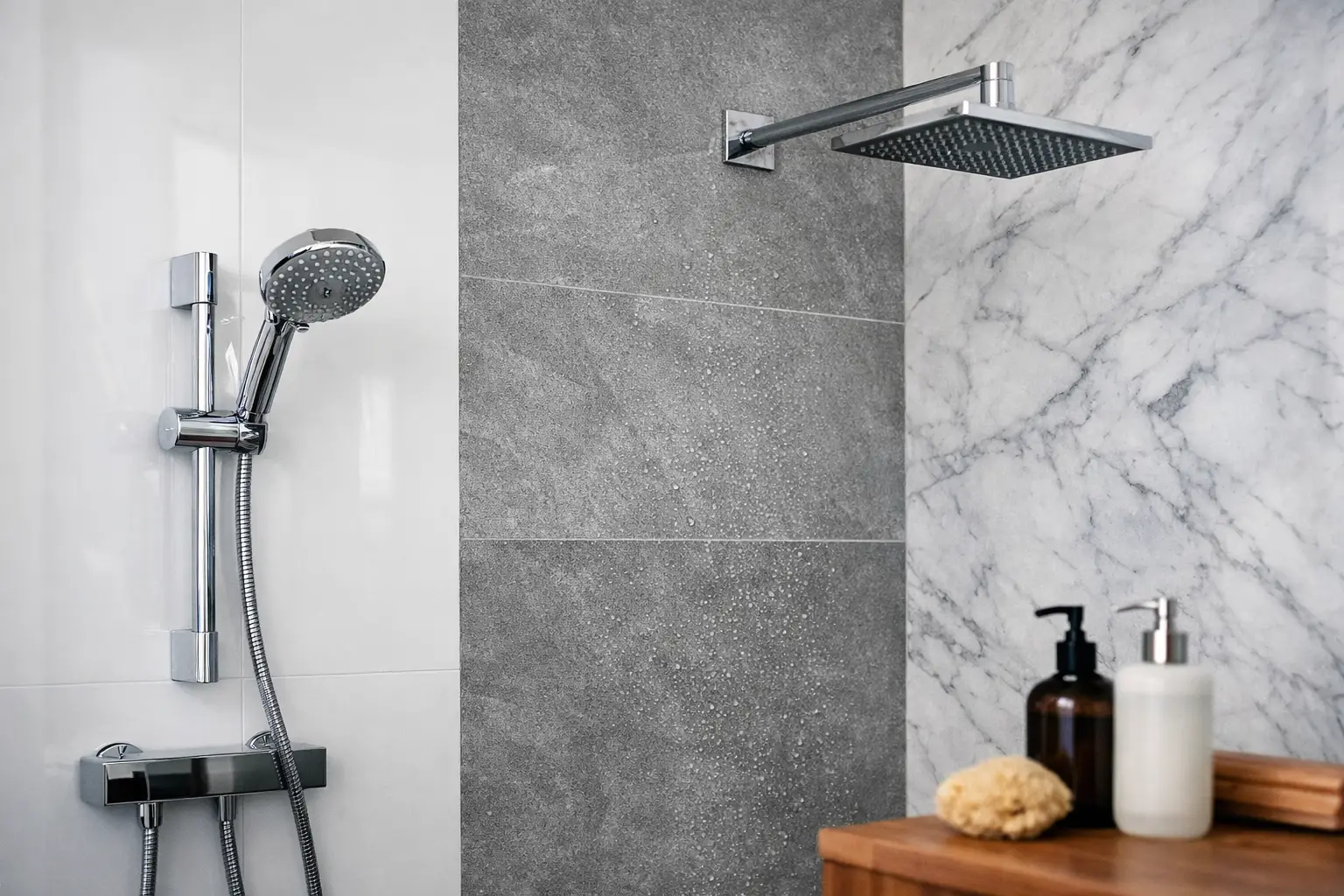
A shower should not become a weekend cleaning project or a sales appointment you regret agreeing to. This shower wall panel review looks past the glossy display sample and focuses on what homeowners actually need to know: how panels perform, where they can fail, what installation quality changes, and whether they are worth the cost.
Shower wall panels are often sold as the fast, low-maintenance alternative to tile. In many cases, they are. But “shower wall panel” describes several very different products, from thin budget sheets to thick, durable composite systems installed over a properly prepared wall. The difference is not cosmetic. It affects how the shower looks five years from now.
Shower Wall Panel Review: The Short Answer
A quality shower wall panel system is a smart choice for homeowners who want a clean, modern shower without the grout lines, long installation timeline, and ongoing maintenance that come with traditional tile. Large-format panels create fewer seams, clean up quickly, and can often be installed faster than a full tile surround.
The trade-off is that panels are only as good as the material, the wall preparation, and the installer’s attention to waterproofing. A low price can be tempting, especially when a company promises a dramatic “today only” discount. That does not tell you whether the panels are thick enough, whether the seams are properly sealed, or whether the existing shower damage was addressed before the new walls went up.
The right system should feel substantial, fit your shower accurately, resist stains and moisture, and come with a warranty that means something after the deposit clears.
What Shower Wall Panels Are Made Of
Not every panel is built for the same job. Asking what the wall system is made of is more useful than asking whether it is “premium.” Premium is a marketing word. Material specifications are facts.
Acrylic and Composite Panels
Acrylic and composite wall systems are common choices for professionally remodeled showers. They are nonporous, easy to clean, and available in colors and patterns that range from crisp white to stone-inspired finishes. Higher-quality systems are typically thicker and more rigid, which gives them a more finished appearance and reduces the flimsy feel associated with bargain panels.
For most homeowners, this category offers the best balance of maintenance, appearance, and practical durability. There is no grout to scrub, and the surface does not need periodic sealing like natural stone or many tile installations.
That said, no material is indestructible. Abrasive cleaners, sharp impacts, and incorrect installation can cause damage. Use nonabrasive cleaning products, and make sure accessories such as grab bars and shelving are installed with the right backing and hardware.
PVC and Thin Plastic Panels
Budget plastic or PVC panels can look acceptable at first, particularly in a rental property, utility bathroom, or short-term refresh. They are lightweight and can be inexpensive. The downside is usually rigidity, appearance, and long-term confidence.
Thin panels may telegraph imperfections in the wall behind them. They can also look less convincing under direct bathroom lighting, especially around edges and joints. If the product seems too flexible in a sample, that is worth paying attention to. Your shower walls should not feel like a shortcut.
Solid-Surface and Stone-Look Systems
Solid-surface panels and higher-end stone-look materials can deliver a more architectural finish. They may be heavier, more expensive, and more limited in installation options, but they can suit homeowners who want a dramatic slab-wall look without maintaining real stone.
This is where design preference matters. If you want natural variation and a highly customized look, tile may still be the better fit. If you want a polished, consistent surface that is easier to maintain, a stone-look panel system can make more sense.
Why Fewer Seams Matter
The biggest practical advantage of shower panels is not just speed. It is the reduction in joints.
Tile showers contain many grout lines, plus corners, transitions, and penetrations around fixtures. Each one needs to be installed correctly and maintained over time. Grout can discolor, crack, and collect soap residue. That does not mean tile is automatically a bad choice. A well-built tile shower can be beautiful and durable. It simply asks more from both the installer and the homeowner.
Large wall panels use far fewer seams. That means fewer places for grime to collect and fewer areas that demand regular attention. It also creates a calmer visual effect. A shower with uninterrupted wall surfaces often looks larger and more current, even when the footprint stays exactly the same.
Still, fewer seams does not mean seams do not matter. The corners, panel connections, and fixture openings must be sealed accurately. Water does not need a dramatic opening to get where it should not go. A small failure behind a wall can become an expensive problem later.
Installation Is the Real Review
Homeowners often compare products while overlooking the part that determines performance: installation. The nicest panel in the world cannot fix rotten framing, hidden mold, an uneven wall, or a failed shower base.
A legitimate remodel should begin with an assessment of the existing space. If there is water damage, it should be corrected rather than covered. If walls are out of plumb, the installer should have a plan to create a straight, secure surface. If plumbing fixtures are old or incorrectly positioned, those issues need to be addressed before the finished walls go in.
Pay attention to how a remodeling company describes prep work. Vague phrases such as “installed over existing surfaces” are not automatically a red flag, but they deserve clarification. In some situations, installation over a sound existing surface is appropriate. In others, removal and repair are necessary. The answer depends on the condition of your shower, not on what makes a sales presentation quicker.
A professional installation should also account for the shower base, drain, plumbing connections, waterproof transitions, and accessory placement. If you want a bench, niche, shelves, or safety grab bars, mention them before the design is finalized. Retrofitting features later can be more complicated and more expensive.
Cleaning and Everyday Maintenance
For busy households, this is where wall panels earn their reputation. Most quality nonporous panels need little more than a soft cloth or sponge, mild cleaner, and regular rinsing. There is no grout to seal and no grid of lines to brush one by one.
The best routine is simple: wipe down the walls after heavier use, avoid harsh abrasive powders, and deal with soap residue before it builds up. If your water is hard, a squeegee can make a noticeable difference. It takes seconds and helps preserve the clean look of the walls and glass.
Do not assume “low maintenance” means “no maintenance.” Caulk and sealant should be inspected periodically, particularly around the base, corners, and fixtures. If you see cracking, gaps, or discoloration that will not clean away, address it early. Small repairs are easier before water has a chance to travel behind the wall system.
What a Fair Price Conversation Looks Like
The cost of shower wall panels varies based on material, shower size, demolition, plumbing changes, base replacement, glass, fixtures, and accessibility features. That is normal. What is not normal is being forced to sit through a long in-home pitch just to learn whether the project fits your budget.
A transparent company should make the price drivers understandable. You should be able to see how your selections affect cost and ask direct questions without hearing a rehearsed answer about a discount that disappears when you ask for time to think.
Be cautious with offers that begin high, then suddenly drop by thousands of dollars if you sign immediately. That pressure does not improve your shower. It only reduces your ability to compare materials, installation scope, warranty terms, and final pricing.
ModernDayBath takes a different approach: homeowners can design a shower online, see pricing as choices change, and move forward without inviting a commissioned sales rep into the house. No sales reps. No pressure. No waiting for a mystery quote.
Questions to Ask Before You Buy
Before choosing a shower wall system, get clear answers on the material thickness, how seams are sealed, what happens if hidden water damage is found, and whether the shower base is included in the scope. Ask who performs the installation, what the warranty covers, and whether labor is covered along with the product.
Also ask to see the exact finish you are considering in realistic lighting. A small sample is helpful, but a full wall has a different visual effect. Matte white, glossy white, marble-look, and stone-look panels can all be right choices. The best one is the finish that works with your bathroom lighting, flooring, fixtures, and tolerance for visible water spots.
A shower remodel should leave you with a better bathroom, not a folder full of confusing paperwork and a price you only accepted because someone would not leave. Choose the wall system that fits your home, then choose the process that lets you make that decision on your terms.