
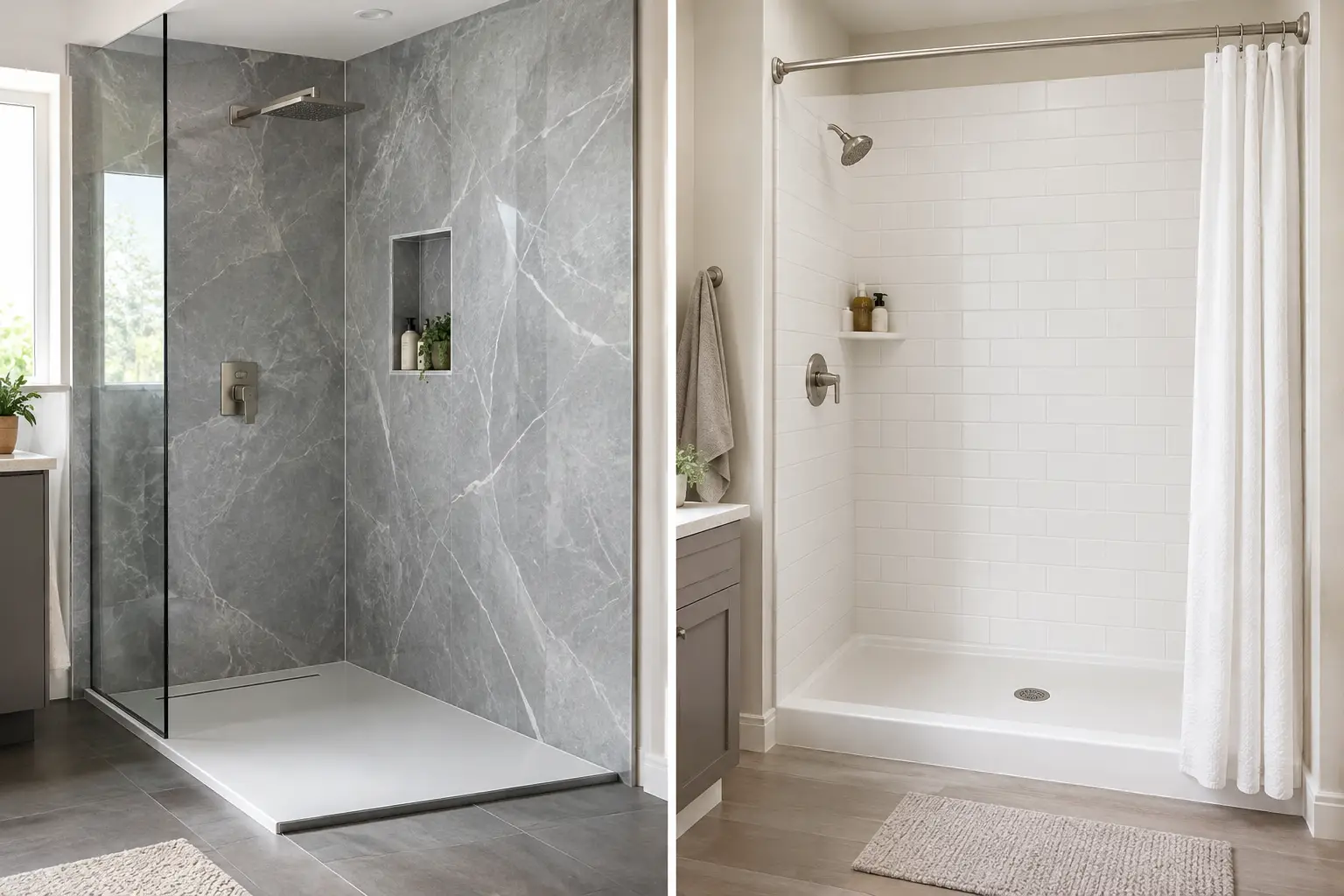
A shower remodel should not require a three-hour sales pitch to answer a basic question: shower panels versus surrounds, which is right for your bathroom? Both can replace dated tile, reduce cleaning, and create a finished look quickly. But they are not interchangeable, and the wrong choice can leave you paying for features you do not need or settling for a look you never wanted.
The better option depends on your shower’s shape, the condition of the walls behind it, your design priorities, and how much maintenance you are willing to tolerate. Here is how to make the call without getting buried in vague promises, inflated “today only” discounts, or confusing product labels.
What Is the Difference Between Shower Panels and Surrounds?
A shower surround is usually a prefabricated wall system designed to cover the walls around a tub or shower. Many surrounds come as one-piece, three-piece, or multi-piece units. They are commonly made from acrylic, fiberglass, or composite materials and are often associated with standard shower and tub layouts.
Shower panels are individual wall sheets installed over a prepared wall surface. They may be acrylic, composite, solid-surface, or other engineered materials. Because panels are cut and fitted for the space, they can be a stronger choice when a shower has unusual dimensions, a window, a niche, a bench, or a layout that does not fit a standard molded unit.
The terminology is not always consistent. Some remodelers call any wall system a surround. Others use “panels” to describe their premium wall product. Do not make a decision based on the label alone. Ask what the walls are made of, how the seams are sealed, whether the system is custom-fitted, and what the warranty actually covers.
Shower Panels Versus Surrounds: The Real Comparison
Appearance and design flexibility
Shower panels usually offer more visual flexibility. Larger sheets create a clean, continuous look with fewer visible lines than tile. Many are available in stone-inspired patterns, bright white finishes, soft neutrals, or subtle textures that feel more intentional than a basic builder-grade enclosure.
Surrounds can also look polished, especially higher-quality acrylic systems. But molded surrounds tend to come in more standardized shapes and finishes. If your priority is a straightforward replacement for an existing tub or shower, that may be all you need. If you are trying to make an older bathroom feel current without taking on a full custom tile project, panels often give you more room to personalize the result.
The trade-off is simple: more customization can mean a more detailed measuring and installation process. That is not a drawback when it is handled by experienced installers. It is a problem only when a company promises a custom result, then relies on generic components and last-minute change orders.
Seams, cleaning, and long-term maintenance
This is where wall systems earn their reputation. Both panels and surrounds have far fewer grout lines than tile, which means less scrubbing and fewer places for mildew to take hold. For busy households, that matters more than a trendy finish that becomes a cleaning project every weekend.
Panel systems often use fewer seams because each wall is covered by a large sheet. Fewer seams can mean a cleaner visual finish and fewer joints to monitor over time. A multi-piece surround has more connection points, though quality systems are engineered to manage water properly when installed correctly.
Neither option is maintenance-free in the literal sense. You still need to wipe down the walls, use nonabrasive cleaners, and avoid products that can dull or scratch the surface. But compared with tile and grout, both are a major step toward a bathroom that looks clean without demanding constant work.
Installation realities
A one-piece surround is often easiest to install during new construction or a major gut renovation, before walls and doorways limit access. Getting a large, rigid unit into an existing home can be difficult or impossible without removing more than you planned.
That is why multi-piece surrounds and wall panels are often more practical for remodels. They can be brought into the bathroom in separate pieces, fitted around existing conditions, and installed without turning a focused shower update into a whole-house disruption.
The substrate matters as much as the visible wall material. An installer should inspect for water damage, weak framing, or mold before covering anything up. A shiny new wall system installed over a compromised area is not a remodel. It is a cover-up with a countdown clock.
Cost and what you are actually paying for
Basic fiberglass surrounds are generally the lower-cost option. They can be a reasonable fit for a rental property, a secondary bathroom, or a homeowner who needs a functional replacement without design upgrades.
Premium acrylic or composite panel systems typically cost more, especially when you add fixtures, shelves, niches, glass doors, accessibility features, or a new shower base. But price alone does not tell you whether the quote is fair. The bigger question is whether it includes demolition, wall preparation, plumbing adjustments, installation, cleanup, and warranty protection.
Be cautious when a remodeler starts with an oversized number, then “finds” a discount after calling a manager. That is not transparent pricing. It is a sales tactic built to make you feel like you won something. A trustworthy quote should show you what changes the price and let you decide which upgrades are worth it.
When a Shower Surround Makes More Sense
A surround can be the practical winner when your layout is standard, your existing tub or shower footprint is staying put, and you want a dependable, easy-clean wall solution. It is especially sensible when speed and budget matter more than having a wide range of colors, accessories, or wall configurations.
Choose carefully, though. A lower-priced surround is not automatically a bad product, and a higher-priced one is not automatically better. Look at thickness, finish quality, seam design, installation method, and warranty terms. You want a system built for daily use, not one that simply looks good in a brochure.
When Shower Panels Are Worth It
Panels are often the better fit when you want a more customized appearance without the upkeep and installation time of tile. They work well for walk-in showers, tub-to-shower conversions, accessible showers, and bathrooms where a standard molded shape would look forced.
They also make sense when details matter. A properly integrated niche, corner shelving, grab bars, a built-in seat, or a glass enclosure can turn a standard shower replacement into a space that works better every day. The goal is not to add every possible upgrade. It is to spend on the features that solve a real frustration in your current bathroom.
For many homeowners, the strongest value is a professionally installed panel system with durable fixtures and clear pricing from the start. That is the kind of straightforward remodel ModernDayBath is built around: choose your design online, see the price as you make selections, and skip the pressure campaign in your living room.
Questions to Ask Before You Sign Anything
Before choosing a wall system, get direct answers about the material, the installation process, and what happens if the walls behind the old shower need repair. Ask whether the quote includes removal and disposal, whether plumbing changes are included, and how long the project will take once materials are ready.
Also ask about the warranty in plain language. Does it cover the wall material only, the installation labor, or both? Is it transferable? Are there exclusions for cracks, leaks, fading, or accessories? A lifetime warranty sounds reassuring, but the details decide whether it has real value.
Finally, ask who is doing the work. You should know whether the installer is trained and insured, not just whether the salesperson sounded confident. The best wall system in the world will not perform as intended if it is measured poorly, sealed carelessly, or installed over hidden damage.
Make the Choice Based on Your Bathroom, Not a Sales Script
There is no universal winner in shower panels versus surrounds. A quality surround can be the smart, efficient choice for a simple replacement. A custom-fitted panel system can deliver a more refined look, better flexibility, and fewer compromises for a larger transformation.
Start with how you use the bathroom now. If cleaning grout, stepping over a tub wall, cramped storage, or an outdated look is the real problem, choose the system and features that address it directly. The right remodel should make your routine easier long after the sales pitch is forgotten.