
A shower installation should not begin with a three-hour sales presentation at your kitchen table. You should be able to choose a style, see how options affect the price, understand what happens in your home, and decide when you are ready. That is the standard homeowners deserve – not mystery pricing, manufactured urgency, or a “today only” discount that somehow reappears tomorrow.
What a Shower Installation Actually Includes
A shower remodel is more than new walls and a shiny faucet. A professional installation is a coordinated construction project inside one of the most water-sensitive rooms in your home. The visible finish matters, but the work behind it determines whether your new shower stays easy to clean and dependable for years.
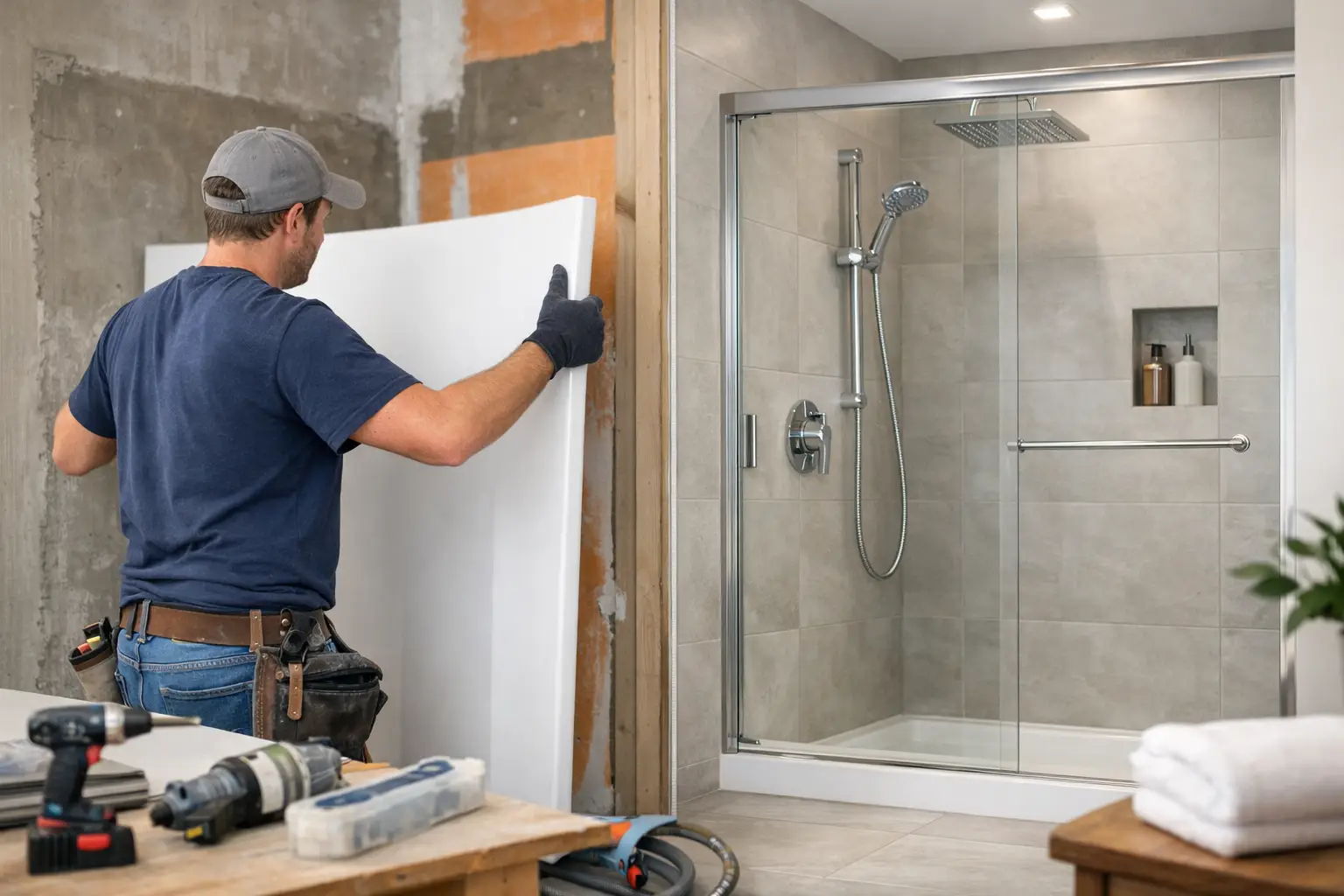
The process generally starts with verifying the space, measuring the opening, and confirming the condition of the existing tub or shower area. Installers remove the old materials, inspect the substrate and plumbing, prepare the walls, and install the new base or tub, wall surround, fixtures, doors, and finishing details. Depending on the scope, they may also address damaged framing, old valves, ventilation concerns, or water-damaged materials found after demolition.
That last part is why a responsible company cannot promise that every project is identical. Most showers are straightforward. Some reveal issues no one could see behind an old wall. The right approach is not to hide that possibility. It is to explain it upfront, document any needed change, and give you a clear path forward before extra work begins.
Start With the Decisions That Drive Price
Traditional bathroom remodelers often make pricing feel like a guarded secret. First comes the appointment. Then comes the pitch. Then comes a quote built around a discount game instead of a clear scope of work.
A better process puts the major choices in your hands early. The size of your shower, wall material, base style, fixture finish, door selection, shelving, seating, and accessibility features all affect the final project. You do not need a sales rep to explain that a frameless glass door costs more than a curtain rod, or that a custom bench adds labor and materials. You need transparent options and real numbers.
The biggest price drivers usually fall into three areas: the layout, the materials, and the condition of the existing space. Keeping plumbing in the same location is often less complex than moving drains or supply lines. A high-quality, low-maintenance wall system can offer a clean finished look with fewer grout lines than tile, while tile may make sense for homeowners who want highly specific patterns or custom layouts. Neither choice is automatically better. It depends on your budget, cleaning preferences, timeline, and design priorities.
Be wary of a quote that sounds unusually low but leaves key details vague. Ask what is included in removal, plumbing work, wall preparation, disposal, accessories, permits where required, and final cleanup. A number without a defined scope is not transparency. It is an invitation for surprises.
The Choices Worth Making Before Installation Day
You do not need every answer before requesting a quote, but a few decisions make planning easier. Think about who uses the shower, how long you plan to stay in the home, and what frustrates you about the current setup.
If stepping over a high tub wall feels unsafe or inconvenient, a low-threshold shower can make daily use much easier. If you are tired of scrubbing grout, large-format wall panels may be the practical choice. If more than one person uses the bathroom, storage niches, corner shelves, and handheld showerheads can make the space work harder without making it feel crowded.
Also consider cleaning before choosing glass. Clear glass looks sharp, but it shows water spots more readily than patterned or treated options. Dark fixture finishes can create contrast, though they may show mineral buildup depending on your water. The best selection is the one that still fits your routine six months after installation, not just the one that looks best in a sample photo.
A Realistic Shower Installation Timeline
Many bath conversions and shower replacements can be completed quickly once materials are ready and the project scope is confirmed. That does not mean every project should be rushed. The timeline has two distinct parts: planning and installation.
Planning includes design choices, measurements, product ordering, scheduling, and any permit coordination. Installation day begins with protecting the work area and removing the old shower or tub. From there, the crew prepares the space, completes necessary plumbing adjustments, installs the base and walls, adds fixtures and glass or enclosure components, seals the system, and cleans up.
A simple replacement may move fast. A project involving structural repairs, a relocated drain, custom glass, or significant plumbing updates may require more time. That is normal. What is not normal is being left without a clear explanation of why the schedule changed or what happens next.
Before the work begins, ask who will be in your home, how the work area will be protected, whether you will have access to another bathroom, and how debris will be handled. A professional team should be able to answer those questions plainly. Good installation is not only about the final reveal. It is about respecting your home while the work is underway.
Materials: Low Maintenance Beats High Maintenance Hype
The bathroom industry loves to sell the idea that more expensive automatically means better. It does not. The right material is the one that performs well in a wet environment and fits the amount of maintenance you are willing to do.
Tile offers enormous design flexibility, but it comes with grout joints that need regular attention. It can be a great choice for a custom design, especially when installed by skilled professionals with proper waterproofing behind it. But homeowners should go into it with open eyes: tile is not a set-it-and-forget-it surface.
Acrylic and composite wall systems offer a different value proposition. They use larger panels, which means fewer seams and less grout to clean. Quality systems can deliver a premium look while making the everyday job of wiping down the shower much simpler. For many homeowners, that balance of appearance, durability, and upkeep is more valuable than a complicated custom finish.
Do not evaluate wall materials in isolation. The base, drain connection, fixture valve, sealants, and installation method all matter. Water does not care how attractive a wall panel looks. If the system is installed poorly, moisture will find the weak point.
Don’t Skip the Installer Questions
The person selling the project and the person installing it are not always connected in the traditional remodeling model. That gap can create frustration. You may get big promises from a salesperson, then a different experience when the crew arrives.
Ask whether the installers are trained for the specific products being used, whether the company handles the project directly, and what workmanship coverage applies after completion. Ask how problems are documented if hidden damage is uncovered. Ask what happens if a fixture arrives damaged or a measurement needs adjustment. These are not difficult questions. A company that values your trust should welcome them.
A lifetime warranty can be meaningful, but read what it covers. Product coverage and labor coverage may not be the same thing. Understand whether the warranty applies to the wall system, fixtures, installation workmanship, or all of the above. Clear warranty language is another sign that a company expects to stand behind the work.
You Should Control the Buying Process
Homeowners have been trained to expect bathroom remodeling to be exhausting: schedule an appointment, make polite conversation with a stranger, sit through a pitch, and negotiate a number that may or may not be real. That model serves commissioned sales teams far better than it serves you.
A modern process gives you room to compare options on your own schedule. You should be able to see pricing as your selections change, place a small deposit when you are comfortable, and schedule professional installation without turning your home into a sales floor. ModernDayBath is built around that simpler idea: no commissioned sales rep, no pressure, and no waiting around for a quote you should have been able to see from the start.
The goal is not to make a major home decision feel casual. It is to remove the nonsense from a decision that already deserves care. Take time to compare materials, verify what your quote includes, and choose a team that communicates clearly. Then you can look forward to the part that matters: stepping into a shower that works better every day.