
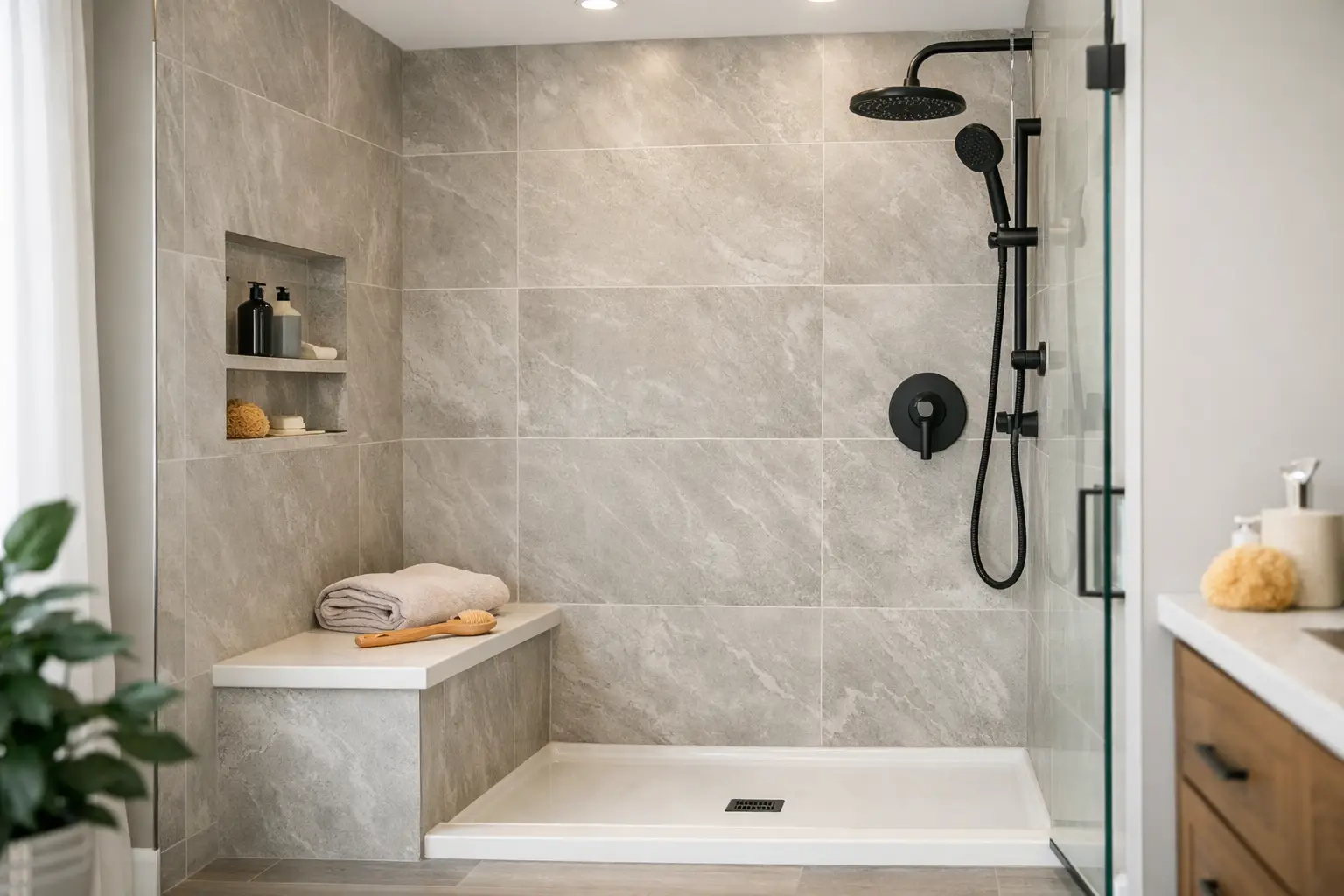
If your current shower feels like a weekly fight with soap scum, grout stains, and hard-water buildup, a low maintenance shower remodel is not a luxury. It is a practical fix. The right remodel does more than update the look of your bathroom. It cuts cleaning time, removes failure points, and gives you a shower that still looks good without constant upkeep.
That sounds obvious, but this is exactly where a lot of bathroom projects go sideways. Homeowners get sold on trendy tile, fancy niches, and complicated fixture packages, then end up with more surfaces to scrub, more grout to seal, and more parts that can wear out. A better remodel starts with a simpler question: what will this shower be like to live with every day?
What makes a low maintenance shower remodel work
A low maintenance shower remodel is really about reducing three things – grout, trapped moisture, and unnecessary complexity.
Grout is one of the biggest maintenance headaches in any shower. It can discolor, crack, hold mildew, and demand repeated cleaning. The more grout lines you have, the more work your shower creates. That is why many homeowners move away from small-format tile and toward large wall panels or wall systems with minimal seams.
Moisture is the second issue. Water that lingers in corners, sits on ledges, or sneaks behind poorly installed materials causes staining and long-term damage. A smart shower design makes water easy to control and easy to drain.
Complexity is the third problem. Extra shelves, decorative trim, multiple spray systems, textured surfaces, and hard-to-reach corners may look impressive at first. They also create more places for buildup and more things that can break. In a shower you use every day, simple usually wins.
The best materials for a low maintenance shower remodel
If easy care is the priority, wall material matters more than almost anything else.
Wall panels beat high-grout surfaces
Large acrylic, composite, or solid-surface style wall systems are popular for a reason. They give you a clean look with far fewer seams than tile, and fewer seams mean fewer places for mildew and discoloration to start. They are also easier to wipe down and usually do not require the sealing and periodic grout care that tile does.
That does not mean tile is always a bad choice. A large-format tile with tight grout lines can still be fairly manageable. But if your goal is truly low effort, tile rarely beats a quality wall panel system. The trade-off is mostly aesthetic preference. Some homeowners love the handcrafted look of tile enough to accept the extra upkeep. Others want a premium look without signing up for a cleaning hobby.
Shower pans can be easier than tiled floors
A custom tiled shower floor can look beautiful, but it often adds maintenance because of all the grout lines and slope transitions. A one-piece or low-threshold shower base is usually easier to clean and easier to keep looking consistent over time.
This is especially true in homes where accessibility matters. A well-designed low-threshold base reduces trip risk and can make cleaning less awkward. It is a practical upgrade now and a smart one for the future.
Fixtures should be durable, not complicated
When choosing fixtures, simple finishes and proven designs usually age better than highly stylized options. Matte black can look sharp, but in some homes it shows mineral spots faster than brushed finishes. Chrome is easy to find and often easy to clean, but it can show fingerprints and spotting. Brushed nickel and similar finishes tend to be forgiving in daily use.
The best choice depends on your water, your cleaning habits, and your taste. The point is not to chase a trend. It is to choose something that will still feel easy to live with six months from now.
Design choices that reduce cleaning time
A low maintenance shower remodel is not just about materials. Layout matters too.
Built-in storage is useful, but too much of it can work against you. A single recessed niche is often enough for most households. Add several niches, ledges, and corners, and you create more horizontal surfaces where water and product residue collect. A clean design with just enough storage usually performs better than one trying to do too much.
Glass is another place where homeowners should think beyond the showroom photo. Frameless glass looks modern and open, but it does require regular cleaning to stay clear, especially in hard-water areas. If you hate wiping down glass, a shower curtain or a more practical enclosure may actually fit your life better. There is no prize for choosing a feature you already know will annoy you.
Shower doors also vary in how easy they are to maintain. Heavy metal tracks can trap grime. Minimal hardware is usually easier to keep clean. Again, the less clutter in the design, the less work later.
The installation matters more than the brochure
Even the best materials fail when installation is sloppy. This is where many homeowners get burned.
A low maintenance shower remodel only stays low maintenance if the system is installed correctly, sealed correctly, and designed to move water where it belongs. Poor wall prep, weak seams, bad drainage, and rushed caulking can turn a promising remodel into a recurring problem.
That is why the buying process matters too. Traditional bath remodeling often turns into a long, high-pressure sales appointment where the conversation is more about financing and fake discounts than the actual build. That model does not reward clear decision-making. It rewards confusion.
A better approach is simple pricing, clear product choices, and professional installation by people who know the system they are putting in. Homeowners should be able to compare options, understand what they are paying for, and make decisions without feeling cornered in their own house.
What to skip if you want less upkeep
Some features are worth passing on.
Natural stone can be stunning, but it usually demands more care than man-made alternatives. Small mosaic floors add traction, but they also add grout. Body sprays and extra plumbing fixtures can make a shower feel luxurious, but every added component is another item to clean and maintain.
Textured surfaces can hide some water spots, but they can also trap grime. Deep shelves are useful, but oversized niches often become clutter zones. Even decorative trim can create edges that catch residue.
This does not mean your shower has to look plain. It means every choice should earn its place. If a feature adds more upkeep than value, it is probably not helping.
How to know if your remodel plan is actually low maintenance
A good test is to picture an ordinary Saturday morning. You are not entertaining guests. You are not admiring sample boards. You are cleaning the bathroom.
Can you wipe the walls down quickly? Are there very few grout lines? Are the corners simple? Is the floor easy to rinse? Will the glass drive you crazy? Are the fixtures durable and easy to reach? If the answer to those questions is yes, you are probably on the right track.
Another test is longevity. Ask what the shower will need in three years, not just three days after installation. Will it need sealing? Will the finish still look good? Will replacement parts be easy to get? Will the materials still feel current, or were they chosen because they were flashy in the moment?
That kind of thinking protects your budget too. A shower that costs a little more upfront but saves time, cleaning products, and future repairs can be the cheaper option over the life of the bathroom.
The smarter way to shop for a low maintenance shower remodel
Most homeowners do not need more sales theater. They need clear options, real pricing, and a remodel that fits how they live.
That is one reason online-first shower remodeling has become more appealing. Instead of giving up an evening to an in-home pitch and waiting for a manager-approved discount, you can focus on the decisions that actually matter – materials, layout, finish choices, installation quality, and warranty coverage. No games. No pressure. Just a faster path to a shower that solves the problem.
For homeowners in places like Ohio and across the Midwest, where busy schedules and practical spending often drive remodeling decisions, that kind of transparency matters. ModernDayBath built its model around that reality: design online, see pricing upfront, choose your shower, and move forward without the usual runaround.
A good shower remodel should make your bathroom easier to own, not just nicer to photograph. If it cuts down cleaning, holds up to daily use, and lets you buy without the circus, that is money well spent.