
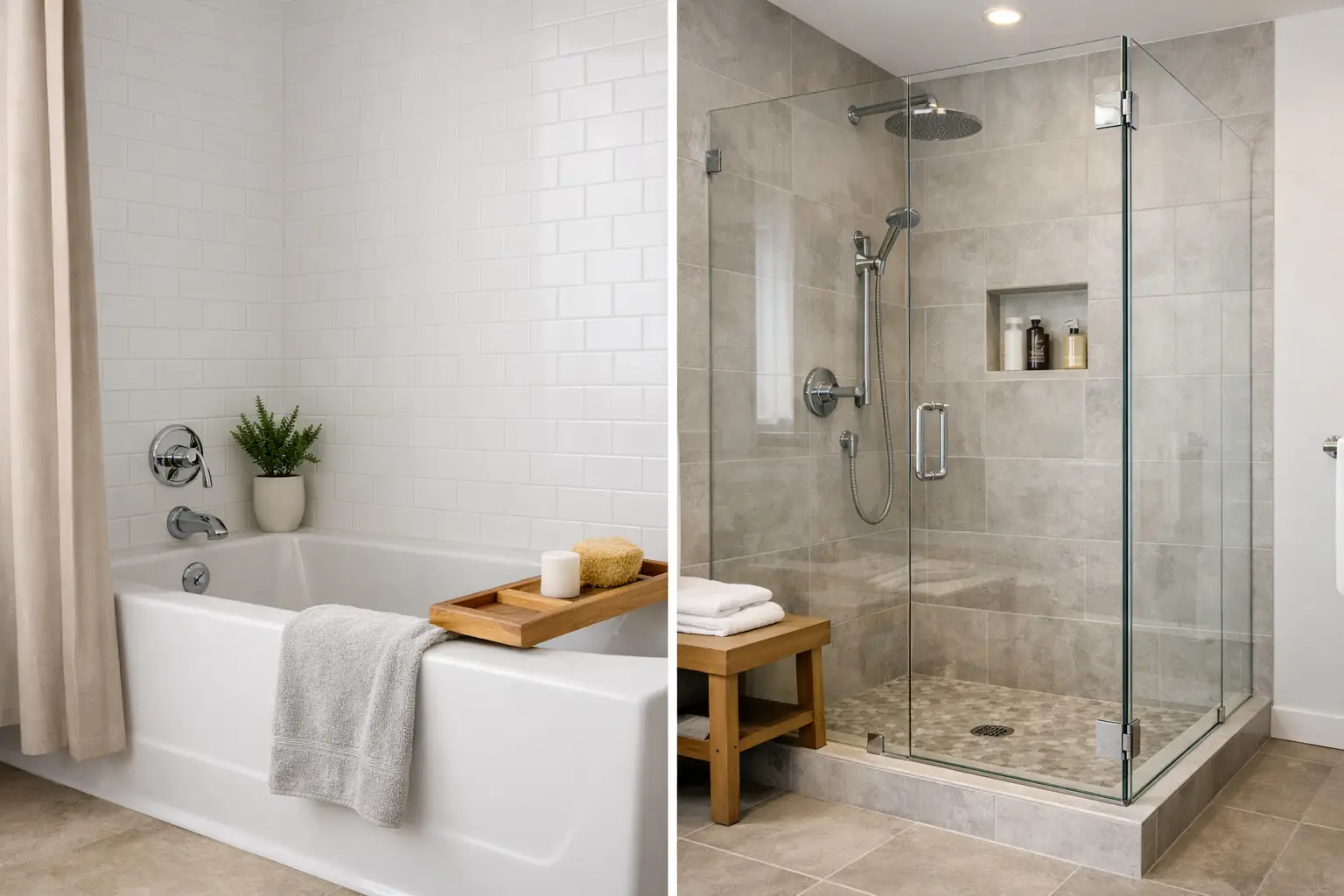
If you never use your bathtub except to store shampoo bottles and wash the dog, the question is pretty straightforward: is a tub to shower conversion worth it? For a lot of homeowners, yes. But not for every bathroom, not every budget, and not every resale plan.
The real value comes down to how you live, what your bathroom layout allows, and whether you want a space that works better every day instead of one that checks a box you rarely use. A tub-to-shower conversion can make a bathroom feel bigger, safer, easier to clean, and more current. It can also be the wrong move if it removes the only bathtub in the house or if you are remodeling purely for a buyer you have not met yet.
When is a tub to shower conversion worth it?
A conversion is usually worth it when your current tub is wasting space and adding friction to your routine. If stepping over a high tub wall feels annoying now, it will not get better with time. If your bathroom feels cramped, a shower often opens up the room visually and functionally. If cleaning tile grout around an old tub surround is a constant battle, newer wall systems can dramatically cut maintenance.
This is why many homeowners make the switch. They are not chasing a trend. They are fixing a mismatch between the bathroom they have and the way they actually live.
A good conversion can also improve accessibility without making the bathroom look institutional. A low-threshold or walk-in shower is simply easier to enter, easier to move around in, and easier to use comfortably at different stages of life. That matters if you plan to stay in your home for years.
The biggest benefits are everyday benefits
The best reason to convert a tub to a shower is not abstract resale math. It is daily convenience.
A shower is faster to use, often easier to clean, and usually more practical for adults who do not take baths. In many homes, the tub becomes dead space. Replacing it with a thoughtfully designed shower can give you more elbow room, better storage options, and a bathroom that feels less dated the second you walk in.
There is also a safety argument that should not be overlooked. Climbing in and out of a traditional tub is one of those things people tolerate until it becomes a real problem. A shower with the right entry height, grab bar placement, and slip-resistant flooring can reduce risk while still looking polished and modern.
Then there is the renovation process itself. Traditional bathroom remodeling has a reputation for being slow, confusing, and full of pricing games. That alone keeps people stuck with bathrooms they do not like. A more streamlined model, where you choose your design, see pricing clearly, and schedule installation without a parade of in-home sales appointments, changes the equation. It makes the upgrade feel achievable instead of exhausting.
The resale question: will it hurt home value?
This is where the answer gets more nuanced.
If your home has multiple bathrooms, converting one tub to a shower is often a smart move. In fact, many buyers prefer a large, modern shower in a primary bathroom. It can make the space feel more upscale and more useful.
If you are removing the only tub in the home, the decision gets riskier. Some buyers, especially families with young children, want at least one bathtub. Even buyers without kids may see a no-tub house as less flexible. That does not mean the conversion is automatically a bad idea. It means you should weigh your own needs against possible resale trade-offs.
A simple way to think about it is this: keep at least one tub somewhere in the house if resale flexibility matters to you. If there is already another usable tub, a tub-to-shower conversion in the bathroom you use most can be a very strong move.
Is a tub to shower conversion worth it financially?
Financially, it depends on what you are comparing it to.
If the alternative is living with a bathroom you dislike for another five or ten years, the value is not just about resale. It is about getting better function from a space you use every day. That kind of return is real, even if it does not show up as a neat percentage.
If you are comparing a conversion to a full gut remodel, a tub-to-shower project can often deliver a big visual and functional upgrade with less disruption. You are changing one of the most important elements in the room without necessarily rebuilding everything from scratch.
The biggest cost mistake homeowners make is focusing only on the lowest quote. Cheap conversions can become expensive if the materials stain, crack, or require heavy maintenance. Poor installation can lead to leaks, soft subfloors, and repairs that wipe out any upfront savings. A conversion is worth it when the materials are durable, the installation is done correctly, and the finished shower actually solves the problem that made you consider remodeling in the first place.
Situations where a conversion makes the most sense
Some homes are almost asking for it. A narrow alcove tub in a guest bath may be fine. But in a primary bathroom, that same setup can feel cramped and outdated. If you want a bathroom that feels easier and more spacious without expanding the footprint, a shower conversion is one of the clearest upgrades you can make.
It also makes sense if cleaning is a major pain point. Many older tubs are surrounded by grout lines, metal tracks, and hard-to-reach corners that collect soap scum and mildew. Modern shower wall systems with fewer seams and easier-care finishes can make a surprising difference in how much effort the room demands.
And if aging in place is even a minor consideration, the value gets stronger. Most people wait too long to make bathrooms safer. A conversion done now can look intentional, not reactive.
When it might not be worth it
Not every tub should go.
If you love taking baths, this is not a hard call. Keep the tub. If your home only has one bathroom and one bathtub, and you may sell in the near future, think carefully before removing it. If your existing bathroom layout is too tight to create a comfortable shower without awkward compromises, the project may need a bigger redesign to be worthwhile.
It may also not be worth it if you are choosing a conversion purely because it sounds modern, but your current tub actually serves your household well. Remodeling for appearances alone is usually where regret starts.
What separates a smart conversion from a bad one
A smart conversion starts with fit, not pressure. You should be able to choose wall styles, fixtures, storage, and entry options based on your space and budget without sitting through a sales script designed to wear you down.
Good projects are built around transparency. You know what is included. You know how pricing changes when you make selections. You know who is doing the installation and what warranty stands behind the work. That should be normal, but in bathroom remodeling, it still is not.
This is exactly why companies like ModernDayBath are gaining traction with homeowners who are tired of the old playbook. No bloated showroom overhead. No commissioned rep camping at your kitchen table. No fake discounts that magically expire tonight. Just a clearer, faster path to a finished shower that looks premium and works better.
How to decide without overthinking it
Ask yourself three simple questions.
Do you actually use the tub? Will removing it hurt your resale options based on the rest of the house? And will a shower make the bathroom easier to use every single day?
If the tub is just taking up room, if there is another tub elsewhere, and if a shower would improve comfort, safety, and maintenance, the answer is usually yes – a tub-to-shower conversion is worth it.
The best home upgrades are not the ones that sound impressive on paper. They are the ones that remove friction from your life. If your bathroom keeps reminding you it was designed for someone else, that is your answer.