
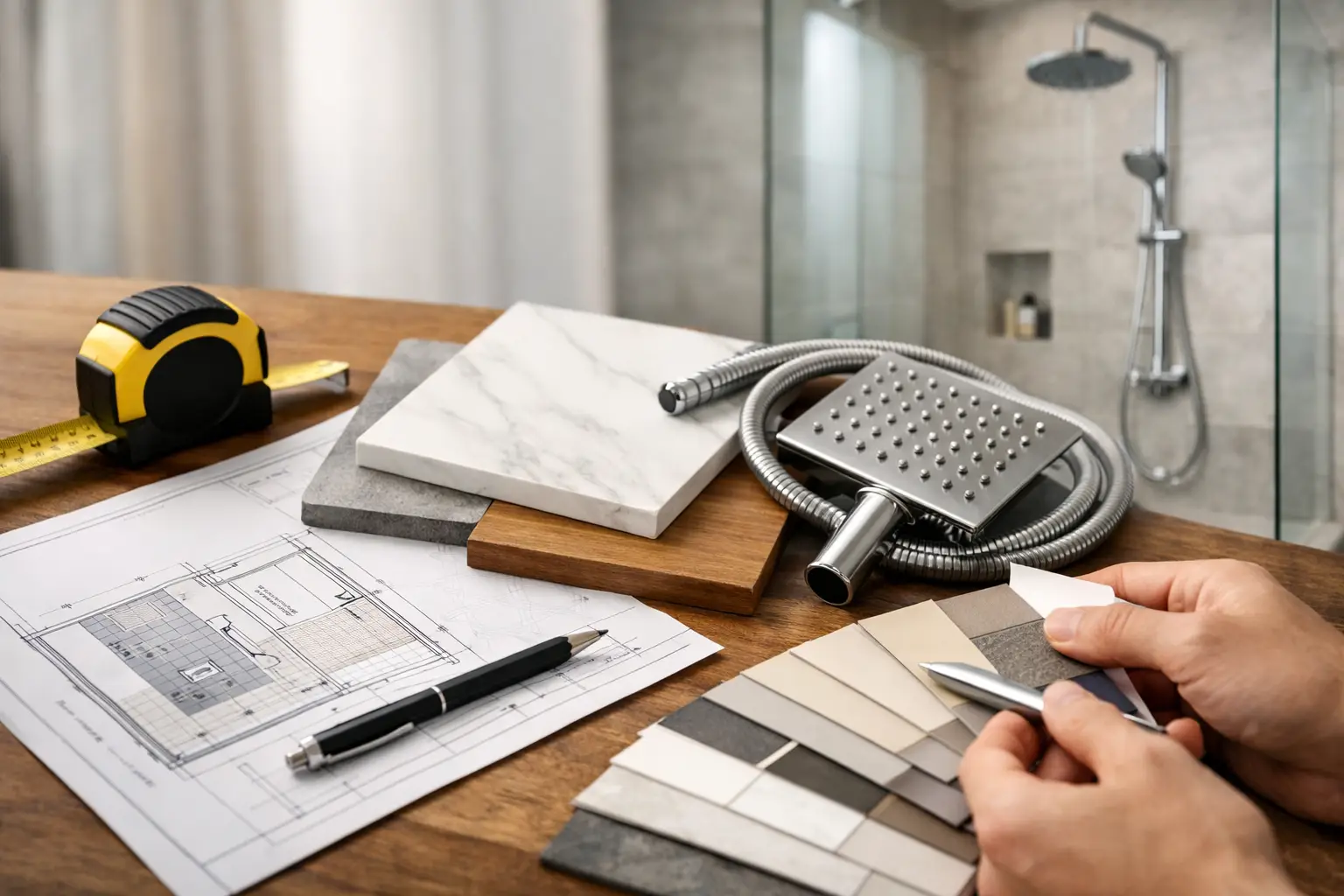
Most shower remodel problems start long before demo day. They start when a homeowner says, “We’ll figure it out as we go,” and then gets hit with shifting prices, vague timelines, and choices that looked good online but do not work in the room.
If you want to know how to plan a shower renovation without getting dragged through the usual remodeling circus, start by getting clear on three things: what problem you’re solving, what you want to spend, and how much disruption you can tolerate. That sounds simple because it is. The industry often makes it feel harder than it needs to be.
How to plan a shower renovation without wasting time
A good shower renovation plan is not a giant spreadsheet or a mood board full of ideas you cannot price. It is a practical decision-making process. You are choosing a layout, a set of materials, a budget range, and an installation path that fits your home and your life.
The best plans reduce surprises. That means deciding early whether this is mostly a cosmetic upgrade, a functional fix, or a full reset. If your current shower leaks, has mold-prone grout, feels cramped, or is hard to step into safely, those issues matter more than trendy finishes. Style matters, but it should not run the project.
Start with the real reason you want the remodel
Be honest here. Are you renovating because the shower looks dated, because cleaning it is a constant headache, or because someone in the home needs easier access? Those are different projects, even if they happen in the same footprint.
If the goal is low maintenance, focus on wall systems and surfaces that minimize grout lines and resist staining. If the goal is better accessibility, the threshold, door width, seating, and grab bar placement need to be considered from day one. If the goal is resale appeal, neutral finishes and practical upgrades usually age better than bold design swings.
When homeowners skip this step, they end up paying for features they do not really need while missing the ones that would have improved daily life.
Set a budget before you choose finishes
This is where a lot of shower remodels go sideways. People start picking tile patterns, hardware colors, and glass styles before they know what the project should cost. Then they either fall in love with options outside their range or get pushed into a strange discount game by a sales rep trying to close fast.
A smarter move is to set a working budget first. Not a fantasy number. A real number you are comfortable spending for the result you want.
For most homeowners, the budget should account for the shower system itself, fixtures, glass or doors, waterproofing, labor, removal of the old unit, and any repairs discovered during demolition. If your home is older, leave room for minor surprises. Hidden water damage and out-of-date plumbing do show up. Not every project has them, but enough do that pretending otherwise is not planning.
The right question is not “What’s the cheapest shower renovation possible?” It is “What level of quality and convenience do I want for this investment?” Cheap installations can become expensive when they fail early, stain easily, or require constant upkeep.
Know where to spend and where to keep it simple
If your budget is tight, spend on the things that affect performance and daily use. Waterproofing, installation quality, wall durability, and fixture reliability matter more than decorative extras.
You can keep the design clean and still get a premium result. In fact, many of the best-looking showers are simple. A bright wall surround, well-chosen fixtures, practical storage, and easy-clean glass often outperform more complicated designs in both appearance and maintenance.
Measure the space and question the layout
One of the biggest mistakes in planning a shower renovation is assuming the existing layout is automatically the best layout. Sometimes it is. Sometimes it is just what the builder installed years ago because it was fast and cheap.
Look at the current shower and ask a few blunt questions. Does the door swing into an awkward path? Is the shower head placed correctly for the people who use it? Is there enough storage for products without adding clutter? Is the threshold safe and comfortable to step over?
Even a same-size replacement can feel dramatically better if the opening is improved, the fixtures are repositioned, or the shelving is better planned.
If you are replacing a tub with a shower, think carefully about how the room will function afterward. This is often a great move for homeowners who want easier entry and a more open feel, but it depends on your household and long-term needs. A tub-to-shower conversion is not automatically the right answer for every home, especially if it removes the only tub in the house.
Choose materials based on maintenance, not just looks
This is where showroom-style selling tends to distract people. A material can look high-end in a sample and still be a pain to live with. Planning well means thinking past the reveal day.
If you want a shower that stays attractive with less work, low-maintenance wall systems deserve serious attention. They give you a clean, upscale look without all the grout scrubbing that comes with traditional tile-heavy designs. That trade-off is worth it for a lot of homeowners.
Tile still has a place. It offers more visual variation and can create a custom look. But it usually comes with more upkeep, more installation complexity, and often more opportunity for delays or labor issues. If you love tile and are prepared for that, fine. Just make that decision with your eyes open.
The same logic applies to fixtures and glass. Matte black may look sharp, but some finishes show water spots more than others. Clear glass feels open and modern, but it needs more frequent cleaning than textured or partially frosted options. There is no universally right choice. There is only the right choice for how you want to live.
Plan the timeline around reality
Homeowners often ask how long a shower renovation takes, but the better question is how long the full process takes from decision to installation. Those are not the same thing.
The installation itself may be relatively fast, especially with a streamlined shower system and an experienced crew. But planning, product selection, scheduling, and prep all happen before that. If you wait until the shower is failing to start making decisions, the project will feel rushed even if the install is efficient.
A realistic timeline includes time to compare options, review pricing, confirm measurements, choose finishes, and prepare the bathroom. If this is your only full bathing space, downtime matters even more. Ask direct questions about how long the bathroom will be out of service and what could extend that timeline.
Fast is good. Undefined is not. You want a company that can explain the process clearly, not one that keeps everything fuzzy until after you sign.
Decide how you want to buy the project
This part gets overlooked, but it has a huge impact on your experience. Some homeowners still think the only way to remodel a shower is to invite a salesperson into the house, sit through a two-hour pitch, and negotiate against fake discounts until someone “calls the manager.”
You do not have to buy remodeling that way.
If you value speed, control, and pricing transparency, look for a process that lets you explore designs, adjust features, and understand cost before you commit. That is not a gimmick. It is simply a more respectful way to buy.
A modern process should let you make real choices without pressure. You should be able to see what changes the price, understand what is included, and schedule installation without feeling like you are trapped in a sales script. That is one reason homeowners across Ohio and nearby markets have started moving away from the old in-home sales model.
What to ask before you commit
Before you choose an installer, ask how pricing works, what the warranty covers, whether installation is handled by trained professionals, and what happens if hidden issues are found during removal. Also ask what is not included. Honest companies answer that clearly.
If a quote feels vague, overcomplicated, or loaded with limited-time pressure, pay attention. Confusion is often part of the sales strategy.
Think past install day
A shower renovation should make life easier after the crew leaves. That means your plan should include the day-to-day details that affect satisfaction later.
Think about cleaning. Think about who uses the shower most. Think about whether you want built-in storage, a handheld shower head, a bench, or safety features that blend into the design. These decisions are easier and less expensive when planned upfront instead of added after the fact.
It also helps to think long term. If you expect to stay in the home for years, durability and accessibility should carry more weight than short-lived trends. If you may sell sooner, broad appeal and a fresh, low-maintenance finish often give you the strongest result.
A well-planned shower does not need to be flashy. It needs to work, look clean, and stay that way without becoming another home project you regret.
ModernDayBath built its process around that idea – less friction, clearer pricing, and a shower remodel you can actually plan with confidence instead of guesswork.
The best time to slow down is before the work starts. Once you know your priorities, your budget, and your installation path, the whole project gets simpler. And that is exactly how it should be.