
A lot of shower regrets start with something small. The handle feels loose after a year. The finish shows water spots constantly. The showerhead looked great online, but the spray is weak, the controls are awkward, and the whole setup feels cheaper than it should.
That is why knowing how to choose shower fixtures matters before your remodel is underway. Fixtures are the part you touch every day. They affect comfort, cleaning, water flow, and whether your new shower still feels like a smart purchase five years from now.
The good news is you do not need to be a designer or a plumber to get this right. You just need to know which choices actually matter, which upgrades are worth paying for, and where people get pushed into spending more than they need to.
How to choose shower fixtures without getting distracted
Most homeowners start with finish and style because that is what gets marketed the hardest. Brushed nickel, matte black, polished chrome. Modern lines. Minimal trim. Rain head. Handheld. Body sprays. It is easy to get pulled into the look of the fixture before thinking about how the shower needs to work.
Start in the opposite direction.
Think first about who uses the shower, how often, and what would make the experience better in real life. If this is the main bathroom used every day by multiple people, reliability and ease of use should outrank trendy extras. If it is a guest bath, you may care more about clean design and simple operation. If mobility or aging in place is part of the conversation, a handheld showerhead and easy-reach controls may matter more than anything else.
This is where a lot of old-school remodelers muddy the water. They present a wall of options, frame everything as a premium upgrade, and make it hard to separate useful features from expensive filler. You do not need the longest feature list. You need fixtures that match the way your household actually showers.
Start with the fixture types you really need
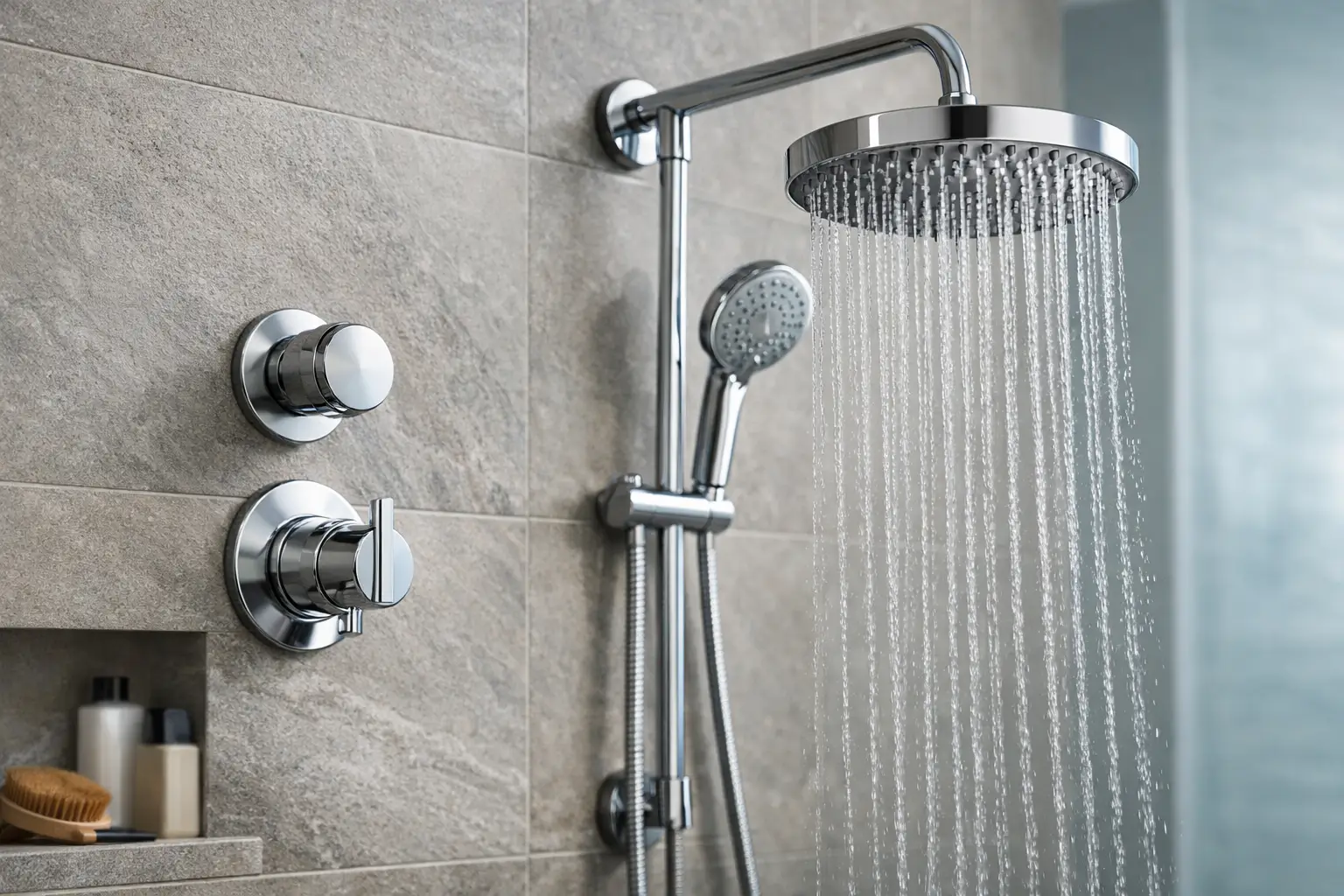
For most showers, the core setup includes a valve, trim, a showerhead, and often a handheld attachment. That combination covers what matters most without turning the project into a complicated custom build.
The valve is the hidden part behind the wall, but it is one of the most important decisions. It controls water temperature and pressure, and cheap valves tend to create expensive frustration later. If you are replacing a shower, this is not the place to cut corners. A good valve helps prevent sudden temperature swings and gives the system a more solid feel overall.
The trim is the visible part – handle, plate, and any controls you see on the wall. This is where style shows up most clearly, but trim should still be chosen with usability in mind. A sleek handle looks great until it is slippery with wet hands or hard to turn.
The showerhead affects the daily experience more than almost any other fixture. Some people want wider spray coverage. Others care more about pressure or easy cleaning. A rain showerhead can feel luxurious, but it is not automatically the best fit. If you want targeted rinsing, easier cleaning, or more flexibility, a standard wall-mounted head or a combo with a handheld may serve you better.
Handheld showerheads are one of the few upgrades that make sense for almost everyone. They help with cleaning the shower, bathing kids, rinsing pets, and improving accessibility. Even if you love the look of a fixed head, a handheld is often the more practical choice.
Finish matters, but maintenance matters more
If you are wondering how to choose shower fixtures that still look good after daily use, pay close attention to finish. Not just the color, but how forgiving it is.
Polished chrome is classic, widely available, and usually the easiest on the budget. It also tends to be durable. The trade-off is that it can show fingerprints and water spots more easily.
Brushed nickel remains popular because it hides spots better and works with a wide range of bathroom styles. It is a safe choice if you want something current without feeling trendy.
Matte black can look sharp and modern, but it is less forgiving in some homes than people expect. Depending on your water quality, soap residue and mineral buildup can stand out. It can still be a great option, just not a zero-maintenance one.
If low maintenance is high on your list, ask a simple question before choosing a finish: how will this look on a random Tuesday, not just in a showroom photo? That is the standard that matters.
Match the fixture style to the shower, not just the trend
A fixture should look like it belongs in the space. That sounds obvious, but it is where many remodels go off track.
If your shower walls, hardware, and overall bathroom design lean clean and modern, choose fixtures with simple shapes and minimal detailing. If the room has a more traditional look, ultra-angular hardware can feel out of place. You do not need everything to match perfectly, but the pieces should feel intentional together.
This is also why package design matters. Fixtures do not exist on their own. They sit next to wall surrounds, shelves, doors, drains, and trim details. A fixture that looked impressive by itself can feel too busy once everything else is installed.
A more disciplined approach usually pays off. Pick a direction, keep the style consistent, and avoid stacking too many statement elements in one shower.
Water pressure, spray settings, and comfort
A good-looking shower that feels underpowered gets old fast. That is why performance deserves as much attention as appearance.
Different showerheads are built for different priorities. Some are designed for wider coverage, some for concentrated pressure, and some for multiple spray patterns. More settings are not always better. If you only ever use one or two, the extra modes are just more parts to clean and more things to fail.
If you have low water pressure in your home, this becomes even more important. Certain showerheads perform better than others under lower pressure conditions. A large rain head may sound appealing, but if the pressure is already weak, the result may be underwhelming. A smaller head with a stronger, more focused spray can feel much better.
This is one of those areas where honesty matters. The right fixture depends on your home, your plumbing, and your expectations. Anyone pretending there is one best setup for everyone is selling, not helping.
Price should reflect value, not pressure
Shower fixtures come in a wide price range, and higher cost does not always mean better long-term value. Sometimes you are paying for better materials and smoother operation. Sometimes you are paying for branding, trendy styling, or upgrade theater.
A smart budget usually focuses on the components that affect daily function and lifespan. Spend for a quality valve. Choose durable finishes. Pick a showerhead and handheld setup you will actually use. Be cautious about expensive add-ons that sound impressive during a sales pitch but do very little once the shower is installed.
Body sprays are a good example. Some homeowners love them. Others use them twice and never again. They can also increase complexity, cleaning, and cost. If you genuinely want that experience, fine. If you are adding them because someone made the shower feel incomplete without them, pause.
This is where a transparent buying process helps. When pricing is clear and options are easy to compare, you can make decisions based on value instead of pressure. That is a much better way to buy a shower than sitting through a long in-home pitch built around inflated upgrades and fake discounts.
How to choose shower fixtures for long-term reliability
Looks matter on day one. Reliability matters after year three.
The best fixtures tend to share a few traits. They feel solid when you use them. The controls move smoothly. The finish holds up. Replacement parts are available if needed. The design is not so complicated that one failed component turns into a full headache.
This is especially important if you are doing a full shower remodel, not just swapping hardware. Once the wall is closed up, you want confidence in what is behind it and what is mounted to it. Saving a little upfront on lower-grade fixtures can cost more later if repairs become difficult or the whole setup starts to feel worn too soon.
Ask practical questions. How easy is the handheld dock to use? Do the nozzles resist mineral buildup? Does the handle feel stable? Is the control layout simple enough for everyone in the home? Those answers tell you more than a polished sales brochure ever will.
The best fixture choice is usually the clearest one
If you feel overwhelmed by fixture options, that is not because shower design is impossible. It is because the remodeling industry often makes simple choices feel more complicated than they need to be.
Most homeowners do best with a streamlined setup: one quality valve, clean trim, a dependable showerhead, and a handheld for flexibility. From there, choose a finish that fits your maintenance tolerance and a style that matches the rest of the bathroom. Keep the focus on daily use, not showroom flash.
That is the real answer to how to choose shower fixtures. Buy for the way you live. Ignore the noise. And if a feature does not clearly improve comfort, function, or durability, you probably do not need it.
A good shower should make your routine easier, not turn into another thing you wish you had questioned sooner.