
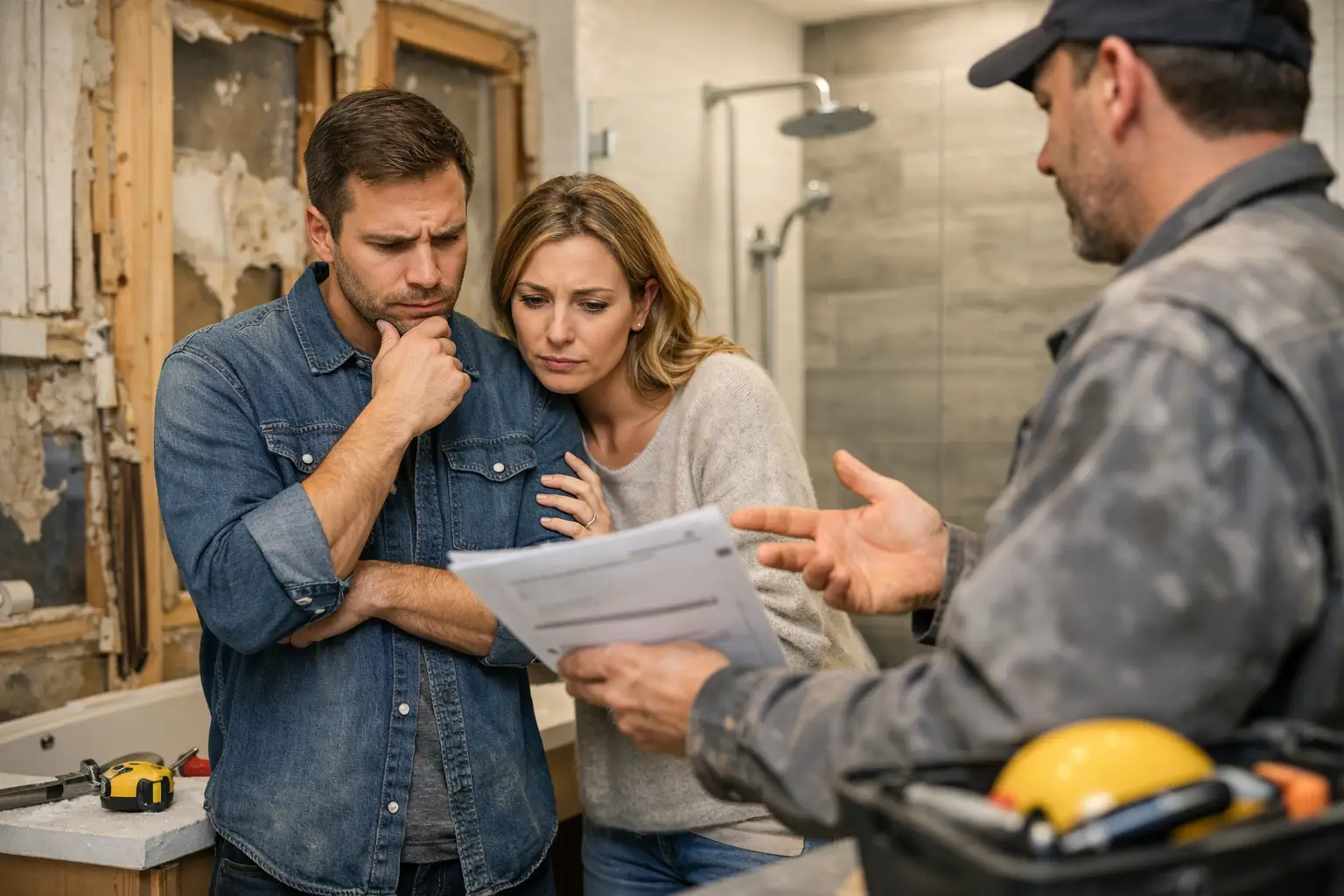
A bathroom quote that starts at one price and somehow doubles by install day is not bad luck. It is often the business model.
If you are researching how to avoid bathroom remodeling scams, the first thing to know is this: most problems do not start with a stolen deposit or a contractor who vanishes. They start much earlier, with vague pricing, pressure tactics, inflated promises, and contracts designed to keep the homeowner confused. The scam is not always dramatic. Sometimes it looks polished, professional, and completely normal until the bill changes or the excuses begin.
Why bathroom remodel scams are so common
Bathroom remodeling is an easy category for bad actors because most homeowners do not buy it often. You might remodel a kitchen once, replace a roof once, and renovate a bath once or twice in a lifetime. That makes it hard to spot what is standard, what is inflated, and what is pure nonsense.
The other issue is emotion. Bathrooms are personal, urgent, and often tied to a real pain point. Maybe the shower leaks. Maybe the tub is hard to step into. Maybe the room looks worn out every single day. Scammers know homeowners want a fast fix, and they use that urgency to push rushed decisions.
Traditional in-home sales models can make this worse. Long appointments, dramatic discounts, manager call-ins, and prices that only exist if you sign tonight are not signs of a customer-first process. They are signs that the price was flexible all along.
How to avoid bathroom remodeling scams before you sign anything
The safest remodels usually feel boring at the beginning. Clear pricing. Clear scope. Clear timeline. No theatrical sales pitch. That is what you want.
Start by paying attention to how the company sells, not just what it sells. If the process is built around confusion, the project usually will be too. A trustworthy remodeler should be able to explain what is included, what changes the price, who performs the installation, and what happens if something goes wrong.
If you cannot get straight answers before you pay, you will not get them after.
Watch for pressure dressed up as a discount
One of the oldest tricks in this industry is the fake deadline. You get a high initial price, then a sudden discount if you sign today. Sometimes it is framed as a seasonal promotion. Sometimes it is a special program. Sometimes the salesperson has to “call the manager” to make it happen.
This is not savings. It is conditioning. The goal is to keep you from comparing quotes, reading the contract carefully, or sleeping on the decision.
Real pricing should not depend on how long a rep can sit at your kitchen table. If a company can cut thousands off the project in one conversation, ask yourself why the original number was so high.
Be wary of vague estimates
A bathroom quote should tell you what you are buying in plain English. That means materials, fixture types, demolition scope, installation, cleanup, and warranty terms. If the estimate is light on specifics, that is not convenience. It is a setup for change orders and disputes.
There is a difference between a project that has variables and a company that hides behind them. Custom work can require some flexibility. But basic questions like what wall system is being installed, whether plumbing changes are included, and what labor covers should not be mysteries.
Never confuse a polished presentation with credibility
A slick brochure, a branded polo, and a well-rehearsed pitch can make almost any company look established. That does not tell you whether crews are qualified, whether the warranty is meaningful, or whether the final invoice will match the promise.
Trust the paper trail more than the presentation. Read the contract. Check how the company explains deposits. Ask who handles installation. Ask what happens if materials arrive damaged or if hidden conditions are found behind the walls. Honest companies answer directly. Shaky ones get slippery fast.
The contract is where scams either die or win
A lot of homeowners focus on the design and barely read the agreement. That is exactly what bad remodelers count on.
The contract should clearly state the total project cost, payment schedule, product details, estimated timeline, cancellation terms, and warranty coverage. It should also explain what is not included. That last part matters because omissions are where surprise charges often start.
Do not rely on verbal assurances. If a salesperson says, “Don’t worry, we’ll take care of that,” make sure “that” appears in writing. If it is missing, assume it is not included.
Deposit rules matter
A deposit is normal. An oversized deposit with fuzzy terms is not.
You should understand exactly how much is due upfront, when later payments are triggered, and whether those triggers are tied to real project milestones. Be cautious if a company wants a large percentage before materials are ordered or before any scheduling is confirmed.
The cleanest payment structures are easy to follow and tied to visible progress, not sales pressure.
Change orders should not feel like ambushes
Some bathroom projects uncover real issues once demolition begins. Rotten subfloors, old plumbing, or water damage can require additional work. That does happen. The problem is when every project somehow discovers expensive surprises.
A legitimate change order should explain the issue, the solution, and the added cost before the work is done. If a contractor makes changes first and tells you later, that is a red flag. You should not be cornered into paying for work you never approved.
The biggest red flags homeowners miss
Most people know to avoid the contractor with no paperwork and no online presence. The harder scams to catch are the ones that look professional from a distance.
One red flag is inconsistent pricing. If the number changes depending on who you talk to, what day you ask, or how hesitant you seem, the pricing model is not built around transparency.
Another is a process that keeps you dependent on the rep. If you cannot review options on your own, see how selections affect cost, or get a clean written quote without a long in-home meeting, the company controls the information. And when the company controls the information, the homeowner usually loses leverage.
A third red flag is inflated urgency around installation slots. Yes, schedules can fill up. But fake scarcity is a common closer. If everything is an emergency except reading the contract, step back.
A better way to shop for a bathroom remodel
The safest buying experience is one that gives you control early. You should be able to compare materials, understand pricing logic, and make decisions without getting trapped in a living-room sales marathon.
That is one reason more homeowners are moving toward streamlined, online-first bath buying. When pricing is visible, options are standardized, and the process is built to reduce friction, there is less room for manipulation. It does not eliminate every risk, but it removes many of the old-school tactics that make bathroom remodeling feel like a negotiation game instead of a home upgrade.
ModernDayBath was built around that reality. No commissioned sales rep sitting in your house for hours. No theatrical markdowns. No waiting days for a number you should have had in minutes. That kind of transparency is not just convenient. It is one of the best defenses against getting played.
How to avoid bathroom remodeling scams when comparing companies
When you compare remodelers, do not just ask who is cheapest. Ask who is clearest.
A lower quote can be real, or it can be incomplete. A higher quote can reflect better materials, or it can be padded to make a fake discount look generous later. Price matters, but pricing honesty matters more.
Look for companies that explain their process without drama. They should tell you what they install, how long projects usually take, what their warranty covers, and how support works after the job is done. If every answer feels rehearsed but nothing feels specific, keep looking.
It also helps to trust your own reaction. If a company makes you feel rushed, talked over, or slightly confused, that feeling is useful data. Good remodelers make the process simpler. Scammy ones make it harder to think clearly.
A bathroom remodel should solve a daily frustration, not create a new one. The right company will respect your time, show you the real price, put the scope in writing, and let the quality of the work do the selling. If you have to fight for clarity before the job starts, you already have your answer.
The easiest scam to avoid is the one that never gets a chance to start.