
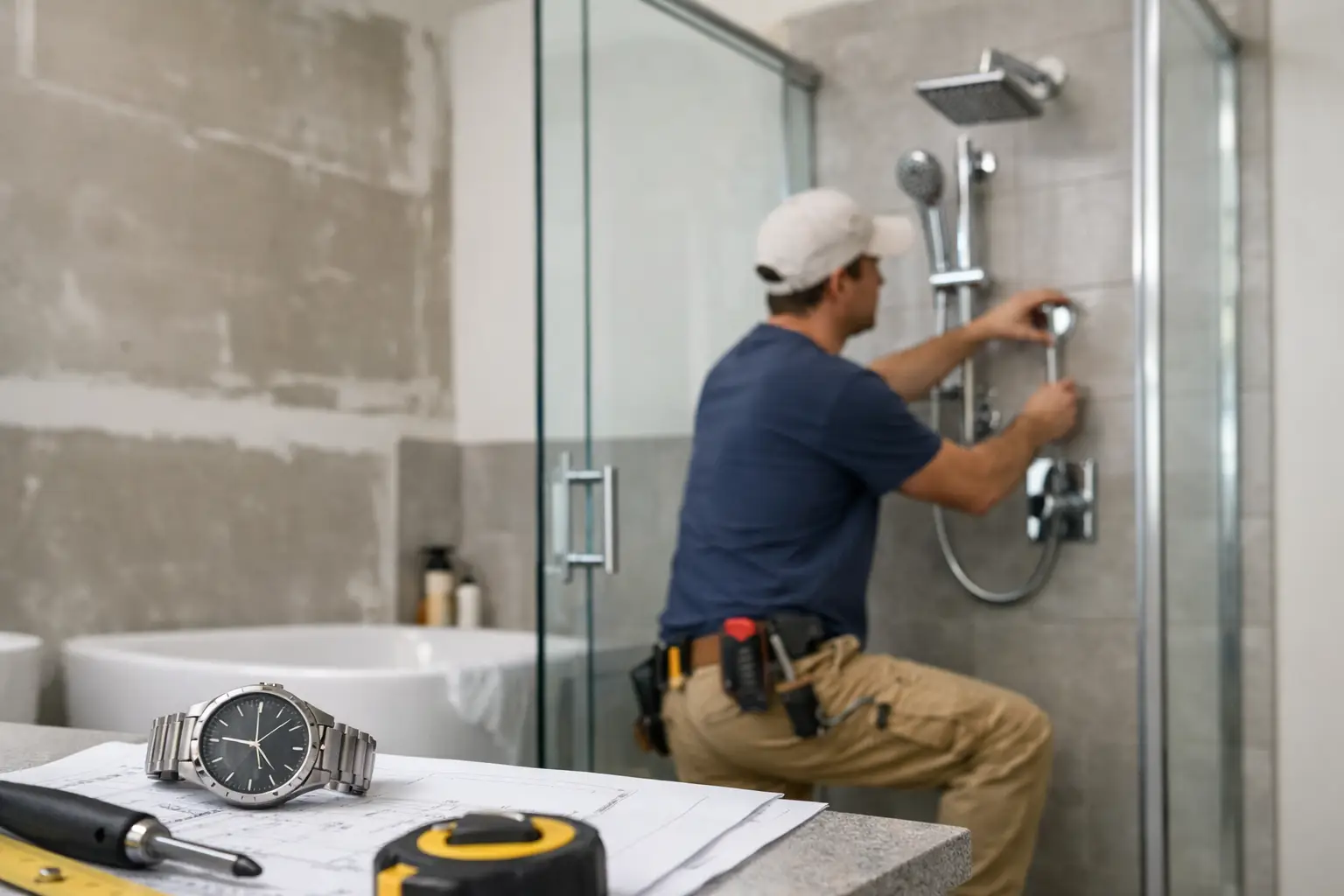
You can usually tell a remodeling company is about to waste your time when they refuse to answer one basic question upfront: how long shower installation takes. Homeowners do not need a vague “it depends” and a two-hour living room sales pitch. They need a realistic timeline, a clear explanation of what can speed things up, and an honest heads-up about what causes delays.
For most standard shower replacement projects, installation takes 1 to 3 days once the crew is on site. That is the practical answer. But like most things in remodeling, the details matter. A clean swap of an old unit for a new one moves much faster than a project that uncovers water damage, requires plumbing relocation, or includes custom tile work.
How long shower installation takes in real life
If you are replacing an existing shower with a new shower in roughly the same footprint, many professional installs are completed in one day or over two days. That is especially true when the wall system, base, fixtures, and measurements have been finalized ahead of time.
A more involved remodel usually lands in the 2 to 3 day range. This might include demolition, prep work, updating the valve, installing new wall panels, sealing everything correctly, and handling cleanup. If the installer opens the walls and finds rot, mold, or plumbing that is not up to code, the timeline can stretch beyond that.
This is why the best answer is not a fake promise. It is a range with context.
What affects how long shower installation takes?
The biggest factor is the type of project. A straightforward replacement is fast. A full rework is not.
If your old shower is being removed and replaced with a similar setup, the crew can often move quickly because the plumbing is already where it needs to be. If you want to move the drain, switch from a tub to a walk-in shower, change wall dimensions, or add built-in features, that adds labor and coordination.
Material choice matters too. Low-maintenance wall systems are generally faster to install than fully tiled showers because they involve fewer individual pieces, less cutting, less grout work, and less curing time. Tile can look great, but it usually takes longer and introduces more places for delay.
Then there is the condition of the bathroom behind the walls. Homeowners rarely know what is hiding there, and no honest installer will pretend otherwise. If the crew finds soaked subflooring, damaged studs, old leaks, or outdated plumbing connections, those issues have to be handled before the new shower goes in. That extra work protects the finished result, but it can add a day or more.
A basic replacement timeline
A standard replacement often follows a simple rhythm. Day one may cover demolition, disposal, inspection, and prep. If conditions are good, the installer may also set the shower base and begin wall installation the same day.
Day two is often for finishing the wall system, installing fixtures, sealing joints, testing plumbing, and cleaning up. In some cases, everything wraps in a single day. In others, a return visit is needed to complete final details or allow materials to set properly.
A more complex project timeline
A larger project can take 3 days or longer. If plumbing needs to be rerouted, if framing needs correction, or if specialty accessories are being added, the schedule gets less predictable. The same goes for custom glass, which is often measured after the main install and completed on a later date.
That does not mean the project is going badly. It just means the scope is bigger than a simple swap.
The timeline before installation matters too
When people ask how long shower installation takes, they often mean the on-site construction time. That is fair, but it is only part of the story.
There is also the lead-up: design selections, measuring, manufacturing or ordering materials, and scheduling the install date. In many remodeling companies, this stage drags on because the process is built around sales appointments, back-and-forth pricing games, and slow internal handoffs.
A more modern process cuts that dead time. If you can choose your wall style, fixtures, and accessories online, see transparent pricing right away, and get scheduled without waiting for a commissioned salesperson to “check with the manager,” the overall project moves faster even if the physical installation still takes 1 to 3 days.
That distinction matters. Homeowners do not just care about how many hours someone is in the bathroom. They care about how long the entire project disrupts their life.
What can slow a shower installation down?
Some delays are avoidable. Others are not.
Poor planning is a major one. If measurements are off, materials are missing, or fixture selections are still changing at the last minute, the install day can get derailed fast. This is where old-school remodeling companies often create their own chaos. They overpromise, under-document, and leave homeowners chasing answers.
Hidden damage is the classic unavoidable delay. Water has a way of turning a small issue into a bigger one behind finished walls. The installer may remove the old shower and find mold, rotted framing, or a soft subfloor. You do not want a company covering that up just to stay on schedule.
Permit requirements can also affect timing in some areas, especially if plumbing changes are involved. And if your home is older, code updates may be required before the shower can be completed.
Fast is good. Rushed is expensive.
There is a difference between an efficient install and a rushed one. Homeowners should want the first and avoid the second.
A well-run shower remodel feels organized. The crew arrives with the right materials, protects the work area, removes the old unit carefully, handles prep correctly, and installs the new system with attention to waterproofing and fit. That can be fast because the process is dialed in.
A rushed job skips prep, ignores wall conditions, and treats sealing like an afterthought. That is how you end up with leaks, movement, cracking, and repairs that cost more than doing it right the first time.
Speed only has value when it comes with quality control.
How to get a more accurate timeline before you commit
The best way to avoid surprises is to ask better questions early. Not just “How long will it take?” but “What would make it take longer?” A trustworthy company should be able to explain the likely range, the factors that affect it, and what happens if hidden damage shows up.
You should also ask whether the quote is based on a standard replacement or assumes extra work. Some companies advertise a one-day install as if every project fits that mold. That is marketing, not planning.
A transparent remodeling process should make the timeline feel understandable, not mysterious. You should know what is being installed, when materials will be ready, what the crew expects to do each day, and what conditions could change the schedule.
So, how long should you expect?
For a typical shower replacement, expect 1 to 3 days of installation once work begins. If the project is straightforward, one day is possible. If the scope is larger or hidden issues appear, it can take longer.
The smarter question is not just how fast the shower can be installed. It is whether the company has built a process that respects your time before, during, and after installation. That is where homeowners usually win or lose.
No one wants a bathroom remodel that turns into a drawn-out production. They want clear pricing, a realistic schedule, professional installation, and a finished shower that looks sharp and holds up. That is not asking too much. It is the baseline.
If a company cannot explain the timeline clearly, they probably cannot manage the project clearly either. Choose the team that gives you straight answers before they ever pick up a tool.