
A shower can look brand-new on installation day and become a cleaning project six months later. The difference is rarely your cleaning routine. It is usually the hardware: too many seams, hard-to-reach spray nozzles, glossy finishes that show every water spot, and doors full of tracks that trap mildew. Choosing the best shower fixtures for easy cleaning means choosing fewer places for soap scum and mineral buildup to hide.
That matters even more in a remodel. Once a fixture is installed behind finished wall panels, replacing it is not a casual weekend task. Make the low-maintenance choices before the installation date, not after you are tired of scrubbing around a showerhead you already regret.
What Makes a Shower Fixture Easy to Clean?
Easy-clean fixtures are not necessarily the cheapest or the most complicated. In fact, simpler is usually better. Look for smooth surfaces, minimal joints, accessible controls, and components you can wipe without taking half the shower apart.
Water quality matters, too. In much of Ohio and the Midwest, hard water can leave mineral deposits on showerheads, handles, glass, and metal trim. A fixture that performs beautifully in a showroom can become frustrating at home if its design holds water or has tiny crevices around the controls.
The right choice depends on who uses the shower and how. A family shower needs flexibility and durability. A low-threshold or aging-in-place shower may benefit from a handheld showerhead and lever controls. But every homeowner can benefit from hardware that does not turn routine upkeep into a Saturday chore.
The Best Shower Fixtures for Easy Cleaning
1. A Handheld Showerhead With Silicone Nozzles
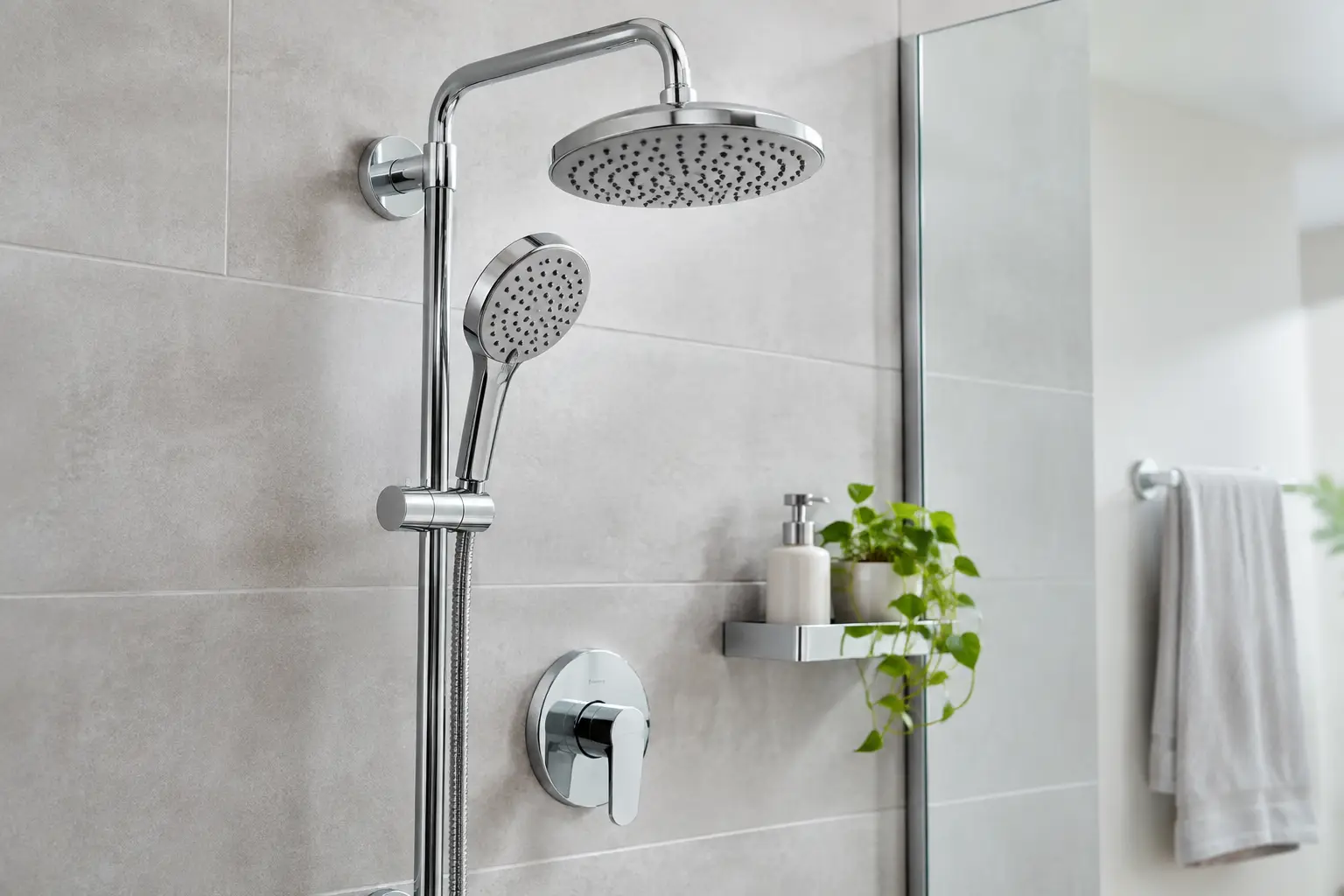
A handheld showerhead is one of the smartest upgrades for cleaning the shower itself. You can direct the spray at wall panels, corners, a built-in seat, and the tub or shower floor instead of filling a bucket or awkwardly rinsing with a cup. It is practical, not flashy, and that is exactly the point.
Prioritize soft silicone spray nozzles. When mineral deposits appear, you can often rub the nozzles with your fingers or a soft cloth to break them loose. Rigid plastic nozzles with tiny holes tend to clog more stubbornly, especially where hard water is common.
Choose a hose that does not have deep ribbing or exposed areas that collect grime. A smooth, durable hose is easier to wipe down. Also, make sure the docking bracket is secure and easy to reach. A handheld showerhead only helps if it is convenient enough to use every week.
2. A Simple Fixed Showerhead, Not a Multi-Part Tower
A fixed showerhead with a broad, smooth face is often the lowest-maintenance option. It has fewer moving parts than a shower tower or body-spray system, which means fewer seals, connections, and surfaces to clean.
This does not mean you have to settle for a weak spray. Look for a well-designed showerhead with silicone nozzles and a face that is easy to access. A slightly angled arm can also make it easier to wipe the showerhead and rinse the wall behind it.
Body sprays and elaborate rain systems can create a spa-like look, but they come with a trade-off. More components mean more cleaning and more places for mineral buildup to affect water flow. If low maintenance is the priority, put your budget into a quality main showerhead and a handheld rather than filling the wall with extra fixtures.
3. A Single-Handle Pressure-Balancing Valve
For most households, a single-handle valve is the best combination of simple, clean, and comfortable. One lever controls temperature and flow, so there are fewer trim pieces and less hardware around the wall to wipe.
A pressure-balancing valve also helps reduce sudden temperature swings when someone flushes a toilet or starts the dishwasher. That feature is about comfort and safety, but it also supports a cleaner-looking design: one well-built control instead of separate hot and cold handles.
Thermostatic systems can be a great upgrade for homeowners who want precise temperature control. Just avoid adding extra controls unless you truly need separate functions, such as operating multiple shower outlets independently. More controls can be useful. They are not automatically better.
4. A Durable Brushed or Satin Finish
The finish you choose affects how often your shower looks dirty. Polished chrome is classic, bright, and widely available, but it can show water spots and fingerprints quickly. Matte black makes a strong design statement, yet soap residue and mineral marks can be obvious depending on your water and lighting.
Brushed nickel, satin nickel, or brushed stainless finishes are often more forgiving. Their softer texture helps disguise everyday spotting between cleanings without looking dull. They also work well with a wide range of wall colors and hardware styles, so you are less likely to feel locked into a trend.
No finish is maintenance-free. The real goal is a finish that tolerates normal life without demanding constant polishing. Use a soft cloth and mild soap when needed. Harsh abrasives can damage protective coatings and create tiny scratches that hold onto grime.
5. A Smooth, Low-Profile Drain Cover
The drain is easy to overlook until hair and soap residue start collecting around it. A low-profile drain cover with a simple removable insert makes cleaning faster than a decorative grate with narrow slots and multiple layers.
For a curbless or low-threshold shower, a linear drain can create a clean, modern look and support proper floor drainage. But it should have an accessible hair trap or removable cover. A drain that looks sleek but requires tools and frustration every time it needs attention is not a low-maintenance feature.
Ask where the drain will sit and how it will be cleaned before finalizing the layout. This is one of those details traditional remodel sales pitches often skip while focusing on finishes and monthly-payment theatrics. You will notice it later.
Fixtures That Look Great but Demand More Work
There is nothing wrong with choosing a high-style fixture package. The problem is pretending every option carries the same upkeep. If you want the easiest shower to maintain, think carefully before adding several body sprays, deeply textured handles, exposed shower pipes, or heavily faceted trim.
Frameless glass doors deserve a special mention. They can make a shower feel open and premium, but clear glass shows water spots. A squeegee after each shower will keep it looking sharp. If nobody in your household is likely to do that, a quality shower curtain, frosted glass, or a more open walk-in layout may be the more realistic choice.
Likewise, rainfall showerheads can be relaxing, but oversized flat models may drip after use and can be harder to reach for cleaning. They work best when they are accessible, paired with an easy-clean handheld, and selected for actual daily use rather than a showroom photo.
Design the Whole Shower for Less Scrubbing
Fixtures are only one part of the equation. Even the best hardware cannot compensate for a shower built around difficult surfaces. Pair easy-clean fixtures with smooth, nonporous wall panels rather than grout-heavy tile if you want to cut down on maintenance. Fewer grout lines mean fewer places for mildew and discoloration to take hold.
Keep shelves purposeful. One or two built-in niches are easier to manage than crowded wire caddies hanging from the showerhead. Choose a niche location that is reachable but not directly in the main spray path, which helps prevent bottles from sitting in pooled water.
Also consider the placement of the handheld shower. Installed near a bench or shower entry, it can make cleaning the entire enclosure much easier. Small layout decisions like this do more for long-term convenience than an expensive decorative upgrade.
At ModernDayBath, the better approach is to make these choices upfront with clear options and transparent pricing, not after a drawn-out sales appointment designed to push the most expensive package. A shower remodel should give you more control over your home, not more work once it is finished.
A Simple Maintenance Routine That Actually Works
Even low-maintenance fixtures need light care. The good news is that regular, small steps prevent the deep-cleaning cycle most homeowners hate. After showering, rinse away visible soap residue and give glass a quick squeegee if you have it. Once a week, wipe the fixtures with a microfiber cloth and a mild cleaner that is safe for the finish.
If water flow begins to weaken, rub the silicone nozzles and check the showerhead for mineral buildup. Do not reach first for harsh chemicals or abrasive pads. They can damage finishes and create a bigger problem than the deposits you were trying to remove.
The best fixture is not the one with the most features. It is the one that fits your routine, cleans up quickly, and still looks intentional years after installation. Choose hardware you will be happy to use, not hardware you will be stuck cleaning around.