
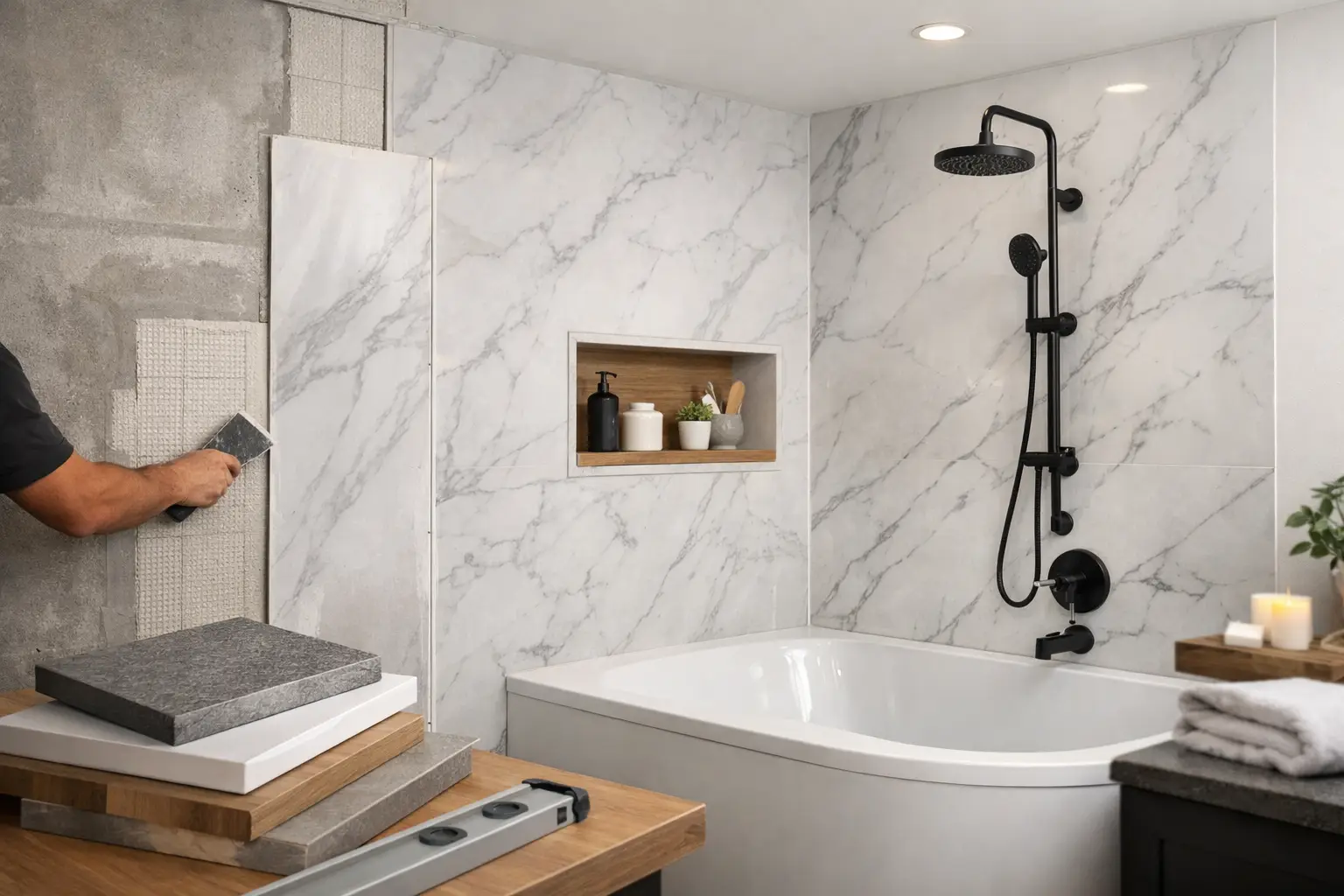
A bathroom wall should not become your weekend maintenance project. If you are tired of scrubbing grout lines, watching caulk discolor, or worrying about water getting behind old tile, this bath wall panels guide gives you the straight answer: wall panels can be a practical, premium-looking replacement for tile, but the material and installation quality matter more than the sales pitch.
Traditional remodel companies often make the process harder than it needs to be. They send a salesperson to your house, show you a high starting price, then offer a supposedly limited-time discount. That tells you nothing useful about whether the wall system will hold up. Start with the product, the installation plan, and a price you can understand.
What are bath wall panels?
Bath wall panels are large, waterproof sections installed over bathroom walls around a shower, tub, or tub-shower combination. Unlike tile, which relies on many individual pieces and grout joints, panels create a mostly continuous surface with far fewer seams.
Most quality systems are designed to go directly over sound existing walls or over properly prepared backing. They can be used for a full shower conversion, a replacement bathtub surround, or an update to a worn-out alcove tub. The finished look ranges from clean white and soft neutral tones to stone-inspired patterns that give a room more character without the upkeep of natural stone.
The appeal is simple: less grout, fewer places for moisture and mildew to settle, and a faster installation path than a fully tiled surround. That does not mean every panel product is equal. Some are made for temporary cosmetic updates. Others are built to handle daily water exposure for years.
Bath wall panels guide: choosing the right material
Material affects appearance, durability, thickness, and price. It also determines whether you are buying a real renovation solution or a thin cover-up that may not age well.
Acrylic wall systems
Acrylic is a common choice for shower and bath surrounds because it is nonporous, smooth, and easy to clean. Better acrylic systems have a substantial feel, resist staining, and maintain their finish without requiring grout sealing. They work especially well for homeowners who want a bright, clean surface and minimal maintenance.
Acrylic is not indestructible. Abrasive cleaners can dull it, and a low-grade, overly thin panel may flex more than you want. Ask what the panel is made of, how thick it is, and whether the manufacturer backs both the product and the installation.
Composite and engineered wall panels
Composite panels can deliver a more dimensional, stone-like look. Depending on the product, they may use a durable surface layer over a solid core or engineered backing. They can be an excellent fit when the goal is a higher-end visual without the maintenance demands of porous natural stone.
These systems are often heavier and may cost more than basic acrylic. That can be worthwhile if appearance is a top priority, but only if the installer is experienced with the specific material. A beautiful panel installed with poor seam work is still a water-risk.
Fiberglass and thin plastic surrounds
Budget surrounds made from fiberglass or thin plastic are widely available. They can solve an immediate cosmetic problem, particularly in a lightly used bathroom or rental setting. But the lowest-priced option is rarely the best long-term value for a primary bathroom.
Thin products can feel flexible, show wear sooner, and offer fewer design choices. If a quote looks dramatically lower than every other option, find out exactly what material is being installed and whether prep work, fixtures, demolition, and warranty coverage are included.
Panels versus tile: the trade-off homeowners should know
Tile has a place. It offers nearly unlimited colors, shapes, patterns, and layout options. A well-built tile shower can look exceptional. It is also labor-intensive, dependent on careful waterproofing behind the tile, and requires regular grout maintenance.
Wall panels reduce those maintenance points. With fewer joints, there is less grout to clean and fewer places for mildew to take hold. They also allow many bath remodels to move faster, which matters when your household cannot give up a bathroom for weeks.
The trade-off is customization. Tile gives you more freedom to create a one-of-one design. Panels offer curated colors, patterns, and configurations instead. For most homeowners, that is not a compromise. It is a sensible way to get a polished result without turning a shower renovation into a complicated construction project.
What makes a panel installation last
The panel itself is only one part of the system. Water management, wall preparation, adhesive selection, seam sealing, and fixture work determine whether the renovation performs as it should.
First, the installer should inspect for underlying issues. Soft walls, active leaks, mold damage, or failing plumbing should not be hidden behind new panels. Covering a problem does not fix it. It gives the problem more time to spread where you cannot see it.
Next comes proper surface preparation. Depending on the project, the installer may remove the old surround, repair damaged areas, level the walls, or install appropriate backing. Panels must sit flat and be bonded according to the system’s requirements. Corners, edges, plumbing penetrations, and horizontal seams need careful sealing.
Finally, the fixtures matter. A new wall system paired with an old leaking valve is not a complete remodel. If you are replacing the showerhead, valve trim, shelving, grab bars, or doors, make those decisions before installation begins. Retrofitting accessories later can be possible, but planning ahead produces a cleaner result.
Design choices that improve daily use
A wall system should make the bathroom easier to use, not just easier to photograph. Think about how you actually shower.
Built-in shelving or recessed storage keeps bottles off the tub edge. A handheld showerhead adds flexibility for rinsing, cleaning, kids, and pets. Grab bars can be integrated in a way that looks intentional rather than clinical. If accessibility is a concern, a low-threshold shower or tub-to-shower conversion may make more sense than simply replacing the walls around an existing tub.
Color deserves a practical decision, too. Bright white can make a compact bathroom feel larger, but warmer neutrals and subtle stone patterns tend to hide water spots better. Darker panels can look sharp, though they may show soap residue more readily in areas with hard water.
How much do bath wall panels cost?
There is no honest single price because the scope changes from bathroom to bathroom. A basic tub surround replacement costs far less than a full shower conversion with demolition, plumbing changes, custom accessories, doors, and accessibility upgrades.
The bigger issue is quote clarity. A trustworthy estimate separates the major choices: wall material, fixture package, accessories, installation, and any needed repair work. You should be able to see how changing a design choice changes the price. You should not have to sit through a three-hour living-room presentation to find out.
Be cautious with offers that lead with an extreme discount rather than a clear starting price. A discount means little if the original number was inflated. Ask whether the quote includes removal and disposal, wall repair, plumbing adjustments, permits where required, and warranty coverage. Then compare the complete project, not a teaser number.
ModernDayBath takes a different approach: design your shower online, see pricing as you make selections, and move forward without the commissioned in-home sales routine. That is how a remodel purchase should work – on your schedule, with fewer surprises.
Cleaning and maintaining wall panels
Low maintenance is not no maintenance. Rinse the walls after use when practical, use a soft cloth or nonabrasive sponge, and clean with a product approved for your panel material. Avoid harsh scouring powders, steel wool, and aggressive solvents unless the manufacturer specifically says they are safe.
Pay attention to caulked joints and seals around fixtures. A good installation should keep water where it belongs, but caulk is a serviceable component, not magic. If you see cracking, separation, or persistent discoloration, address it early. Small maintenance is far less expensive than ignored water intrusion.
The decision should feel simple
The right wall panels give you a cleaner bathroom, less grout work, and a finished look that holds up to everyday life. But do not let a polished sample board make the decision for you. Confirm the material, understand what is included, and choose an installer who treats waterproofing and workmanship as seriously as appearance.
You deserve a bathroom remodel that respects your time before it earns your money. Choose the system that fits your home, ask direct questions, and expect direct answers.