
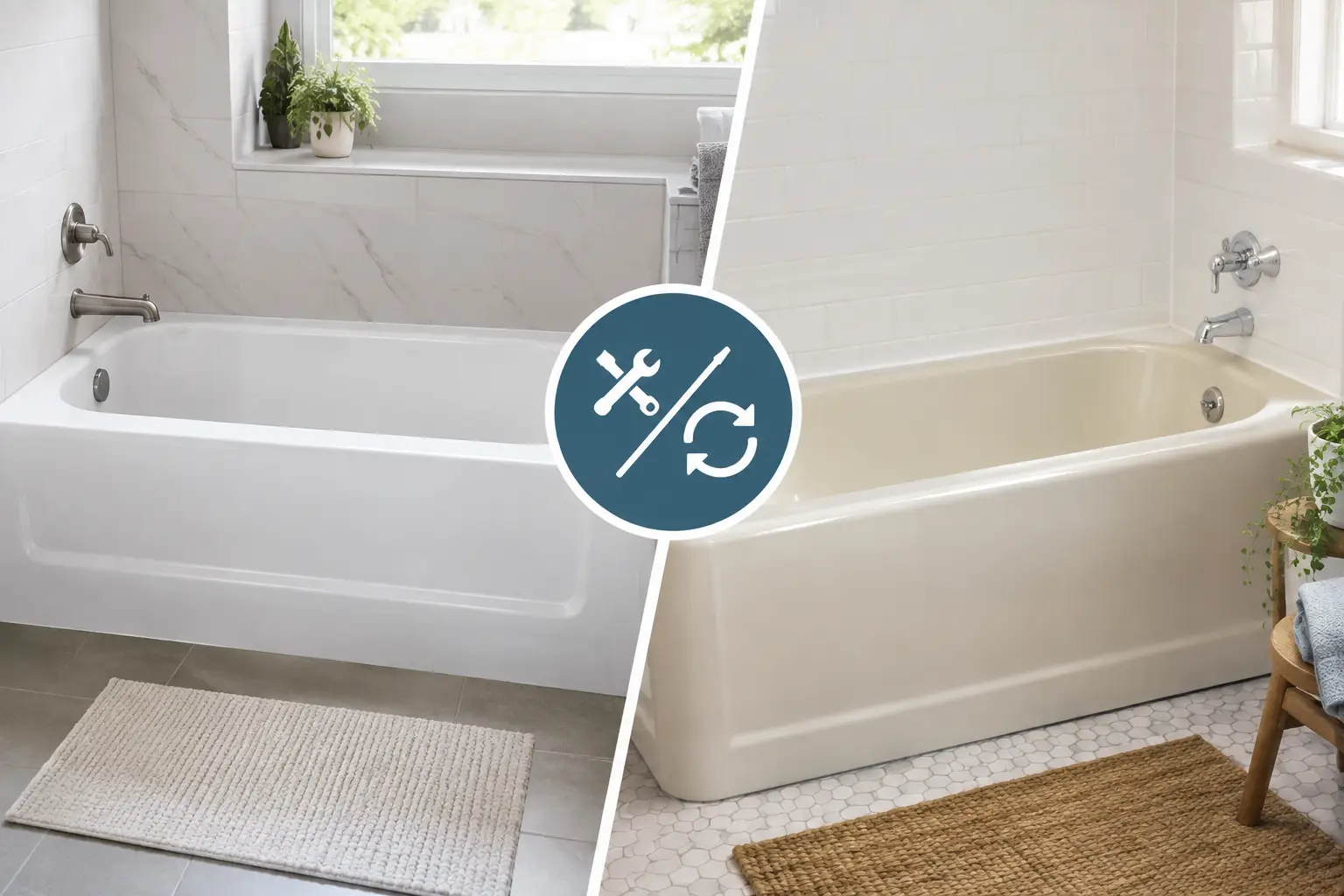
A bathtub can look tired long before it is truly finished. Yellowed color, scratches, dull shine, or a stubborn stain can make refinishing tempting because it promises a fast visual reset. But bath replacement versus refinishing is not simply a question of which option costs less today. It is a question of what is happening beneath the surface, how long you plan to stay in the home, and whether you are solving a cosmetic issue or postponing a bigger one.
The wrong choice can leave you paying twice: once for a quick coating and again when the tub, surround, plumbing, or subfloor needs real attention. The better choice is the one that fits the condition of your bathroom and gives you a result you will not regret six months from now.
Bath Replacement Versus Refinishing: The Core Difference
Refinishing, sometimes called reglazing or resurfacing, applies a new coating over the existing tub. It can cover discoloration, light surface scratches, minor chips, and worn-looking enamel or fiberglass. When the tub is structurally sound and the surrounding area is in good condition, refinishing can improve the appearance without removing the fixture.
Replacement removes the old tub or converts the bathing area into a new shower or bath system. It allows you to address the walls, base, fixtures, accessibility, drainage, and hidden damage at the same time. It is more involved, but it creates a new bathing space rather than a cosmetic layer over an old one.
That distinction matters. A refinished tub may look clean and bright. A replacement can change how the room functions, how easy it is to maintain, and how confidently you can use it every day.
When Refinishing Makes Sense
Refinishing is a reasonable option when the issue is truly limited to the surface. Maybe you have a cast-iron tub with a few chips, an older fiberglass unit that has lost its shine, or a rental property that needs a presentable update without a full remodel.
It also works best for homeowners who need a short-term improvement. If you are preparing to sell soon, managing a tight budget, or planning a larger renovation later, a professionally refinished tub can buy time. The key is being honest about what you are buying: a refreshed finish, not a new bathtub.
A quality refinishing job requires meticulous prep. The surface must be cleaned, repaired, sanded, and coated under controlled conditions. Poor prep can lead to peeling, rough texture, discoloration, or a finish that fails early. The lowest bid is not always the bargain it appears to be.
Refinishing also comes with care requirements. Abrasive cleaners, bath mats with suction cups, harsh chemicals, and dropped objects can damage the new coating. If you want a bathroom that stands up to normal family use with less babysitting, that limitation deserves real weight in your decision.
When Bath Replacement Is the Better Call
Replacement is usually the smarter move when the tub has cracks, flexes underfoot, leaks, drains poorly, or has repeated coating failures. Those are not surface-level problems. Covering them up may improve the photo, but it will not improve the bathroom.
It is also the better choice when the surrounding walls are dated, stained, difficult to clean, or showing signs of moisture intrusion. A tub does not exist in isolation. Water gets behind failing caulk, old grout, loose wall panels, and worn fixtures. Once moisture reaches the wrong places, the repair can grow more expensive the longer it waits.
A new bath or shower system lets you make functional upgrades that refinishing cannot touch. You can choose a low-threshold shower for easier entry, add built-in shelving, replace hard-to-clean tile with nonporous wall panels, update fixtures, and select a layout that works for the people actually using the space.
For many homeowners, the biggest benefit is not the new look. It is the end of the recurring maintenance cycle. No more scrubbing stained grout, touching up caulk every few months, or wondering whether that soft spot near the tub is becoming a bigger issue.
Replacement is not always a full gut renovation
Traditional remodelers often frame the decision as all or nothing: live with the old bath or prepare for weeks of disruption and a giant price tag. That is an outdated sales story.
Many bath replacements focus on the wet area only. The existing footprint can often remain, while the tub or shower, wall system, fixtures, and accessories are replaced. This approach can deliver a major visual and functional change without rebuilding the entire bathroom.
The right scope depends on what is behind the walls and under the base. A reputable installer should inspect for damage and explain what is included before work begins. Vague allowances and surprise change orders are not a normal part of a transparent remodeling experience.
Compare the Real Cost, Not Just the Starting Price
Refinishing usually has a lower upfront price than replacement. That is its strongest advantage. But the comparison gets more useful when you factor in durability, maintenance, warranty coverage, and the likelihood that you will need another update later.
A refinished surface may last several years with careful use, though results vary based on the original material, preparation, coating quality, ventilation, and cleaning habits. A replacement system is a larger investment, but it is designed as a long-term solution. It can also remove several expenses from the future equation, including repeated repairs, recoating, grout work, and patching water-related damage.
Think about your timeline. If you plan to remain in your home for years, a short-lived cosmetic fix may not be the economical option. If you need an immediate, limited-budget refresh and the tub is sound, refinishing may be exactly the right call.
The answer is not automatically replacement. It is replacement when the value of a durable, easier-to-clean bathing space outweighs the savings of a temporary finish.
Questions to Ask Before You Decide
Start with the condition of the tub itself. Are there cracks, rust, soft spots, persistent leaks, or visible repairs? Next, look at the walls and joints. Is the caulk failing? Is there missing grout, staining, mildew that returns quickly, or water damage around the tub edge?
Then consider daily use. Is stepping over the tub wall becoming uncomfortable? Do you have enough storage for shampoo and soap? Are you tired of cleaning tile and grout? A bathroom should work for your life, not force you into a maintenance routine you resent.
Finally, ask for clear pricing and a clear scope. You should know what materials are being installed, who performs the work, what happens if hidden damage is found, and what warranty protects the finished project. If a company needs a long in-home presentation before it will reveal a price, that is not customer service. That is pressure disguised as consultation.
A Better Way to Plan a Bath Update
ModernDayBath was built for homeowners who want the facts before the sales pitch. You should be able to explore bath and shower options, see pricing as selections change, and make an informed decision without giving up an afternoon to a commissioned salesperson.
Whether you choose refinishing or replacement, do not let urgency make the decision for you. A stained tub is frustrating, but a rushed project is worse. Match the solution to the condition of the space, the way you use it, and the number of years you expect it to serve you.
If your current tub is solid and you only need a temporary appearance upgrade, refinishing can be a practical bridge. If you want a clean, low-maintenance bathroom that feels new every morning, replacement is often the move that stops the cycle for good.