
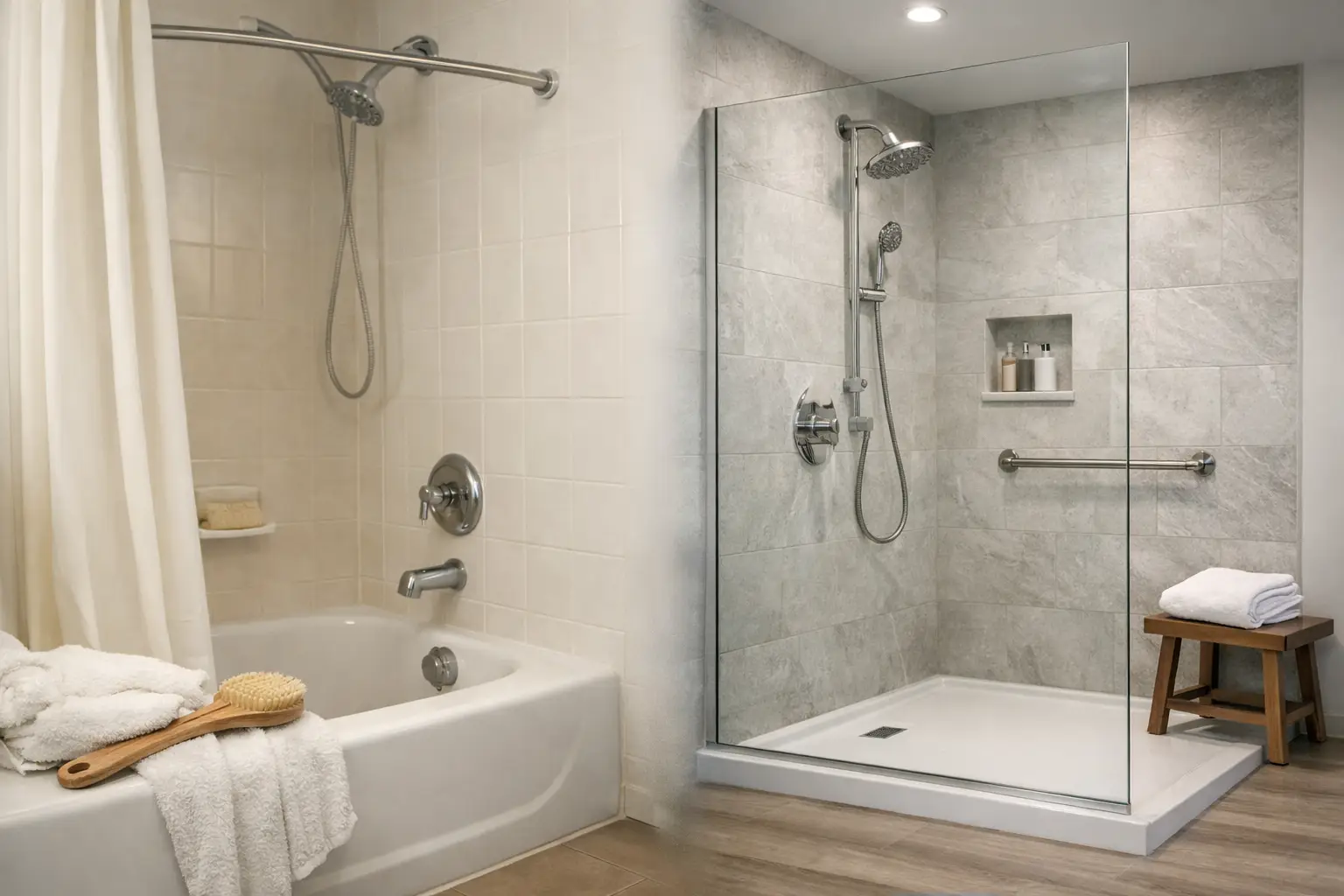
A bathtub that mostly holds shampoo bottles is taking up valuable space. For many Akron homeowners, the better bathroom is not bigger – it is easier to enter, easier to clean, and built around the way they actually start and end the day. An Akron tub to shower conversion can do exactly that without turning your home into a months-long construction zone.
The catch is that this category has earned a reputation for confusing quotes, marathon sales appointments, and a price that somehow changes after the “special discount” expires. You should not have to sit through a sales pitch to find out whether a shower remodel fits your home and budget.
Why homeowners replace tubs with showers
A tub-to-shower conversion is a practical change, not a compromise. A walk-in shower can make a bathroom feel more open, particularly in the compact hall baths common throughout older Akron-area homes. It also removes the high tub wall that can become harder to step over with age, an injury, or limited mobility.
Cleaning is another major reason. Traditional tile can look great, but grout lines demand attention. A quality wall system with large, nonporous panels has far fewer places for soap residue and mildew to settle. That means less weekend scrubbing and fewer worries about moisture getting behind the wall.
There is a trade-off. If your house has only one bathtub, removing it can matter for families with young children and may affect how some future buyers view the home. If you have another tub elsewhere, converting the least-used one is usually an easier decision. The right answer depends on how you live now, not on a one-size-fits-all remodeling rule.
What an Akron tub to shower conversion includes
A real conversion is more than placing a showerhead above an old tub. The existing tub is removed, the surrounding area is evaluated, plumbing is adjusted when needed, and a new shower base, wall system, fixtures, and glass or curtain solution are installed.
The best projects begin with the shower footprint. Keeping the new shower close to the existing plumbing is often the simplest route and can control costs. Expanding the shower, moving drains, or changing walls may be possible, but those choices add labor and should be priced clearly upfront.
Your finish selections shape both the look and the daily experience. Wall color and texture set the tone, while shelves, corner caddies, grab bars, handheld showerheads, and seating determine whether the shower works for your routine. A built-in shelf is not just a nice extra if several people share the bathroom. It is the difference between organized storage and bottles lined along the floor.
Low-threshold shower bases are especially popular because they create a cleaner entry and support aging-in-place goals without making the room feel clinical. If accessibility is a priority, discuss it at the beginning. Retrofitting the right safety features later is rarely as efficient as planning for them from day one.
What affects the cost?
There is no responsible single price for every conversion. A basic replacement in a straightforward alcove costs differently from a larger, custom-configured shower with premium fixtures and plumbing changes. What matters is seeing exactly what drives the number before you commit.
Four factors typically have the biggest impact:
- Shower size and layout: Reusing an existing tub alcove generally requires less work than widening the opening or moving walls.
- Plumbing condition and changes: Older homes can reveal aging supply lines, drain issues, or water damage once the tub comes out. Moving fixtures also adds complexity.
- Materials and features: Wall panels, shower bases, glass doors, fixture finishes, niches, seating, and accessibility upgrades all influence the final scope.
- Preparation and repair work: A contractor should account for demolition, subfloor or wall repair when necessary, waterproofing, and proper installation – not hide those essentials behind a suspiciously low starting price.
Be cautious with quotes that lean heavily on vague language such as “starting at” or a discount that only exists if you sign before the representative leaves your kitchen. That is not transparency. It is pressure dressed up as a promotion.
A clear quote should show the design choices behind the price and explain what is included in installation. Ask what happens if hidden damage is found, whether permits are needed for the work, how long installation is expected to take, and what warranty protects the finished shower. Direct answers matter more than a flashy percentage-off offer.
Design for daily life, not a showroom photo
A great shower looks intentional, but it also handles the unglamorous details. Think about who uses it, where towels go, whether the door swing will interfere with the vanity, and how much privacy you want. A beautiful glass enclosure may be right for one bathroom, while a simple curtain rod is the smarter choice for another.
For a smaller Akron bathroom, light wall finishes and a clear glass panel can help preserve visual space. A sliding glass door can be useful where a swinging door would crowd the room. If easy cleaning is the top priority, consider the hardware and glass treatment as closely as the wall color. More glass can create a more open look, but it also means more surface to wipe down.
Fixtures deserve the same practical thinking. A fixed showerhead is simple and familiar. A handheld option makes rinsing the shower easier and can be helpful for children, pets, or users who prefer to sit. Pairing both can offer flexibility, provided the plumbing configuration supports it.
A better way to plan the project
Bathroom remodeling should not require a daylong appointment with a commissioned salesperson. You should be able to explore styles, select features, and see how those decisions affect pricing without someone pushing a “today only” deal.
ModernDayBath was built around a more direct model: design online, see pricing as you make selections, place a small deposit, then schedule certified installation. No sales reps. No pressure. No waiting around for a quote that arrives after a staged consultation.
That approach does not eliminate the need for professional assessment. Your installer still needs to verify measurements, existing conditions, and the final project plan. It does eliminate the unnecessary theater that has become common in bathroom remodeling. Homeowners deserve control before they invite anyone into their home.
When comparing companies, do not just compare the opening number. Compare the buying experience, material quality, installation standards, timeline, and warranty. A lower quote can become expensive if it leaves out essential work or relies on materials that will be difficult to maintain. On the other hand, a premium price is not automatically proof of premium work – especially when it is padded with sales commissions, showroom overhead, and manufactured discounts.
Questions worth asking before you commit
Before scheduling a tub-to-shower conversion, get specific about the details that affect your home. Will the installer remove and dispose of the old tub? How will surrounding walls and floors be protected? What waterproofing method is used? Is the shower wall material designed to resist stains and mildew? Who handles permits if the project requires them? And if an issue comes up after installation, who answers the phone?
Also ask how the company communicates during the project. A short installation timeline is valuable only when the work is organized, the crew is prepared, and you know what to expect. Respect for your time should be part of the service, not a bonus.
The best conversion is not the one with the loudest discount. It is the one that gives you a safer, cleaner, more useful bathroom – with the price, process, and workmanship clear before work begins. Your bathroom should make mornings easier, not remind you how hard it was to buy it.