
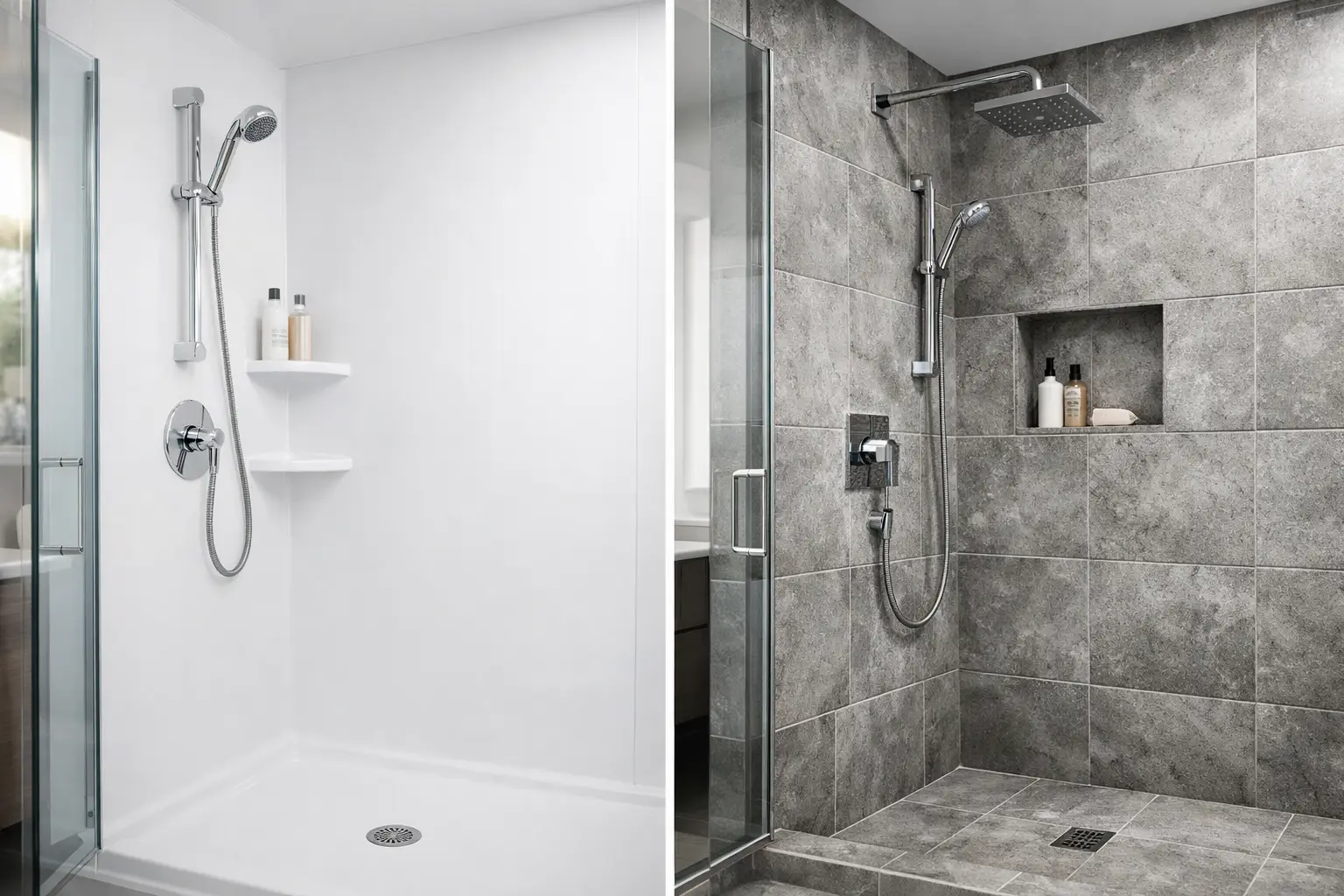
If you are weighing acrylic shower walls vs tile, you are probably not looking for a design lecture. You want to know what will look good, hold up, stay clean, and not turn your remodel into a drawn-out mess. Fair. This choice affects your budget, your maintenance routine, and how much friction you deal with before your new shower is actually finished.
A lot of bathroom companies make this decision sound more complicated than it is. They push whatever they sell, wrap it in showroom talk, and leave out the trade-offs. The better approach is simpler: compare how each material performs in the real world, not just under bright lights in a display.
Acrylic shower walls vs tile: the real difference
The biggest difference between acrylic shower walls and tile is not just appearance. It is how the shower behaves after install.
Tile is built from many individual pieces with grout lines between them. That gives you design flexibility and a classic custom look, but it also creates more places for water, soap residue, and mildew to collect. Acrylic wall systems use large, smooth panels. Fewer seams means less maintenance and fewer weak points.
That does not automatically make one option better for every home. It means they solve different problems. If your top priority is one-of-a-kind design, tile has an advantage. If your top priority is a clean-looking shower that is fast to install and easy to live with, acrylic usually pulls ahead.
What looks more premium?
This is where a lot of homeowners hesitate. They hear “acrylic” and picture a flimsy plastic surround from a builder-grade bathroom twenty years ago. That comparison is outdated.
Modern acrylic and composite wall systems can deliver a much more upscale look than old one-piece surrounds. Better finishes, realistic textures, and cleaner lines have changed the category. When installed well, they can look sharp, modern, and intentional – not cheap.
Tile still offers more design freedom. You can choose subway tile, oversized format tile, marble-look porcelain, stacked patterns, contrasting grout, and niche detailing that feels highly customized. If you want your shower to be the visual centerpiece of the bathroom, tile gives you more ways to create that effect.
But premium is not only about material. It is also about execution. Poor tile work looks bad fast. Uneven lines, sloppy grout joints, and mismatched corners can drag down the whole room. A well-designed acrylic system often looks better than mediocre tile because the finish is clean and consistent.
Cost is not just the material price
Homeowners often compare tile and acrylic as if they are buying boxes off a shelf. That is not how shower remodels work.
Tile usually costs more once labor enters the picture. The material itself can range from affordable to very expensive, but installation is where the number climbs. Tile requires surface prep, layout planning, cutting, waterproofing, grouting, sealing in some cases, and more labor hours overall. If you choose decorative details or complex patterns, the price moves up again.
Acrylic wall systems are generally more predictable. The materials are designed for shower applications, and installation tends to be faster and less labor-intensive. That often translates to a lower total project cost, or at least a clearer one.
This matters because the bathroom remodeling industry has a bad habit of blurring the real price until a salesperson is sitting at your kitchen table. If you are trying to make a clean, informed decision, acrylic is usually easier to price accurately upfront. Tile leaves more room for labor surprises, change orders, and “while we are in there” costs.
Installation time changes the whole experience
This is one of the biggest practical differences and one of the most overlooked.
Tile showers take longer. Even if the crew is excellent, there are more steps and more drying time involved. Waterproofing has to be done correctly. Tile has to be set. Grout has to cure. Depending on the scope, the process can stretch well beyond what many homeowners expect.
Acrylic wall systems are faster. Because the panels are manufactured for the application and cover large sections at once, installation is more streamlined. Less cutting. Less mess. Less waiting.
If this is your main bathroom, that speed matters. A shower remodel already disrupts your routine. The longer the project drags on, the more frustrating it gets. For homeowners who want the remodel done without turning the house upside down, acrylic has a clear edge.
Maintenance is where the gap gets obvious
If you hate scrubbing grout, tile is going to test your patience.
Tile can absolutely perform well over time, but it asks more from you. Grout lines need regular cleaning, and depending on the material and grout type, they may need sealing and periodic repair. Even with good maintenance, grout tends to show age before the tile itself does.
Acrylic walls are much easier to keep clean because the surface is smooth and nonporous. There are fewer seams, fewer crevices, and fewer places for soap scum to settle in. For busy households, older homeowners, or anyone who wants a low-hassle bathroom, that is a real benefit, not a small one.
This is where buyer priorities become clear. Some people are happy to trade more maintenance for a custom tile look. Others know they will resent that upkeep within six months. Be honest with yourself. The prettiest option on install day is not always the one you will be happiest with a year later.
Durability depends on the kind of wear you mean
Tile has a reputation for being the tougher option, and in some ways that is true. Properly installed tile can last a very long time. The surface is hard, and high-quality tile does not go out easily.
But durability is not just about hardness. It is also about vulnerability. Tile systems have grout lines, joints, and multiple installation layers that all have to work together. If water gets behind the tile because of a failure in waterproofing or grout maintenance, repairs can be expensive and invasive.
Acrylic walls are not as hard as tile, so they can be scratched or damaged by abuse. But because the system is simpler and less porous, it avoids some of tile’s most common long-term headaches. In many households, especially ones focused on practical use rather than luxury detailing, acrylic proves more dependable day to day.
So what lasts longer? A beautifully installed, well-maintained tile shower can last decades. A high-quality acrylic wall system can also deliver long service with less upkeep. The better question is which one fits the level of maintenance and risk you are actually willing to take on.
What about resale value?
This is where people often overestimate tile.
Yes, tile has cachet. Buyers recognize it, and in the right bathroom, it can feel upscale. But resale value is tied to the whole impression of the bathroom, not just whether the walls are tiled. A clean, modern, low-maintenance shower with a polished finish can absolutely appeal to buyers.
Most buyers are not doing a material purity test. They are reacting to how new, attractive, and functional the bathroom feels. If the acrylic shower looks current and the installation is professional, it can still support strong resale appeal.
The bigger resale mistake is choosing something that looks dated, poorly installed, or hard to maintain. That can happen with tile or acrylic.
When tile makes sense
Tile makes sense when design flexibility is your top priority and you are willing to pay for skilled labor. It is also a solid fit if you are creating a high-end custom bathroom where the shower is meant to be a standout feature.
It can be worth it in homes where architectural character matters, or when you have a very specific aesthetic that panel systems cannot match. If you are comfortable with longer installation times and more cleaning, tile may still be the right call.
Just do not choose tile because the industry trained you to think anything else is second-rate. That talking point survives because tile projects are often more expensive, not because they are always better for the homeowner.
When acrylic makes more sense
Acrylic is often the smarter choice when you want a premium-looking shower without the upkeep and unpredictability of tile. It works especially well for busy homeowners, aging-in-place remodels, second bathrooms, and primary bathrooms where convenience matters as much as style.
It is also a strong fit if you value speed, straightforward pricing, and a remodel process that respects your time. That is a big reason more homeowners are moving toward modern wall systems instead of signing up for a long, messy renovation just to get a shower they then have to baby.
Companies like ModernDayBath built around this shift are responding to what customers actually want: good design, professional installation, less hassle, and pricing that does not depend on an hours-long sales performance in your home.
So which one should you choose?
If you want the broadest design freedom and you are comfortable paying more and maintaining more, tile can be worth it. If you want a cleaner process, easier upkeep, and a polished result without unnecessary complications, acrylic shower walls are hard to beat.
There is no prize for choosing the higher-maintenance option. The right shower wall is the one that fits your life after the installer leaves. Pick the material that respects your time as much as your budget, and you will be a lot happier every morning you step into it.