
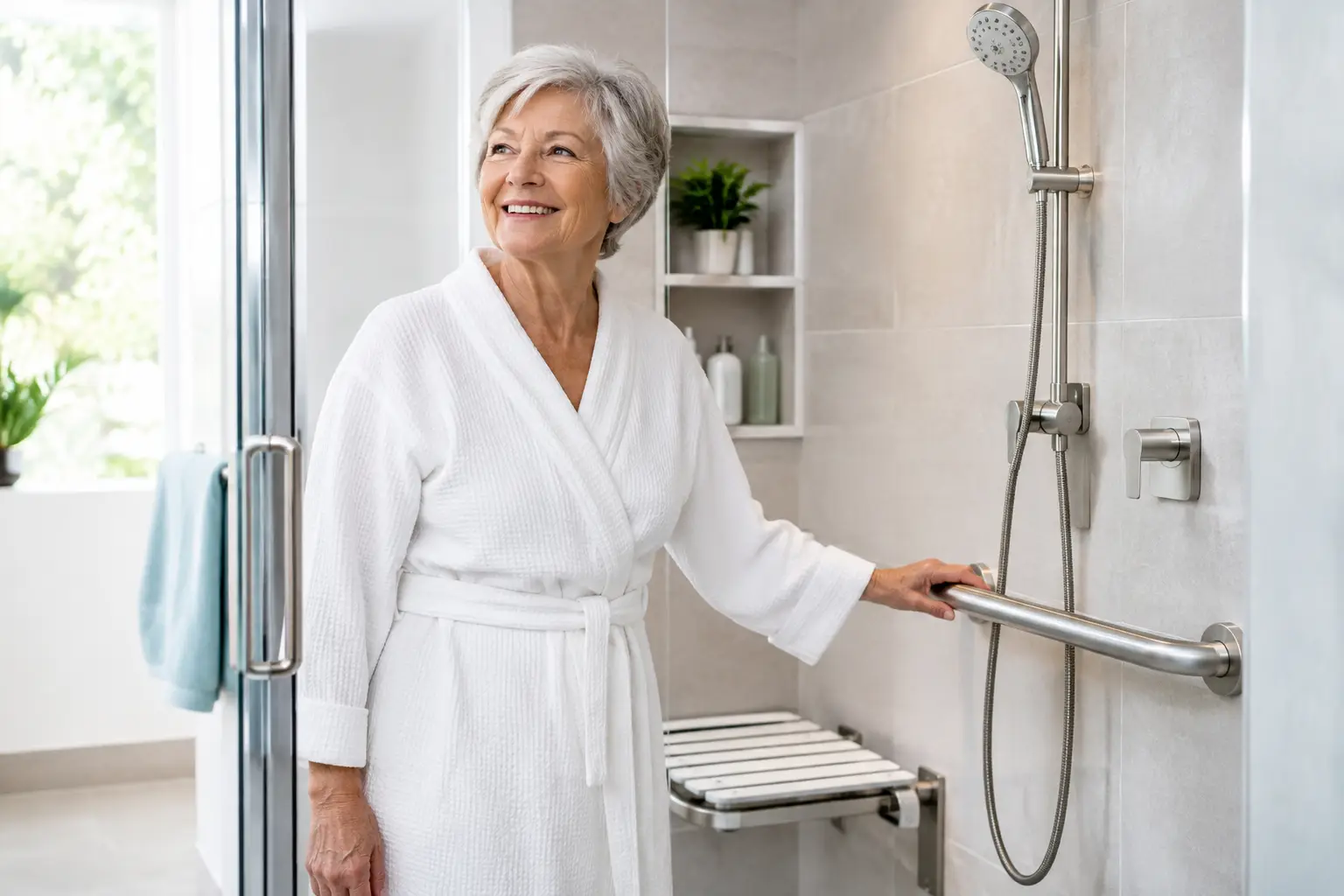
A shower should not become the most difficult room in the house to use. Yet many older homeowners are still stepping over high tub walls, balancing on slick tile, and reaching for controls placed across the spray. The best shower features for seniors solve those daily problems without making the bathroom feel clinical, dated, or unnecessarily expensive.
The right remodel is not about loading a shower with every accessory on a brochure. It is about choosing features that support safer movement, easier bathing, and long-term independence. Start with the essentials, make smart choices for your household, and skip the upsells that do not improve how the shower works.
1. A Low-Threshold Shower Entry
A low-threshold entry is the foundation of a senior-friendly shower. Instead of lifting a leg over a traditional bathtub wall, the user steps through a short curb, often just a few inches high. That reduces a common fall risk and makes the shower far easier to enter with limited mobility.
A true zero-threshold, or curbless, shower can be even easier to access because the bathroom floor flows directly into the shower. It is an excellent option for wheelchair access or future planning, but it may require more extensive floor and drainage work. A low-threshold shower often delivers most of the practical benefit with a simpler installation and lower project cost.
Do not let a contractor treat “walk-in” as a magic word. Ask for the actual threshold height and make sure the entry is wide enough for the person using it. A shower can be marketed as accessible while still having a curb that feels awkward or unsafe.
2. Properly Installed Grab Bars
Grab bars are not decorative towel bars, and they should never be installed like one. A real grab bar is securely anchored to the wall structure and designed to support body weight when someone slips, stands, turns, or lowers themselves onto a seat.
Placement matters as much as the bar itself. Most showers benefit from support near the entry and on the wall beside the controls. If there is a bench, a horizontal bar near the seating area can make sitting and standing more controlled. Vertical or angled bars can help some users at the entrance, particularly when balance is an issue.
Choose a finish that coordinates with the fixtures if appearance matters to you. Brushed nickel, matte black, chrome, and bronze options can make safety features look intentional rather than institutional. What should not be optional is proper installation. Suction-cup bars and lightweight accessories are not substitutes for anchored support.
3. A Built-In Shower Seat
A built-in seat gives seniors the option to shower while seated, take a break, or handle tasks like shaving without standing on a wet surface. It is one of the most useful features for people with arthritis, fatigue, balance concerns, or a temporary injury.
There are two common directions: a fixed bench or a fold-down seat. A fixed bench creates a solid, substantial look and can double as a shelf for towels or products. It does take up shower floor space, so it works best in a generously sized shower. A fold-down seat keeps the floor more open when it is not being used, which can be helpful in a smaller layout or a shared household.
The seat should be sturdy, easy to clean, and placed where the showerhead can comfortably reach. A bench that looks good but sits outside the water stream will not be as useful as homeowners expect.
4. A Handheld Showerhead With Easy Controls
A handheld showerhead makes bathing more flexible from a standing or seated position. It allows the water to be directed where it is needed without forcing someone to twist, stretch, or step around under the spray. That alone can make a shower feel far more manageable.
Look for a hose long enough to reach a seated user, along with a docking bracket that holds the showerhead securely at a practical height. A combination fixture with both a fixed showerhead and a handheld wand can work well for couples or families with different preferences.
Controls should be easy to grip and operate with wet hands. Lever handles are generally easier than small knobs, especially for someone with reduced hand strength or arthritis. Thermostatic or pressure-balancing valves are also worth considering because they help prevent sudden temperature swings when someone flushes a toilet or runs a sink elsewhere in the home.
5. Slip-Resistant Flooring That Is Easy to Clean
The shower floor needs traction, but it should not be so heavily textured that it traps grime and becomes difficult to clean. This is where material selection matters. Small tile with many grout lines can offer grip, but grout requires regular maintenance. Some modern shower base systems provide a textured, slip-resistant surface with fewer places for soap residue and mildew to collect.
Avoid assuming that a glossy finish is safe because it is new. Wet, smooth surfaces can still be slippery. Ask specifically about the floor’s slip resistance, drainage, and cleaning requirements.
Good drainage is part of the safety equation. Water should move toward the drain instead of pooling near the entrance or under a seat. A beautiful shower that leaves standing water behind is not a finished solution.
6. Enough Space to Move Without Feeling Boxed In
A cramped shower increases the chances of bumping into walls, struggling to turn around, or losing balance while reaching for products. More interior room makes a noticeable difference, even for homeowners who do not need wheelchair access today.
If the bathroom layout allows it, consider widening the shower opening and using a doorless entry or a wide, easy-operating glass door. Doorless showers can eliminate the need to manage a heavy swinging door, but they need thoughtful design to keep water contained. In a smaller bathroom, a well-designed glass door may be the better trade-off.
Planning for space is also future planning. You may not need assistance now, but a shower that can accommodate a caregiver or mobility device gives you more options later without requiring another remodel.
7. Built-In Storage at Reachable Heights
Shampoo bottles placed on the floor create clutter and invite unsafe bending. High corner shelves create a different problem: reaching overhead on a wet surface. Built-in storage should sit at a comfortable, reachable height and provide enough room for the products actually used every day.
Recessed niches are a clean option because they do not project into the shower. A corner shelf can work in a tight space, provided it does not interfere with movement or grab bars. Think through where the user will sit or stand before deciding where storage belongs.
This is a small detail that affects the shower every day. The best designs remove unnecessary reaching, bending, and balancing.
8. Bright, Glare-Controlled Lighting
Poor lighting makes every other safety feature less effective. Seniors need to clearly see the threshold, floor surface, controls, and any water on the ground. A single ceiling light outside the shower is often not enough.
Recessed wet-location lighting above the shower can improve visibility without taking up space. The goal is bright, even light rather than harsh glare that reflects off glass, glossy walls, or chrome fixtures. If the bathroom is being fully updated, lighting around the vanity also helps with grooming and overall visibility.
Consider a night-light or motion-activated pathway light for households where nighttime bathroom trips are common. It is a modest addition that can reduce fumbling in the dark.
9. Low-Maintenance Walls and Fixtures
A safer shower should also be easier to own. High-maintenance tile and grout can demand regular scrubbing, sealing, and repair. For some homeowners, that means more bending, kneeling, and chemical cleaners than they want to deal with.
Modern wall systems with smooth, durable surfaces can deliver a polished look while reducing cleaning work. Fewer grout lines means fewer places for mildew and soap buildup to settle. Pair those walls with quality fixtures that are easy to operate and covered by a meaningful warranty, not a vague promise that disappears after installation.
This is where homeowners should be skeptical of the traditional remodeling playbook. You should not need to sit through a long in-home sales presentation just to learn whether a safer shower fits your budget. ModernDayBath gives homeowners a clearer way to explore options, see pricing, and make choices without the pressure tactics that have defined this industry for too long.
Choose Features for the Person, Not the Sales Pitch
The best senior shower is not always the one with the most upgrades. For one homeowner, a low threshold, grab bars, and a handheld showerhead may be enough. For another, a built-in bench, wider entry, and zero-threshold design may be the right investment.
Think about how the shower is used on an ordinary morning, not just how it will look in a showroom. Where does the person steady themselves? What do they reach for? Can they enter, bathe, and exit without rushing or taking unnecessary risks? A remodel that answers those questions well can make staying comfortably at home feel much more realistic.