
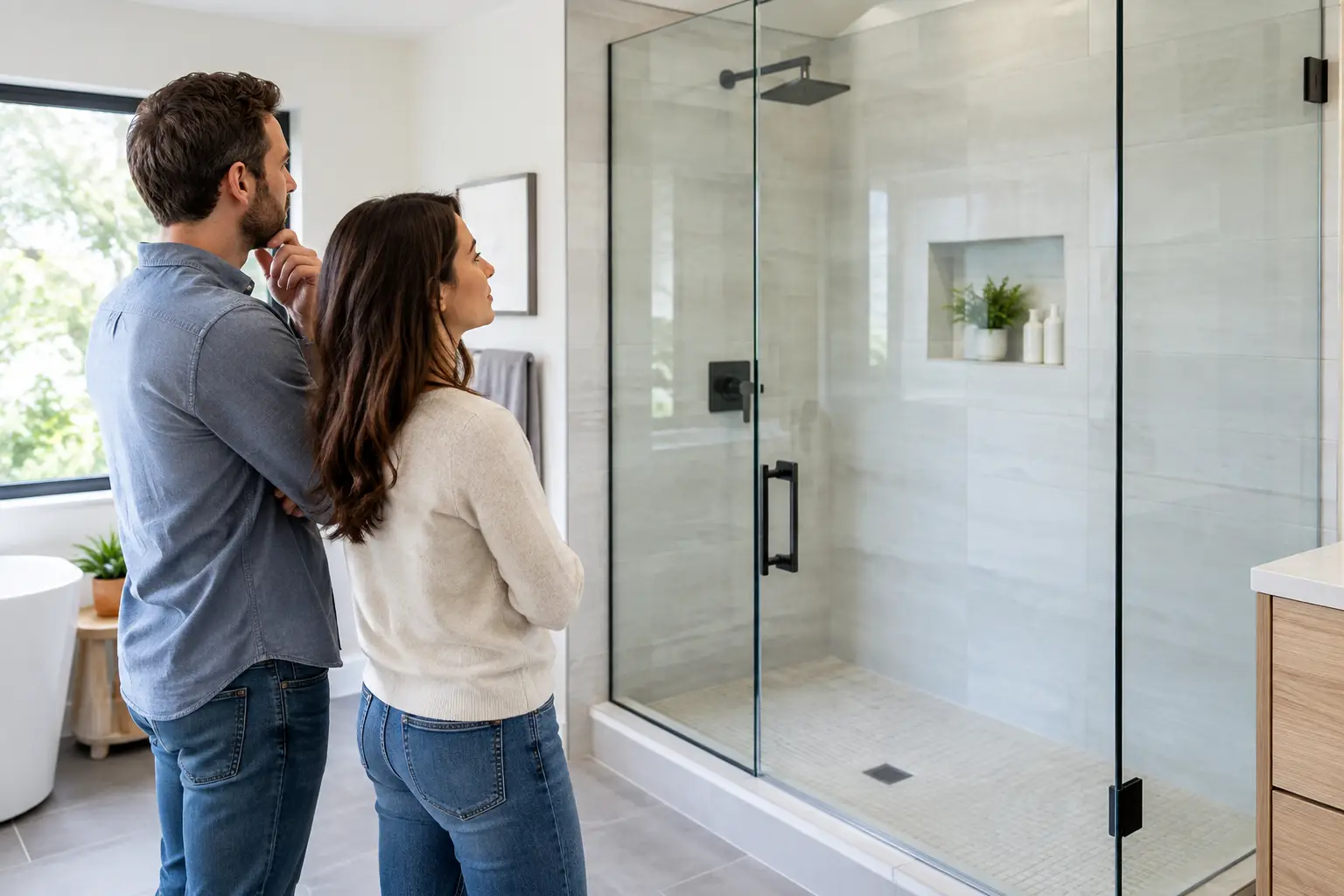
A shower can look brand-new and still feel wrong if the door fights the room. Maybe it swings into the vanity. Maybe the track collects grime. Maybe the glass looks great in a showroom but leaves you wiping water spots every morning. Shower doors are not a small finishing detail. They affect how your bathroom opens, cleans, and works every day.
That is why choosing one should not involve sitting through a two-hour sales pitch while someone circles a “today only” discount. You need a clear view of the options, the trade-offs, and the installed price before you commit.
Shower Doors Start With Your Bathroom Layout
The right door is usually the one that works with the space you have, not the one with the flashiest hardware. Before comparing glass thickness or handle styles, look at the shower opening, nearby fixtures, and how people move through the room.
A hinged door needs clear floor space to swing outward. This creates a wide, open entry and gives a shower a high-end look, especially with frameless glass. But it can be a poor fit in a compact bathroom where the door would hit a toilet, vanity, or towel bar.
Sliding doors are often the practical answer for tubs and narrower shower openings. They do not require swing clearance, and modern bypass systems can look far cleaner than the clunky framed doors many homeowners remember. The trade-off is that one side of the opening remains closed at any given time, and tracks require more attention during cleaning.
A fixed glass panel, sometimes paired with an open walk-in entry, delivers the most minimal look. It also eliminates moving parts. That can make it easier to maintain, but it is not right for every shower. The layout must keep water inside the wet area, and the opening must be wide enough to enter comfortably.
Measure for movement, not just width
A contractor should take final measurements, but you can rule out bad options early. Open the bathroom door. Stand where you would step out of the shower. Check whether a swinging shower door would collide with anything or create an awkward squeeze.
Also consider who uses the bathroom. A large, easy-entry opening may matter more than a sleek pivot door if aging in place, mobility, or helping young children are part of the picture. Good design is not about forcing a trend into your bathroom. It is about removing daily friction.
Frameless vs. Framed Shower Doors
This is where homeowners often get sold more than they need. Frameless doors use thicker tempered glass and minimal metal, creating a clean, open appearance. They are popular for a reason: they make tile or wall panels more visible and can make a smaller bathroom feel less boxed in.
But “frameless” does not mean maintenance-free or universally better. Because the glass is heavier, proper installation and secure wall support matter. A frameless door also relies on precise leveling and well-designed seals to manage water. It is a premium choice when the layout, wall system, and budget support it.
Semi-frameless doors split the difference. They reduce visible metal around the glass while using some framing for structure and water control. For homeowners who want a modern look without paying for a fully frameless configuration, this can be a smart middle ground.
Fully framed doors are typically the most budget-friendly and can work well in straightforward tub or shower replacements. Their biggest downside is visual weight and additional channels where residue can collect. They are not automatically a bad choice. They are simply less minimal, and the frame needs regular cleaning to keep it looking sharp.
Glass Choices Matter More Than You Think
Clear glass remains the most versatile option. It shows off attractive shower walls, lets more light through, and keeps the room visually open. If your renovation includes premium wall panels or a bold tile-look finish, clear glass lets that work speak for itself.
Frosted, patterned, or obscured glass adds privacy, which can be useful in a shared bathroom. The trade-off is that it blocks the view of the shower interior and can make the space feel more closed. It may also limit how much of your wall design is visible.
Glass thickness affects both appearance and performance. Thicker tempered glass has a substantial feel and is common in frameless systems. It is not a reason to ignore the rest of the build, though. Quality hinges, properly placed supports, accurate measurements, and a level installation matter just as much as the glass itself.
Ask about protective glass coatings, too. They can reduce soap scum and mineral buildup by helping water sheet off the surface. They are helpful, especially in areas with hard water, but they are not magic. You will still need basic care to keep any glass door clear.
Pick Hardware You Will Still Like in Five Years
Hardware is where a shower door can look intentional or look like an afterthought. Chrome is bright, versatile, and easy to match with many fixtures. Brushed nickel offers a softer, warmer finish. Matte black creates contrast and works well in modern bathrooms, though it can show dried water marks depending on the finish and local water conditions.
Consistency matters more than chasing a trend. Match the door hardware to your shower fixtures when possible, then consider the faucet, lighting, and cabinet pulls. Everything does not have to be identical, but conflicting finishes can make a renovated bathroom feel pieced together.
Pay attention to the handle as well. A long ladder pull looks clean and gives a solid grip. A smaller knob may suit a tighter layout. If accessibility is a concern, choose a handle that is easy to grasp with wet hands rather than selecting solely by appearance.
The Cleaning Reality No One Should Hide
Every shower door needs cleaning. The question is whether the design makes that job simple or turns it into another weekend chore.
Doors with fewer seams, fewer tracks, and fewer exposed metal channels are generally easier to maintain. A fixed panel is the simplest. A hinged frameless door is also relatively straightforward because there is less hardware around the edges. Sliding doors can be a great space-saving choice, but their bottom tracks need routine attention to prevent buildup.
A quick squeegee after showering is the most effective habit for clear glass. It takes less than a minute and saves you from aggressive scrubbing later. Use a nonabrasive cleaner, avoid harsh tools that can damage coatings or hardware finishes, and wipe the lower seals and tracks regularly.
If you hate cleaning, say that upfront. It is useful design information, not a minor preference. The best shower door for a household that wants low maintenance may be different from the best door for someone prioritizing a fully open, spa-like look.
Get an Installed Price, Not a Starting Price
A door quote is only useful when it accounts for the whole job. The glass and hardware are part of the cost, but so are measurements, wall preparation, installation, seals, removal of the old enclosure, and any adjustments required by an out-of-square opening.
Traditional bath remodelers often make pricing feel complicated on purpose. They send a commissioned representative into your home, start high, and then reveal a supposedly exclusive discount if you sign before they leave. That is not transparency. It is pressure dressed up as a deal.
A better process lets you see how design choices affect the price before a salesperson enters your living room. At ModernDayBath, homeowners can build a shower online, explore options, receive pricing, and schedule certified installation without the old-school sales routine. No sales reps. No pressure. No waiting around for a mystery quote.
That does not mean every renovation has one fixed price. Custom sizing, plumbing changes, structural repairs, and unusual layouts can legitimately affect the final scope. The standard should be clear: if the price changes, you should understand exactly why.
Ask the Questions That Protect Your Purchase
Before approving a shower door, confirm who is measuring, who is installing, and what happens if the opening is not perfectly square. Ask how the door is sealed, whether the hardware is adjustable, and what warranty covers both materials and workmanship.
You should also ask whether the door choice works with the shower base, wall system, and water direction. A beautiful door installed without regard for slope, splash zones, or wall support can create leaks that have nothing to do with the glass itself.
The right shower door should disappear into your routine. It should open easily, keep water where it belongs, complement the room, and clean up without a fight. Choose the option that makes your bathroom easier to use every morning, not the one a salesperson worked hardest to sell you.