
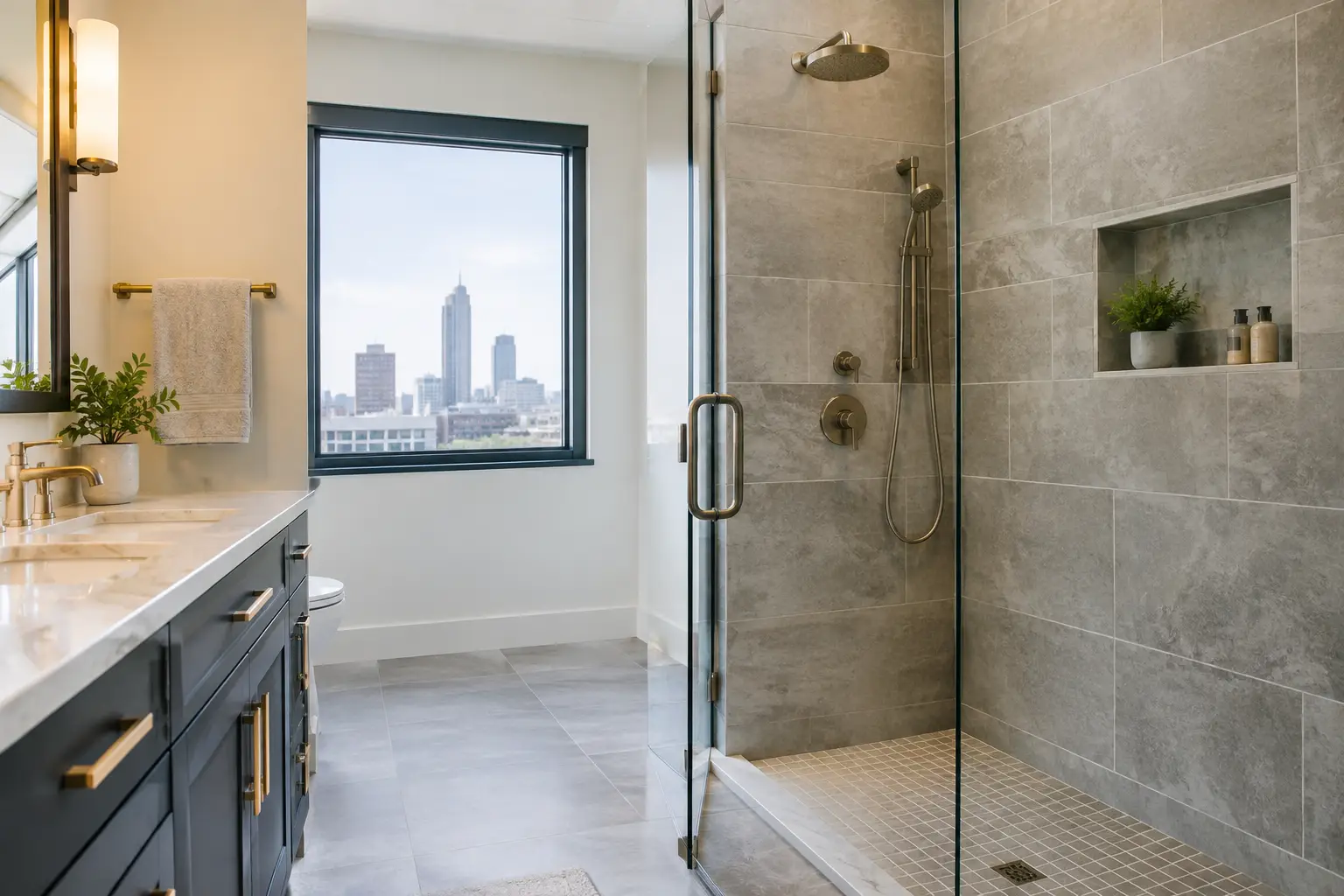
A shower that leaks at the corners, stays stained no matter how hard you scrub, or requires a risky step over a tall tub wall is not a small inconvenience. It is a daily reminder that your bathroom is working against you. This Cleveland shower renovation guide helps you make the decisions that actually affect your finished shower: the scope, the materials, the installation plan, and the buying process.
Cleveland-area homes add a few practical variables. Many have older plumbing, compact bath layouts, uneven walls, and bathroom finishes that have seen several decades of moisture. A good renovation accounts for those realities before anyone starts talking about a dramatic discount that expires tonight.
Start With the Problem You Want to Solve
“New shower” can mean very different things. Some homeowners want to replace a worn tub-shower combination with a fresh, low-maintenance version. Others need a safer walk-in shower with a low threshold, built-in seating, and secure grab bars. Some are tired of cracked tile, grimy grout, and constant caulk repairs.
Be clear about the job before comparing prices. A cosmetic refresh and a full shower replacement are not interchangeable, and a suspiciously low quote often reflects a smaller scope than the homeowner expects.
Think through how the shower is used now. Is this the main family bath, a guest bathroom, or the bathroom you expect to use comfortably for decades? Do you need to keep a bathtub for young children or resale preferences? A walk-in shower is usually easier to enter and clean, but removing the only tub in a home can be a trade-off for some households.
Choose Materials Based on Maintenance, Not a Showroom Display
Tile can look beautiful, and it can be the right choice for a custom, high-design project. It also comes with grout lines, more installation variables, and a longer construction timeline. In an active household, that may be a fair trade. In a bathroom where the goal is fewer chores and fewer water-related worries, it may not be.
For many shower renovations, nonporous wall systems are the more practical choice. Quality acrylic or composite wall panels create a clean, finished look without turning every wall into a grid of grout lines. They are designed to be wiped clean, resist moisture, and keep the maintenance routine simple.
Do not judge a wall system by a tiny sample alone. Ask how the panels fit together, how corners are finished, what sits behind the walls, and how the company handles seams. The visible surface matters, but the waterproofing details matter more. Water has a way of finding shortcuts.
Fixtures deserve the same scrutiny. Choose a finish you can live with, but prioritize function: a pressure-balanced valve, an easy-to-use handle, a handheld showerhead if flexibility matters, and storage that keeps bottles off the floor. A niche or corner shelf can be useful. Too many shelves can make a compact shower feel crowded.
Plan for Cleveland-Area House Realities
A shower renovation rarely starts with a perfectly square, modern room. Older Cleveland and Northeast Ohio homes may have plaster walls, aging supply lines, cast-iron drains, or surprises behind a decades-old surround. That does not mean the project has to become a demolition marathon. It means the installer should evaluate the existing conditions honestly.
The key question is whether the plumbing layout can stay where it is. Keeping the drain and valve in the same general location usually reduces labor, cost, and risk. Moving them may be worthwhile for a major layout change, but it should be a deliberate choice, not an afterthought discovered after demolition.
Ventilation also deserves attention. A new shower will not solve a weak exhaust fan or persistent moisture problem elsewhere in the bathroom. If mirrors stay fogged long after a shower or paint repeatedly peels, address the fan, ducting, or humidity issue as part of the larger plan.
Permits depend on the work and the local jurisdiction. A straightforward replacement may be treated differently than a project that moves plumbing, alters electrical wiring, or changes the room layout. A reputable installer should explain what applies rather than leaving you to sort it out after the work begins.
Set a Budget That Includes the Real Scope
The right budget is not the lowest advertised starting price. It is the price for the shower you actually want, installed correctly, with the features and warranty you expect.
Your total can change based on shower size, wall material, door style, plumbing updates, fixture choices, accessibility features, and the condition uncovered once the old unit comes out. That is normal. What is not normal is being kept in the dark until a salesperson has spent three hours at your kitchen table.
Look for pricing that makes options visible early. You should be able to see how switching from a curtain to a glass door, adding a built-in seat, or selecting a different fixture finish affects the cost. Transparency is not a luxury feature. It is how you avoid agreeing to a vague package and finding out later that the details cost extra.
A small deposit can make sense when it secures production and installation scheduling. Before paying one, understand what it covers, when final payment is due, what happens if site conditions require changes, and how warranty service works after installation.
A Cleveland Shower Renovation Guide to Avoiding Sales Games
The traditional bath-remodeling playbook is familiar: a “free estimate” becomes a long in-home presentation, the first price is intentionally inflated, and a manager supposedly authorizes a one-night-only discount if you sign immediately. That process is built to create pressure, not clarity.
A better buying experience lets you explore design choices, see pricing, and make a decision on your schedule. Online design tools are especially useful for homeowners who already know the broad direction they want and do not need a commissioned salesperson to explain that white walls are white.
Before choosing a remodeling company, get direct answers to four questions:
- What is included in the quoted price, from demolition through final cleanup?
- Who performs the installation, and what training or certification do they have?
- How are unexpected plumbing or wall issues documented and priced?
- What does the warranty cover, and who handles a service request?
You are not being difficult by asking. You are protecting your home and your budget. Clear answers are a good sign. Evasion, forced urgency, and vague “starting at” numbers are not.
Design for Daily Use, Not Just Before-and-After Photos
The best shower layouts make mornings easier. Put controls where they can be reached without stepping under cold water. Select shelving at a height that works for the people using the shower. Consider a handheld fixture if you bathe kids, pets, or need easier cleanup. If mobility is a concern now or may be later, a low-entry shower, grab bars, and a fold-down or built-in seat can add confidence without making the room feel clinical.
Color and finish choices should work with the rest of the bathroom, but do not overcomplicate them. Light wall colors can help a smaller bath feel more open. Darker fixtures create contrast but may show water spots more readily, depending on the finish and your water. Clear glass can make a shower feel larger, while a curtain or more enclosed option may offer easier access in a tight room.
ModernDayBath is built around this more straightforward approach: design online, see real pricing, place a small deposit, and schedule certified installation without the sales marathon. The point is not to make a renovation feel casual. It is to make the decision feel like yours.
Prepare for Installation Without Overthinking It
Once the design is set, installation is usually much easier on the homeowner than a full bathroom gut renovation. Still, a little preparation helps. Clear the bathroom and nearby access path, remove personal items from adjacent cabinets, and make arrangements for another bathing option if this is your only shower.
Ask where installers will enter, how they will protect flooring, what hours they expect to work, and how debris will be handled. If you live in a condo, townhome, or neighborhood with access rules, confirm any required notices before installation day.
A finished shower should not leave you with a long list of mystery maintenance tasks. You should know how to clean the walls, maintain the drain, operate the fixtures, and request service if something needs attention. A lifetime warranty carries more weight when the company has a clear, accessible process behind it.
Your shower renovation does not need to begin with a stranger taking over your living room or end with a bathroom that looks good only in photos. Choose the features that improve your routine, insist on transparent pricing, and give yourself enough room to decide without pressure. That is how a new shower starts feeling better before the first shower you take in it.