
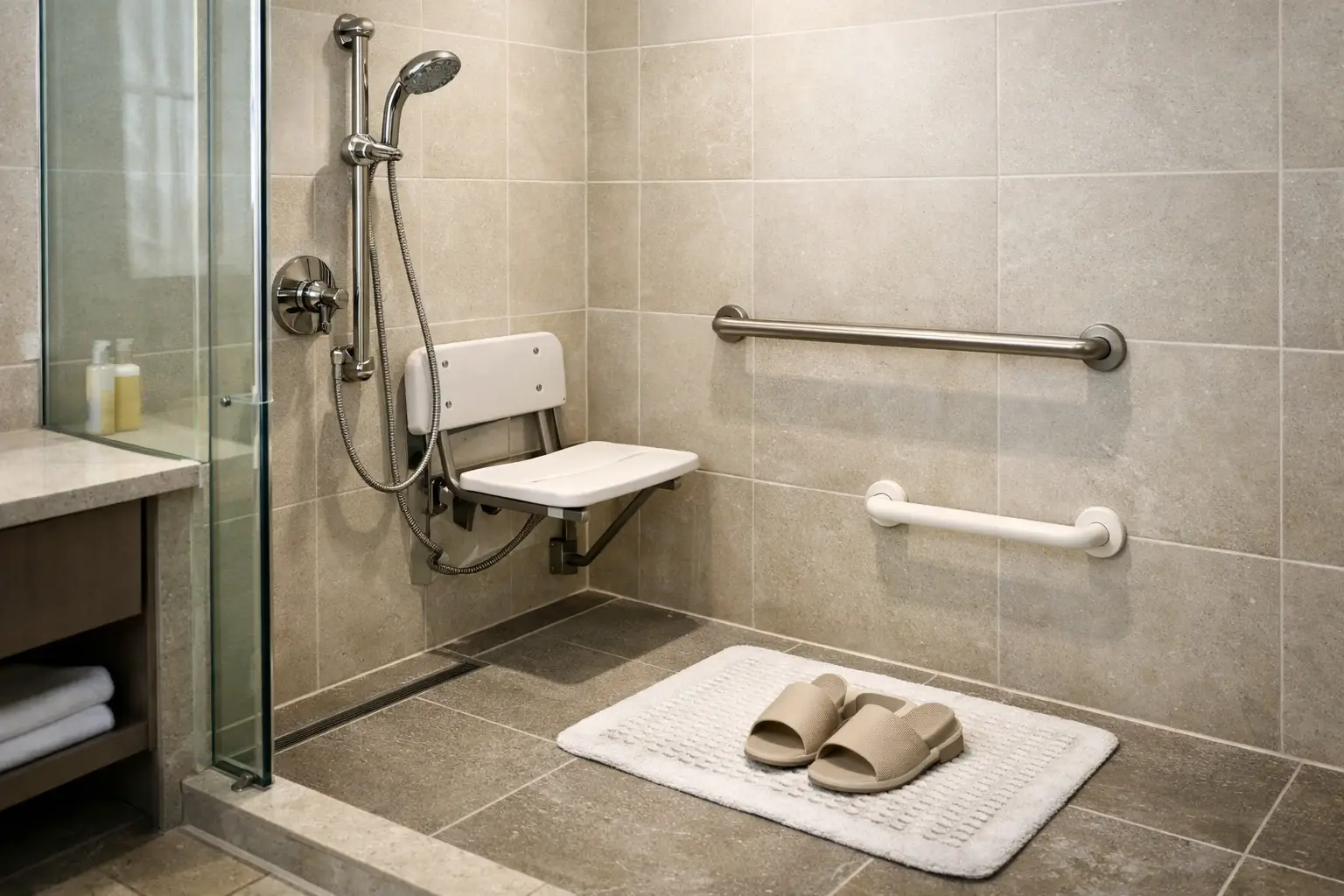
A shower should be the easiest room in the house to use. Yet a high tub wall, slick tile, a hard-to-reach control, or a floor that holds water can turn a daily routine into a risky one. The right walk in shower safety features solve those problems quietly, without making your bathroom look like a hospital room.
That distinction matters. Many homeowners want a safer shower for themselves, a parent, or a spouse, but they do not want to trade away comfort, style, or resale appeal. You do not have to. A well-planned walk-in shower can look clean and current while giving you more footing, more support, and far less to worry about.
Start With a Low, Easy Entry
The biggest safety improvement is often the one people notice first: getting in and out. Stepping over a traditional tub wall requires balance, leg strength, and a dry foot at exactly the moment the bathroom floor may be wet. That is not a great design decision for anyone planning to stay in their home.
A low-threshold shower reduces that step significantly. A true curbless entry removes it altogether, creating a level transition from the bathroom floor into the shower. Curbless showers are especially useful for wheelchair access or anyone who uses a walker, but they are not automatically the right choice for every bathroom. They require careful floor slope, drainage planning, and waterproofing. When they are done poorly, water can travel where it should not.
A low threshold is often the practical middle ground. It makes entry much easier than a tub while helping contain water. The best option depends on the room layout, the subfloor, and how much accessibility you need now versus later.
Walk In Shower Safety Features Begin Underfoot
Most shower falls happen because the surface is slippery, not because someone ignored a warning sign. This is why the shower floor deserves more attention than decorative fixtures.
Choose a textured, slip-resistant base designed for wet spaces. The goal is traction that feels secure under bare feet without being so rough that it is uncomfortable to stand on or difficult to clean. Small mosaic tile can provide grout-line traction, but it also means more grout to maintain. A quality textured shower base is easier to clean and typically gives homeowners a more consistent surface underfoot.
Drainage is part of floor safety, too. Water should move toward the drain instead of pooling around your feet. A properly installed shower has the right pitch from the start. This is not an upgrade to skip or a detail to leave vague in a quote. If a remodeler cannot clearly explain how the shower will drain, the low price is not the deal it appears to be.
Outside the shower, use a secure bath mat with a non-slip backing. Even the safest shower floor cannot help much if the first wet step lands on a loose rug.
Do not confuse glossy with clean
Highly polished tile can look dramatic in a showroom, where it is dry and brightly lit. In a real bathroom, it can become slick with water, soap residue, conditioner, or a little bath oil. You can still have a polished wall system, glass doors, and a sharp modern look. Just keep the walking surface focused on traction rather than shine.
Grab Bars Should Be Planned, Not Added in Panic
A towel bar is not a grab bar. Neither is a decorative handle mounted on a glass door. If a person needs to steady themselves, the support needs to be designed for body weight and installed into proper wall blocking or studs.
The most useful grab bar locations are usually at the entry, along the long shower wall, and near the shower seat if there is one. Placement should follow how the person actually moves through the space. Someone who needs support while stepping in may benefit most from a vertical bar near the opening. Someone who stands while washing may prefer a horizontal bar where they can naturally reach it.
Modern grab bars no longer have to announce themselves. Some are available in finishes that coordinate with shower fixtures. Others do double duty as shelves or integrated supports. Appearance matters, but strength matters more. Ask how the wall will be reinforced and what weight rating the bar is designed to handle. A vague answer is a red flag.
Make Controls Reachable From a Dry Position
A safer shower lets you start the water without standing directly under it. Put controls near the entry or just inside the opening, where they can be reached before you step into the spray. This prevents the familiar rush of cold water, and it means less twisting and stretching on a wet floor.
A handheld showerhead is one of the most practical upgrades available. It makes rinsing easier while standing or seated, helps target sore joints, and makes shower cleaning less of a chore. Pair it with an adjustable slide bar so the showerhead height can change with the user. That flexibility is useful in a shared household and sensible if your needs change over time.
Consider pressure-balancing or thermostatic valves as well. These controls help reduce sudden temperature swings when someone flushes a toilet or runs water elsewhere in the home. Scald prevention is a real safety feature, especially for children, older adults, and anyone with reduced temperature sensitivity.
A Seat Adds Comfort and Control
A built-in shower seat is not only for people with major mobility limitations. It gives anyone a stable place to sit while shaving, washing feet, applying treatments, or taking a break. It can also make a shower more usable after surgery, during injury recovery, or as people age in place.
A permanent corner seat uses less shower space than a full-width bench and often works well in compact layouts. A larger bench can feel more luxurious and more useful, but it needs enough room to avoid making the shower cramped. The seat surface should be water-resistant, easy to clean, and securely supported. Avoid treating this as a simple accessory. It needs to be built as part of the shower system.
Better Lighting Prevents Small Mistakes
Bathroom safety is not only about the floor. Poor lighting makes it harder to judge depth at a threshold, find a control, or see water on the ground. Use bright, even lighting near the shower entry and vanity, and avoid a setup where the person casts a heavy shadow into the shower.
A recessed wet-location-rated shower light can make a major difference. Night lights or motion-activated pathway lighting can also help homeowners who use the bathroom after dark. The light should be functional first. Decorative lighting is welcome, but no one should have to navigate a wet bathroom by memory.
Glass, Doors, and Storage Need a Safety Check
Shower doors can look great, but they add moving parts and cleaning demands. A wide-opening door with sturdy hardware may be a good fit for some bathrooms. For others, a fixed glass panel or an open walk-in design removes the need to maneuver around a swinging door. The right answer depends on the available floor space and how water will be contained.
If you choose glass, it should be safety glass. More importantly, do not use a door handle as support when entering or exiting. That is exactly why a real grab bar belongs nearby.
Storage matters more than it gets credit for. Reaching down for a shampoo bottle or stretching across the spray for soap creates unnecessary balance risks. Recessed niches, corner shelves, and soap ledges keep everyday items within easy reach. Keep the layout simple: the products you use most should be available without bending, twisting, or stepping across the shower.
Do Not Let a Sales Pitch Decide Your Safety Plan
Some remodeling companies use safety upgrades as a reason to push an oversized package during a long in-home presentation. Others quote a basic shower and treat every useful feature as a surprise add-on later. Neither approach puts the homeowner in control.
A better process is straightforward: decide which safety features solve a real problem, see how each choice affects the price, and make selections without a commissioned salesperson parked at your kitchen table. At ModernDayBath, that is the point of designing and pricing a shower online before installation is scheduled.
Ask direct questions before committing: Is the base slip-resistant? How is water directed to the drain? Where will grab bars be anchored? Can the controls be reached from the opening? What warranty covers the finished shower and installation? Clear answers are worth more than a dramatic “today only” discount.
The best safer shower does not feel like a compromise. It feels like a bathroom that finally works with you: easy to enter, comfortable to use, simple to clean, and ready for the years ahead.