
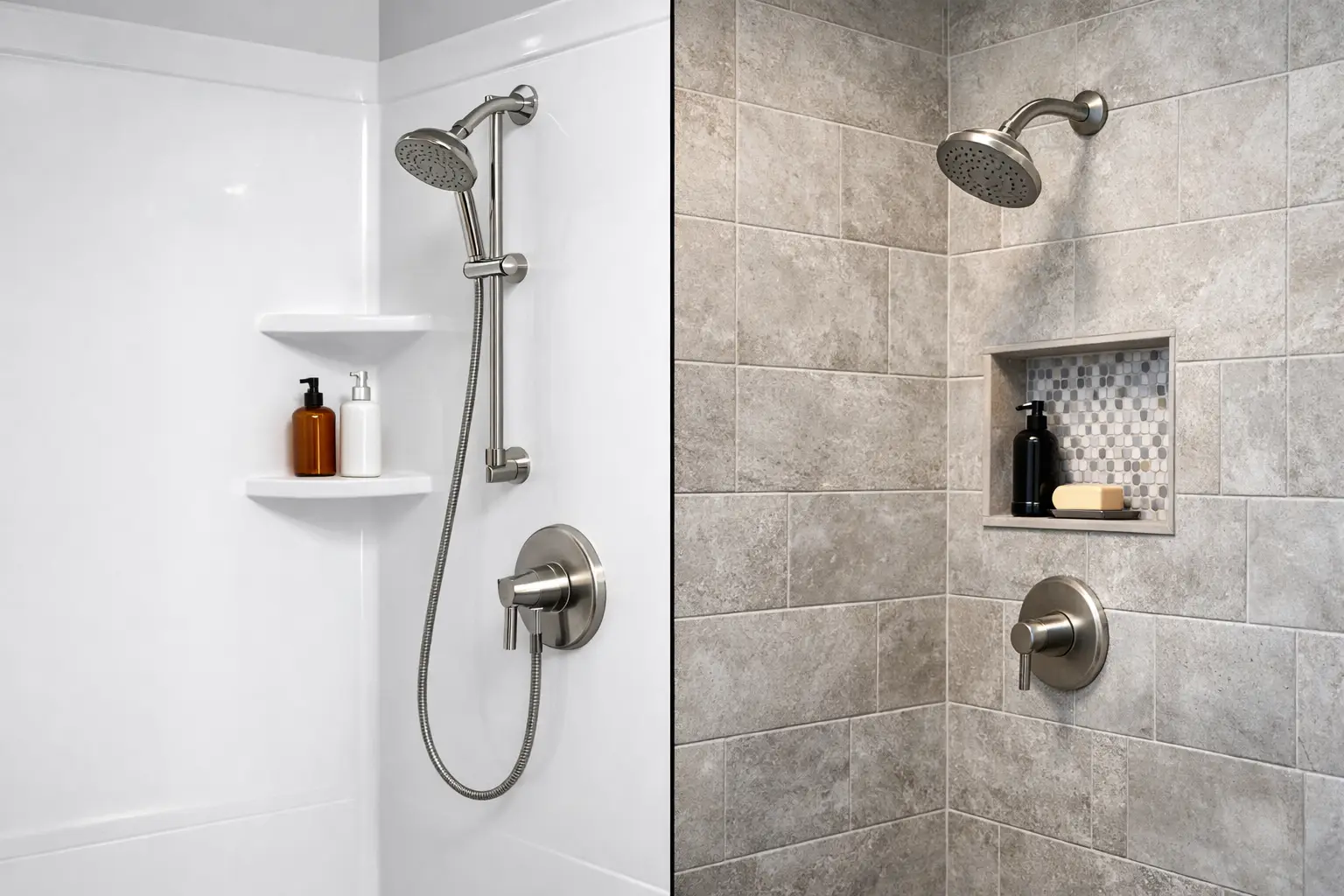
A shower remodel can look amazing in a showroom and become a maintenance project six months later. That is why the wall surrounds versus tile decision is bigger than color, pattern, or what happens to be trending on social media. You are choosing how long the project takes, how often you clean, where water can get behind the walls, and how much uncertainty you are willing to accept.
Tile has earned its reputation for design flexibility. Modern wall surrounds have earned their place by eliminating many of tile’s most frustrating weak points. Neither choice is automatically right for every home. But the right choice becomes much clearer once you compare the ownership experience, not just the finished photos.
Wall Surrounds Versus Tile: The Real Difference
Tile is an individual-piece wall finish. Ceramic, porcelain, glass, and natural stone tiles are installed one at a time over a properly prepared shower wall, then grouted. A tile shower can be highly customized, but it relies on many joints, several layers of waterproofing, and careful workmanship.
Wall surrounds are large waterproof panels that cover the shower walls with far fewer seams. Depending on the system, they may be acrylic, composite, solid-surface material, or another engineered product designed for wet environments. Premium panels can replicate the look of stone, marble, subway tile, or clean contemporary surfaces without requiring a grid of grout lines.
The practical difference is simple: tile is a built-up system with hundreds of small decisions and joints. A wall surround is a purpose-built wall system designed to reduce those variables. That does not make every surround high quality, and it does not make every tile installation risky. Materials and installation standards matter in both cases.
Installation Time Is Not a Small Detail
A traditional tile shower is rarely a quick project. Existing walls may need to be removed, framing repaired, backer board installed, waterproofing applied, tile set, grout cured, and fixtures finished. If water damage or mold is found behind the old shower, the timeline can grow quickly. A well-built tile shower is worth the effort for homeowners who want that level of customization, but it is not a one-day cosmetic swap.
Wall surrounds are often installed much faster because the panels are fabricated to fit the space and cover large areas at once. In many straightforward shower renovations, an experienced crew can complete the wall portion in a day or two. That matters when the bathroom is your only full bath, when you do not want construction stretched across multiple weekends, or when you simply want the project done without living around it.
Speed should never mean shortcuts. The old walls still need to be evaluated, the plumbing needs to be addressed correctly, and the new system needs a sound, level substrate. If a contractor promises an instant installation without discussing wall condition, drainage, or waterproofing, ask better questions. Fast is valuable. Fast and careless is expensive.
Maintenance Usually Decides the Long-Term Winner
Most homeowners do not regret choosing tile because it looked bad. They regret the grout maintenance. Grout is porous unless properly sealed, and even sealed grout can discolor, crack, or collect soap residue over time. Corners and joints need attention, especially in a shower used every day.
Tile cleaning does not have to be miserable, but it is recurring work. You may need to scrub grout lines, use mold and mildew treatments, reseal certain grout or stone surfaces, and repair isolated areas if grout begins to fail. Natural stone adds another layer of responsibility because some stones are more sensitive to acidic cleaners and moisture.
Wall surrounds have far fewer seams, so there are fewer places for residue and mildew to settle. For many homeowners, routine cleaning is closer to wiping down a continuous surface with a nonabrasive bathroom cleaner. Caulked edges still need to be inspected over time, but there is no field of grout joints to maintain.
That low-maintenance advantage is especially meaningful for busy households, aging homeowners, rental properties, and anyone who has spent a Saturday trying to bring stained grout back to life. A shower should not demand a specialty cleaning strategy just to stay presentable.
Style: Tile Wins on Unlimited Choice, but Not Always on Results
Tile offers nearly unlimited design possibilities. You can choose the exact size, layout, color, trim, niche treatment, and pattern. If you are building a high-end custom bathroom around a specific architectural vision, tile gives a designer more individual pieces to work with.
But unlimited choice also means more opportunities for a design to feel busy, dated, or poorly coordinated. A dramatic tile selection can look different under your bathroom lighting than it did in a showroom. Pattern alignment, grout color, trim details, and cuts around fixtures all affect the final result.
Wall surrounds provide a more edited selection, which is a benefit for homeowners who want a polished result without becoming their own interior designer. Today’s premium systems are not limited to plain white plastic panels. Large-format marble looks, subtle stone textures, and clean neutral finishes can create a high-end appearance while keeping the visual field calm.
The trade-off is honest: if you want a one-of-one mosaic, handcrafted tile is probably your better route. If you want a current, upscale shower that will not require hours of design decisions or years of grout care, a wall system is hard to beat.
Cost Depends on More Than the Material Price
Comparing the price of a box of tile to the price of wall panels is a bad way to budget a shower remodel. Tile may look inexpensive by the square foot, but the installed cost includes demolition, surface preparation, waterproofing materials, setting materials, grout, trim, labor, and the added time required for skilled installation.
Wall surrounds can have a higher material cost than basic tile, yet the total installed price may be competitive because installation is more efficient and there are fewer components. The exact number depends on shower size, wall repairs, fixture upgrades, accessibility features, and whether the project includes a new base or tub.
This is where homeowners get burned by old-school remodeling sales tactics. A contractor presents a giant starting price, then offers a “today only” discount after a long in-home pitch. That is not transparency. It is a negotiation game designed to make the final number feel like a win.
A better process lets you see real options and pricing before you hand over your evening to a salesperson. You should be able to compare wall finishes, fixtures, and upgrades with a clear understanding of what changes the price. No mystery fees. No fake discount countdown.
Durability Depends on the System Behind the Surface
A properly installed porcelain tile shower can last for decades. Porcelain is exceptionally durable, and high-quality tile does not go out of style as quickly as many people assume. The concern is not usually the tile itself. It is the grout, the caulk, and the waterproofing assembly underneath.
Water finds weak points. If a tile shower was installed without proper waterproofing, water can migrate behind the tile and damage framing or drywall long before the homeowner sees a visible problem. A beautiful surface cannot compensate for poor preparation.
Quality wall surrounds are designed to create a watertight enclosure with minimal seams. They are not immune to damage – sharp impacts, improper cleaners, and bad installation can create problems with any material – but fewer joints reduce the number of places where a system can fail. Look for products intended specifically for showers, professional installation, and a warranty that covers more than a vague promise.
Be cautious with bargain panels that feel thin or are installed over questionable walls. The category includes very different products. A premium wall system with certified installation is not the same thing as a temporary DIY panel kit.
When Tile Is the Better Choice
Tile makes sense when custom design is the priority and you are comfortable with a longer, more involved renovation. It is also a strong choice for homeowners restoring a historic home, creating a distinctive wet room, or matching existing tilework that cannot be replicated with panels.
Choose tile with your eyes open. Budget for skilled labor and proper waterproofing, not just the visible finish. Plan for grout maintenance. And do not let a low material estimate disguise a complicated installation scope.
When a Wall Surround Is the Smarter Move
A wall surround is often the better fit when you want a premium-looking shower without turning the project into a months-long research assignment. It is built for homeowners who value easy cleaning, fewer seams, quicker installation, and a predictable result.
That does not mean settling for generic. The right wall system can still reflect your taste through finish, fixtures, shelving, glass, and hardware. It simply puts the focus where it belongs: a shower that looks good, works every day, and does not demand constant upkeep.
ModernDayBath was built around that idea. Homeowners should be able to select a shower style, see straightforward pricing, and schedule professional installation without sitting through a pressure-filled sales appointment. The remodel should feel modern from the first decision through the final cleanup.
Before choosing, think about the shower you want to own five years from now. If the answer includes less scrubbing, fewer repair worries, and no regret every time you see dirty grout, a quality wall surround deserves more than a quick glance. Choose the system that gives you the bathroom you want and the routine you do not have to think about.