
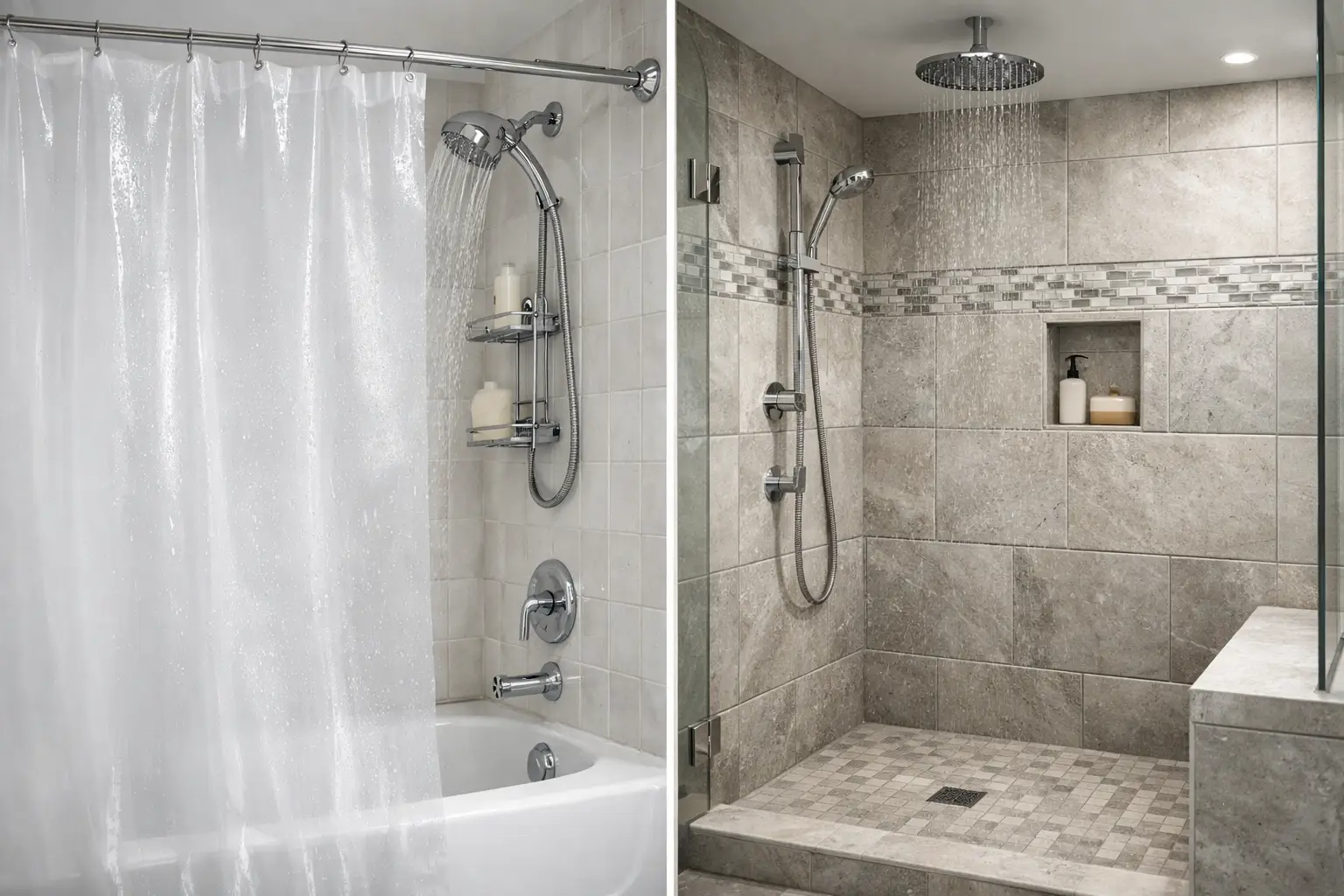
If you have ever priced a shower remodel and felt like the answers got vague fast, you are not imagining it. The shower liner vs tile decision is where a lot of homeowners get pushed into expensive upgrades, confusing allowances, and drawn-out timelines. One option is sold as custom and premium. The other is often dismissed as basic. The truth is less dramatic and a lot more useful.
For most homeowners, this choice is not about what looks best in a staged showroom. It is about what holds up, what needs maintenance, what your project will actually cost, and how much disruption you are willing to live with. That is where the real comparison starts.
Shower liner vs tile: the real difference
When people say shower liner, they usually mean a wall surround or wall system made from acrylic, composite, PVC-backed panels, or other low-maintenance waterproof materials. It is designed to give you the finished look of a remodeled shower without the grout lines, long install schedule, and maintenance that come with tile.
Tile, on the other hand, is the traditional custom route. It can absolutely look beautiful. It also involves more labor, more variables, and more places where things can go wrong if the install is not done well.
This is why the right answer depends less on trend and more on priorities. If you want maximum design freedom and are comfortable paying for skilled labor and ongoing upkeep, tile can make sense. If you want a clean, premium result with less hassle, a shower wall system is often the smarter buy.
Cost is not just the material price
Tile gets marketed as the premium choice, but the material itself is only part of the bill. A tile shower includes waterproofing, backer board, mortar, grout, trim pieces, labor, and usually more time on site. If your walls are not perfectly square, if water damage is found behind the old shower, or if you choose specialty tile, costs can climb quickly.
That is where many homeowners get frustrated. The quote starts at one number, then the real project starts revealing all the fine print.
A shower liner or wall system is usually more predictable. The materials are designed to install faster, and the labor is typically far less involved than a full tile build. That can mean lower total cost, but just as important, it often means fewer pricing surprises.
If your goal is value instead of bragging rights, a quality wall system tends to perform well here. You are paying for a finished shower, not for a long list of line items and change orders.
Why tile labor changes everything
A tile shower is only as good as the crew building it. Layout matters. Waterproofing matters. Slope matters. Grout joints matter. One weak point can create mold, leaks, cracked grout, or loose tile later.
That is why tile projects are so dependent on craftsmanship, and craftsmanship is expensive. Good installers earn it. The problem is that many homeowners do not realize how much of their project cost is labor until they are already deep into the process.
By contrast, shower wall systems are built for consistency. That does not mean every installer is equal, but the process is generally simpler, faster, and less vulnerable to small errors becoming major repairs.
Maintenance is where the gap gets bigger over time
This is the part of the shower liner vs tile debate that matters most after the remodel is done.
Tile requires upkeep. Even if the tile itself is durable, grout is the weak link. It can stain, crack, trap soap residue, and require sealing depending on the material used. If your bathroom gets heavy daily use, cleaning grout stops feeling like a small issue pretty quickly.
A wall system is easier to live with. Fewer seams mean fewer places for moisture and grime to collect. Cleaning is simpler. There is less scrubbing, less special-product guesswork, and less long-term maintenance. For busy households, that is not a minor perk. It is a real quality-of-life upgrade.
If you already know you do not want to spend weekends fighting mildew in grout lines, tile may not be the luxury it is made out to be.
Style matters, but so does realism
Tile still wins on pure customization. You can choose from almost endless colors, sizes, patterns, textures, and layouts. If you have a very specific design vision, tile gives you more room to chase it.
But there is a catch. The more custom the design, the more expensive and time-consuming the project becomes. Herringbone patterns, niche details, accent strips, and mixed-format tile can all look great. They also add labor and complexity.
Modern shower wall systems have improved a lot. The old idea that they only come in shiny white panels belongs in the past. Many now offer realistic stone looks, clean matte finishes, oversized panel designs, and fixture options that feel current rather than builder-grade. For many homeowners, that is enough customization to get a polished result without turning the remodel into a design puzzle.
This is where expectations matter. If you want one-of-a-kind artisan detail, tile is still the broader canvas. If you want a sharp, modern shower that looks high-end and stays easy to maintain, a wall system often gets you there faster and with less friction.
Installation time affects more than your calendar
A tile shower usually takes longer. There are more steps, more cure times, and more opportunities for delays. Demo, prep, waterproofing, tile setting, grouting, and finishing all take time. If materials are backordered or the installer finds hidden damage, the timeline stretches even further.
A shower liner or wall system is typically much faster to install. That matters if this is your main bathroom, if you have a busy household, or if you simply do not want your home turned into an active work zone for longer than necessary.
Speed is not just a convenience issue. It reduces disruption, lowers labor costs, and makes the whole remodel feel manageable instead of exhausting.
For homeowners who want a better shower without weeks of chaos, faster install is a serious advantage.
Durability depends on the weak points
Tile has a reputation for durability, and in some ways that is fair. Properly installed tile can last a long time. But the phrase properly installed is doing a lot of work there.
A tile shower has many joints, many edges, and several layers working together behind the scenes. If moisture gets where it should not, the damage can stay hidden until repairs become expensive.
A shower wall system reduces those weak points. Large panels and integrated waterproof designs leave less room for failure. That does not make them indestructible, but it does make them more straightforward. In practical terms, fewer seams usually mean fewer problems.
For homeowners who care more about long-term reliability than old-school prestige, that simplicity is a strength, not a compromise.
Which option makes more sense for resale?
This depends on your market and the overall quality of the bathroom. Tile can carry perceived value because buyers associate it with custom work. In a high-end home, that can matter.
But resale is not just about materials. Buyers also notice cleanliness, condition, and whether the bathroom feels updated. A well-designed low-maintenance wall system can absolutely support resale, especially if it looks current and the bathroom feels fresh and move-in ready.
Most buyers are not opening the shower and thinking about grout maintenance schedules. They are reacting to whether it looks good and whether it feels easy to own.
That is why the best resale move is usually the one that gives you a clean, durable, attractive result without obvious shortcuts. Either option can do that. Poor execution, on either side, is what hurts value.
Who should choose tile and who should not
Tile makes sense if design flexibility is your top priority, your budget has room for labor, and you are comfortable with maintenance. It can also be a fit if you are renovating a high-end home where custom finishes are expected.
It makes less sense if you want fast installation, predictable pricing, and easy upkeep. In that case, a premium wall system is usually the more practical choice.
That is why many homeowners end up choosing a modern shower surround even after starting out convinced they wanted tile. Once the full picture becomes clear, the low-maintenance option often feels less like a downgrade and more like a smarter decision.
The better question is how you want to live
The shower liner vs tile choice is not really about which option sounds more upscale. It is about how much time, money, and maintenance you want tied to one part of your bathroom.
If you enjoy custom design and accept the extra cost and upkeep, tile can be worth it. If you want a sharp-looking shower that installs faster, costs less to maintain, and avoids the usual remodeling drama, a quality wall system is hard to beat. That is exactly why more homeowners are moving toward simpler, more transparent remodel options from companies like ModernDayBath.
A good remodel should make your daily routine easier, not give you a new surface to worry about.