
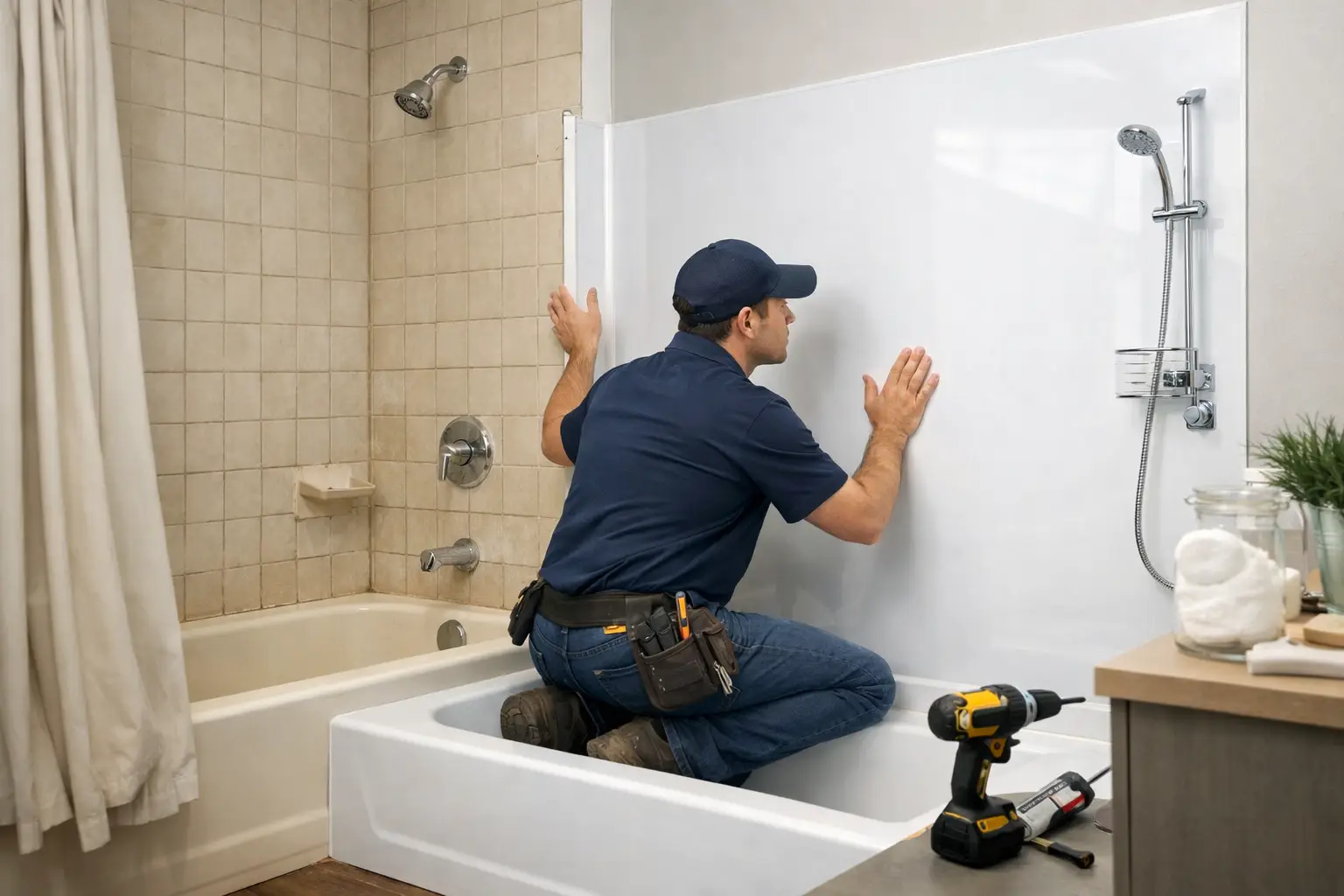
If you’re searching for the best alternative to Bath Fitter, you’re probably not just comparing tubs and wall panels. You’re comparing buying experiences. Most homeowners already know what they don’t want – a long in-home sales pitch, fuzzy pricing, and a quote that somehow changes depending on who’s sitting at the kitchen table.
That’s the real reason this question matters. Bath and shower remodeling is full of companies selling convenience while making the process anything but convenient. So if Bath Fitter doesn’t feel like the right fit, what should you look at instead?
What is the best alternative to Bath Fitter?
For most homeowners, the best alternative to Bath Fitter is a direct-to-consumer bath or shower remodeler that offers custom design choices, transparent pricing, professional installation, and a low-maintenance finished product without the old-school in-home sales routine.
That answer is broader than naming one brand on purpose. The strongest alternative is not just another company with a different logo. It’s a different model.
Traditional bath remodeling companies often sell through commissioned reps, showroom overhead, and the familiar game of inflated pricing followed by dramatic “discounts.” Bath Fitter built its name around one-day style renovations and acrylic systems, but many shoppers now want more control than the standard remodel sales process allows. They want to see options online, understand pricing before a visit, and make decisions without pressure.
That shift is why digital-first remodelers stand out. They remove a lot of friction from the process and hand more control back to the homeowner.
Why homeowners start looking for a Bath Fitter alternative
Most people don’t wake up wanting to comparison shop bathroom wall systems. They start looking elsewhere because something about the process feels off.
Sometimes it’s price. A quote comes in higher than expected, and it’s hard to tell whether you’re paying for material quality, labor, branding, or just a padded sales model. Sometimes it’s the appointment itself. Homeowners who are busy, skeptical, or simply tired of high-pressure home improvement tactics don’t want a two-hour presentation just to get a number.
And sometimes it’s customization. Some buyers want a cleaner, more current design with better fixture options, niche storage, or a layout that feels less cookie-cutter. Others care most about practical issues like easier cleaning, mold resistance, and a warranty that actually means something.
None of those concerns are unreasonable. They’re exactly the right questions to ask before signing anything.
Best alternative to Bath Fitter: what to compare
If you want a smart replacement for Bath Fitter, compare more than the headline promise. A company can say “fast install” and still make the rest of the experience frustrating.
Start with pricing transparency. Can you see real pricing early in the process, or do you have to sit through a sales visit to get a quote? This matters because opaque pricing usually signals an old system built around negotiation. If the number is only available after a performance in your living room, you’re not really in control.
Next, look at materials and design flexibility. Many bath remodelers use acrylic or composite wall systems, and that’s not automatically a bad thing. In fact, low-maintenance systems are often exactly what homeowners want. The real question is whether the materials look updated, hold up well, and offer enough finish and fixture choices to avoid the generic replacement-bath look.
Installation quality matters just as much as product selection. A polished sales pitch means very little if the fit, sealing, and finishing work are sloppy. Ask whether installers are certified, whether plumbing updates are handled correctly, and how the company manages scheduling and communication.
Then there’s warranty coverage. A lifetime warranty sounds great, but homeowners should still ask what it covers in plain English. Does it cover only the manufactured product? Does it include installation-related issues? Is the process for service straightforward, or does support become hard to reach once the job is done?
Finally, pay attention to speed – but don’t oversimplify it. Fast is good. Rushed is not. A better alternative should make decisions faster and installation smoother, without cutting corners on prep or fit.
The options most homeowners actually consider
When people move on from Bath Fitter, they usually end up comparing three paths.
The first is another traditional bath remodeling company. This can work, but it often means the same playbook with different branding: in-home consultation, staged discounts, limited pricing clarity, and a lot of pressure to sign quickly. If your issue with Bath Fitter is the buying experience, this may not solve much.
The second is hiring a general contractor for a full custom bathroom remodel. This is the right move if you want to relocate plumbing, expand the footprint, or rebuild the entire room from the studs out. But for a straightforward wet-area upgrade, it can be slower, more expensive, and more disruptive than necessary. You may get total flexibility, but you’ll usually give up speed and simplicity.
The third is the modern direct-to-consumer model. This is where many homeowners find the real alternative they were hoping for. Instead of forcing every decision through a rep, this model lets you explore styles, make selections, and understand pricing upfront. You still get professional installation, but without the sales circus attached.
That combination matters more than it sounds. Good remodeling should feel organized and respectful. No sales reps. No pressure. No waiting around to find out whether the project is even in budget.
Where Bath Fitter still makes sense – and where it doesn’t
To be fair, Bath Fitter still fits some homeowners well. If you want a known national brand, like the idea of an acrylic liner or wall system, and don’t mind a more traditional sales path, it may be a workable option. Some buyers value familiarity more than process innovation.
But it may not be the best fit if you want cleaner pricing, more buying control, or a more modern customer experience. It may also fall short for homeowners who are tired of home improvement companies acting like every quote needs a sales script.
That’s the trade-off. Brand recognition can feel reassuring, but it does not automatically mean better value. Sometimes it simply means a bigger machine with more overhead.
What a better remodel experience should look like
A real alternative to Bath Fitter should make the project easier before installation day even arrives.
You should be able to browse design options without booking a visit first. You should be able to understand how fixtures, wall styles, and accessories affect price. You should know what happens after you place a deposit, how the timeline works, and who is responsible for the install.
Most of all, you should not feel like you’re being worked. Bathroom remodeling is a major purchase, but that doesn’t justify manipulative sales tactics. Homeowners deserve the same transparency they expect from almost every other large purchase they make.
That’s why online-first remodeling stands out. It replaces the old sequence of appointment, pitch, pressure, and paper quote with a process that is simply easier to trust. For homeowners in markets like Ohio and nearby Midwest service areas, that shift can save time and remove a lot of unnecessary friction from a project that already has enough moving parts.
One example is ModernDayBath, which centers the process around online design, instant pricing, a small deposit, and professional installation rather than the usual showroom-and-sales-rep routine. Whether you choose that route or another, the bigger point is this: the business model matters.
How to choose the best alternative to Bath Fitter for your home
The best choice depends on what you’re really trying to avoid.
If your main concern is a dated tub or shower that needs a fast cosmetic upgrade, focus on companies that specialize in wet-area renovation with durable, easy-clean wall systems and a strong installation track record. If your main concern is budget clarity, prioritize companies that show pricing upfront instead of forcing a consultation first. If your goal is a fully custom bathroom with structural changes, a specialized bath replacement company may not be enough, and a general contractor may be the better fit.
But if you want the sweet spot – premium-looking results, faster turnaround, less disruption, and no pressure-heavy sales process – then the best alternative to Bath Fitter is usually a transparent, direct-to-consumer remodeler built for how people actually want to buy now.
That’s the part many homeowners miss at first. They think they’re choosing between products, when they’re really choosing between systems. One system is built to maximize sales leverage. The other is built to give the homeowner more visibility, more control, and fewer wasted steps.
When you compare options through that lens, the decision usually gets a lot clearer. Choose the company that respects your time before it ever touches your bathroom.