
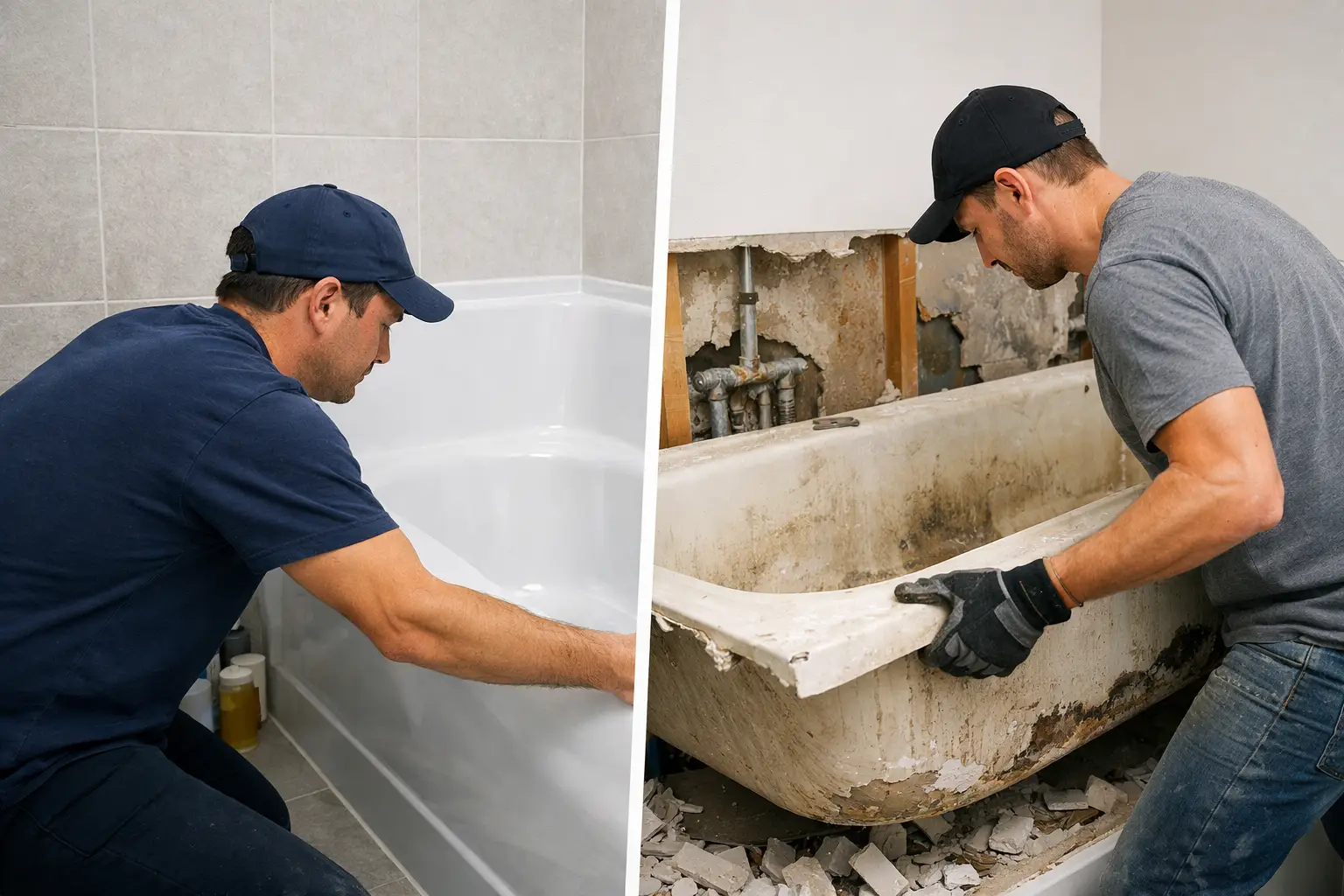
If you have a stained, chipped, or dated bathtub, the bath liner vs bath replacement decision usually comes down to one question: do you want the fastest cosmetic cover-up, or do you want to actually fix the problem? That distinction matters more than most homeowners realize, especially when a slick sales pitch makes both options sound almost identical.
A lot of remodeling companies blur the line on purpose. They know most people are not comparing acrylic thickness, wall condition, drainage alignment, or how long a solution really lasts. They are just trying to get a cleaner, better-looking bathroom without getting trapped in a weeks-long project or a five-hour in-home sales presentation. Fair enough. But when you strip away the marketing, bath liners and bath replacements are not the same thing.
Bath liner vs bath replacement: the real difference
A bath liner is exactly what it sounds like – a custom-molded shell installed over your existing tub. The old tub stays in place. The liner covers it. In many cases, matching wall panels are added around it to create a more uniform look.
A bath replacement means the existing tub is removed and a new tub is installed in its place. Depending on the project, that may also include new wall surrounds, updated fixtures, and repairs to any hidden issues uncovered during removal.
On the surface, both can make an old bath look new. The difference is what is happening underneath. A liner hides the original tub. A replacement starts over.
That does not automatically make liners bad or replacements right for every home. But it does mean you are choosing between two very different levels of remodeling.
When a bath liner makes sense
A bath liner can work if your current tub is structurally sound, the surrounding area is in good shape, and your main goal is speed. If the tub is ugly but not failing, a liner can deliver a cleaner appearance without a full tear-out.
That appeals to homeowners who want less disruption. Installation is often quicker than a full replacement, and the mess is usually more limited because the old tub stays where it is. For someone who needs a visual upgrade fast, that can be attractive.
Cost is also part of the appeal, at least in some cases. A liner may come in below the price of a true replacement, though the gap is not always as wide as people expect. Once you add coordinated wall systems, plumbing updates, and installation, the number can climb.
The biggest point in a liner’s favor is convenience. If your bathroom has no moisture damage, no soft subfloor, no plumbing concerns, and no need to change layout or function, a liner can be a practical short-term or mid-term option.
Where bath liners fall short
The problem with liners is not the concept. The problem is what they cannot solve.
If your existing tub has leaks, movement, hidden mold, or water damage around the walls, a liner does not remove any of that. It covers the visible surface. That can make the bathroom look better while leaving the underlying issue untouched.
There is also the fit and feel. Because a liner sits over the old tub, it slightly changes the dimensions. The bathing well can feel a bit smaller. Depending on the installation quality, the finished result may look solid, or it may look like what it is – a shell over an older fixture.
Moisture is another concern. A properly installed liner should be sealed well, but if water gets where it should not, you can end up with odor, mildew, or hidden deterioration. That is why installation quality matters so much. A cheap or rushed job can create problems that are expensive to track down later.
And then there is lifespan. A liner may hold up well for years, but it is still dependent on the condition of the tub underneath and the quality of the seal around it. It is usually not the best answer if you want a fresh start with fewer unknowns.
When bath replacement is the better move
Bath replacement is usually the stronger option when your current tub is old enough that you do not trust what is behind it, under it, or connected to it. If there are cracks, persistent stains, soft walls, signs of leaks, or outdated plumbing, replacement gives you the chance to deal with the real condition of the space instead of covering it.
It is also the better path if you care about long-term value. A new tub installation is more than a cosmetic change. It resets one of the most used fixtures in the bathroom. Done well, it can improve durability, comfort, cleanability, and confidence that you are not inheriting hidden issues.
Replacement also gives you more freedom. You can update the tub style, improve the wall system, swap fixtures, and choose materials that are easier to maintain than old tile or worn fiberglass. If you want the bathroom to feel genuinely new, not just freshly covered, replacement gets you there.
For homeowners who are already skeptical of patchwork remodeling, this matters. Paying for a surface-level fix only to revisit the same bathroom a few years later is not a bargain. It is just delayed frustration.
Bath liner vs bath replacement on cost
This is where many people expect a simple answer, and there is not one.
Yes, a bath liner can cost less upfront. But it depends on the condition of the existing bathroom, the materials used, and what is bundled into the job. Some liner quotes look low until trim, wall panels, plumbing changes, demolition prep, or warranty terms start shifting the total.
A bath replacement generally costs more because it involves removal, disposal, installation of a new tub, and often more labor. But with that added cost, you are also paying to eliminate the old unit and inspect the space behind it. That has real value.
The smarter way to compare price is not liner versus replacement in isolation. It is total cost versus total outcome. If one option saves money today but leaves you with hidden risk or a shorter useful life, it may not actually be the cheaper decision.
This is why transparent pricing matters so much in bathroom remodeling. Homeowners should be able to compare real scope, not just headline numbers designed to get a signature before dinner.
Appearance, maintenance, and daily use
For daily life, both options can improve the look of an older bathroom. But they do not always age the same way.
A quality replacement typically feels more solid because it is more solid. There is no old tub underneath. There is no second layer changing the profile. The finished bath tends to look cleaner and more intentional, especially when paired with modern wall surrounds and updated fixtures.
Maintenance can be easier too. New wall systems and tubs built for low-maintenance cleaning usually outperform older surfaces that have been patched, refinished, or covered. That matters if your goal is a bathroom that looks good without constant scrubbing.
Liners can still look attractive, especially right after installation. But they are more vulnerable to feeling like a cosmetic retrofit if edges, seams, or fit are not excellent. In a category full of rushed installations and inflated claims, that is not a small issue.
How to choose without getting sold into the wrong option
Start with the condition of your current tub, not the sales pitch. If the tub is structurally sound and you truly only want a faster cosmetic upgrade, a liner may be worth considering. If there is any doubt about water damage, age, movement, or long-term reliability, replacement deserves serious attention.
Then ask better questions. What happens if hidden issues are found? What exactly stays and what gets removed? How is the warranty structured? Is the quote clear, or is it built to change once the job starts? A confident company should answer those questions directly.
This is where modern homeowners have less patience for the old remodeling playbook, and rightly so. You should not need to sit through a high-pressure appointment just to understand your options. You should be able to compare solutions clearly, see pricing honestly, and make a decision on your timeline. That shift is one reason companies like ModernDayBath are gaining traction with homeowners who want control instead of theater.
Which option is smarter?
If your tub is basically healthy and you want the quickest visual upgrade, a bath liner can be a reasonable choice. If you want a more complete, durable update with fewer question marks underneath, bath replacement is usually the smarter investment.
Most homeowners are not just buying a prettier tub. They are buying peace of mind, cleaner maintenance, and confidence that the bathroom will hold up. That is why the right answer is often the one that solves more than what you can see.
A bathroom remodel should make life easier, not leave you wondering what got covered up behind the new finish.