
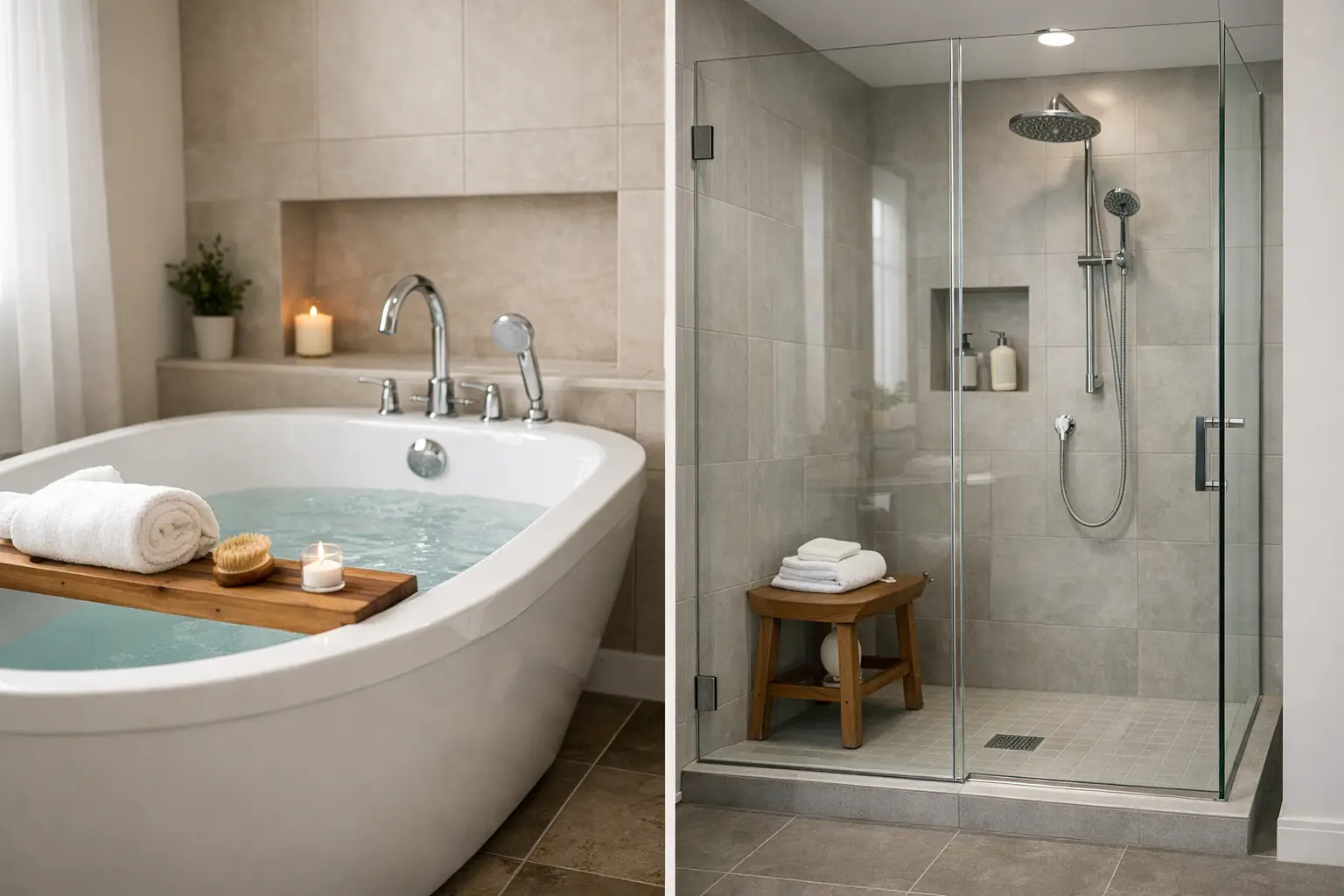
That old tub might not be doing you any favors. If it mostly collects dust, feels hard to step into, or makes your bathroom look stuck in another decade, it may be time to replace bathtub with shower and make the space work for how you actually live.
For a lot of homeowners, this is less about luxury and more about removing friction. A shower is faster to use, easier to clean, and often a better fit for daily routines. The trick is knowing when the switch makes sense, when it does not, and how to avoid getting trapped in the usual remodeling circus of vague pricing, bloated quotes, and high-pressure sales tactics.
Why homeowners replace bathtub with shower
Most people are not making this change because they suddenly stopped liking baths. They are making it because the tub is not practical anymore.
A standard bathtub takes up visual space and physical space. In smaller bathrooms, that can make the room feel crowded. In busy households, a shower usually fits the rhythm of real life better. You step in, get clean, and move on. No climbing over a high tub wall. No awkward reach to scrub around corners. No oversized fixture that gets used twice a year.
There is also the accessibility factor. Even if mobility is not an issue today, many homeowners are thinking ahead. A low-threshold or walk-in shower can make the bathroom more comfortable now and much safer later. That kind of upgrade is not only about aging in place. It is about convenience for anyone who wants a bathroom that feels easier to use every day.
Then there is the design impact. Replacing a tub with a shower can make an older bathroom feel cleaner, more open, and more current. With the right wall system, fixtures, and glass options, the room can shift from dated to sharp without requiring a full gut renovation.
When replacing a tub is a smart move
If you rarely use the tub, the decision gets easier. A fixture that takes up a big footprint should earn its keep.
This switch usually makes sense when the bathroom is a primary bath, especially in a home where adults use the space more than young kids do. It is also a strong move when the existing tub is stained, chipped, hard to maintain, or paired with old tile that has become a cleaning project you never asked for.
A tub-to-shower conversion can also be the right answer when speed matters. Compared with a full bathroom remodel, replacing the footprint of an existing tub with a new shower can be more straightforward. That means less disruption, fewer moving parts, and a faster path to a bathroom that feels finished.
If your goal is to modernize the room without turning your house into a construction zone for weeks, this type of project often hits the sweet spot.
When you may want to keep at least one tub
This is where the answer becomes a little less absolute.
If your home has only one bathroom, removing the only tub can be a trade-off. Some buyers, especially families with small children, still want at least one bathtub in the home. That does not mean you should organize your house around hypothetical future buyers, but resale is worth thinking about.
If you already have another tub elsewhere in the house, the concern usually drops. Keeping one tub and converting another to a shower gives you flexibility without forcing every bathroom to do the same job.
There is also personal preference. If you actually use the tub and enjoy it, replacing it just because showers are popular may not be the right move. Remodeling should solve a problem, not create one.
The real benefits of a shower conversion
The biggest benefit is usability. A shower simply works better for most adults on most days. That matters more than showroom trends.
Cleaning is another major reason people make the switch. Older tubs and tiled walls tend to collect soap scum, mildew, and grime in all the places nobody wants to scrub. A modern shower system with low-maintenance wall panels can cut down on cleaning time and frustration.
There is also the feeling of space. Even in a modest bathroom, a well-designed shower can make the room look less boxed in. Glass doors or simple curtain layouts help open up sightlines, and updated finishes can brighten the entire space.
And then there is control. A good remodel should let you choose the details that matter, like wall color, fixtures, shelving, grab bars, and door style, without making you sit through a three-hour sales pitch just to get a number. Homeowners are increasingly done with that model, and for good reason.
How much does it cost to replace bathtub with shower?
The honest answer is that it depends on materials, layout, plumbing conditions, and the level of finish you want.
A basic conversion costs less than a fully custom shower with premium glass, upgraded hardware, built-in storage, and layout changes. If plumbing can stay in roughly the same location, that helps keep the project more efficient. If the subfloor, walls, or plumbing behind the tub need repair, the price can move up.
The bigger issue for many homeowners is not just the number. It is how that number gets presented.
Traditional bath remodeling companies often hide pricing behind in-home appointments, then build the quote around negotiation theater. You get the dramatic discount, the manager call, the if-you-sign-tonight offer. It is outdated, and it wastes your time.
A better process is simple. You should be able to review options, see pricing clearly, make selections at your own pace, and understand what is included before committing. No mystery fees. No performance art.
What to look for in a new shower
Not all shower remodels age well. Some look good on day one and become a maintenance problem six months later.
Start with the walls. Grout-heavy tile can be beautiful, but it also comes with upkeep. Many homeowners prefer premium wall systems that give a clean, finished look without the constant maintenance. If your goal is less scrubbing and fewer mildew headaches, this matters.
Think carefully about the shower base and entry. A low threshold is more comfortable and more practical than a high step-over edge. Built-in shelving can make the shower easier to use without adding clutter. Fixture finishes should match the look of the bathroom, but they also need to hold up to daily use.
If safety is part of the goal, plan for it now. Grab bars, seating, and handheld showerheads do not have to make the space feel clinical. When chosen well, they can blend into the design while making the shower more functional.
How long does the project take?
A tub-to-shower conversion is usually faster than homeowners expect, especially when the project stays within the existing footprint.
The full timeline depends on product availability, site conditions, and scheduling, but the actual installation is often much quicker than a complete bathroom overhaul. That is one reason this remodel is so appealing. You get a major daily-life upgrade without signing up for a long, messy renovation.
The process should also feel efficient before installation begins. You should not need multiple showroom visits, drawn-out sales appointments, or endless back-and-forth just to make basic decisions. A modern buying experience respects your time.
Common mistakes to avoid
One mistake is choosing based only on the lowest advertised price. Bathroom remodeling has no shortage of bait-and-switch tactics. A low starting number can climb fast once the real quote shows up.
Another mistake is overbuilding for the space. If the bathroom is modest, you do not need every luxury feature on the market. Focus on what improves daily use, appearance, and durability.
The last mistake is ignoring how you actually use the room. This project should reflect your routine, not a generic idea of what a bathroom is supposed to be. The best remodels are the ones that remove annoyances you deal with every day.
Is it worth it to replace bathtub with shower?
For many homeowners, yes. If the tub is rarely used, hard to clean, difficult to step into, or simply making the bathroom feel older and less functional, replacing it with a shower can be one of the most practical upgrades you can make.
It is not the right choice in every house. If it is your only tub and that matters for your household or future plans, pause and think it through. But if your goal is a bathroom that feels easier, cleaner, and more aligned with real life, the case for a shower is strong.
And the process should feel just as sensible as the result. You should be able to design what you want, understand the price, and move forward without pressure. That is not asking for too much. It is what remodeling should have looked like all along.