
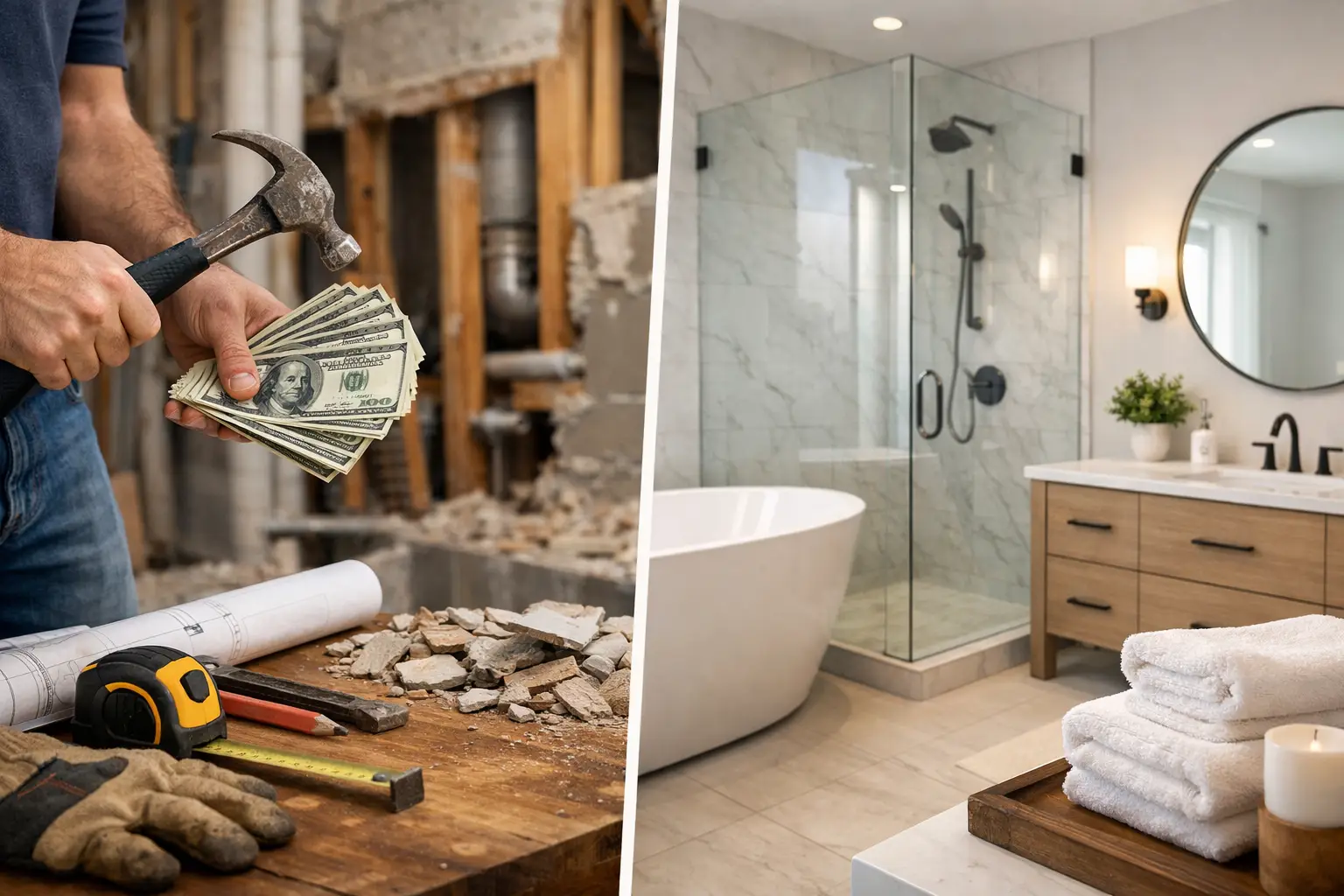
Sticker shock usually hits somewhere between the first quote and the first fixture selection. A homeowner starts with a simple question – why are bathroom remodels so expensive – and then gets handed a number that feels wildly out of step with the size of the room. That reaction is fair. Bathrooms are small. But bathroom remodeling is not a small job.
The short answer is this: you are paying for skilled labor, waterproof construction, plumbing, product choices, project risk, and often a lot of business overhead that has nothing to do with your actual shower or tub. Some of those costs are legitimate. Some are baked into an old-school sales model that makes the process slower, more confusing, and more expensive than it needs to be.
Why are bathroom remodels so expensive in the first place?
A bathroom packs more complexity per square foot than almost any other room in the house. You are combining plumbing, electrical, ventilation, trim work, moisture control, finish materials, and code compliance in one tight space. If even one part is done poorly, the damage can spread behind walls and under floors long before you notice it.
That is why cheap bathroom work often ends up being the most expensive kind. A crooked tile line is annoying. A failed waterproofing system is a completely different problem. Good remodelers price for precision because bathrooms punish shortcuts.
There is also a labor reality many homeowners do not see at first. A proper bath or shower renovation usually involves demolition, disposal, prep, wall repair, plumbing adjustments, installation, sealing, cleanup, and follow-up. Even when the footprint stays the same, the work is specialized and sequential. You cannot rush through it with a general handyman approach and expect a lasting result.
The biggest cost drivers in a bathroom remodel
Labor is usually the largest piece of the bill. Not because contractors are making easy money, but because qualified installers, plumbers, electricians, and finish crews cost real money. Tight spaces make everything slower. Older homes add surprises. And if the remodel includes moving plumbing lines, reworking drains, or correcting previous bad work, the labor cost climbs fast.
Materials are the next major variable, and this is where homeowners can accidentally raise the price without realizing it. The gap between a basic fiberglass surround and a premium wall system, or between builder-grade fixtures and better-performing hardware, can be substantial. Some upgrades are worth it. Some are mostly cosmetic. The hard part is knowing the difference before you sign.
Then there is the substrate behind the pretty part. Moisture-resistant backer, waterproofing systems, quality pans, proper wall prep, and mold-resistant materials do not make for glamorous showroom talking points, but they matter more than the finish color. If a quote looks suspiciously low, this is one of the first places corners get cut.
Permits and code-related work can also affect pricing. Not every project requires the same level of permitting, but licensed, compliant work costs more than off-the-books shortcuts. That extra cost is often buying accountability.
The hidden reason some quotes are so much higher
Not every high quote is about better products or better installation. Sometimes it is about overhead.
Traditional bathroom remodeling companies often carry the cost of showrooms, commissioned sales reps, canvassing teams, long in-home appointments, managers, financing promotions, and a pricing model built around negotiation. That system is expensive to run, and those costs do not disappear. They get folded into your project.
This is one of the least talked-about answers to why bathroom remodels are so expensive. Many companies are not just charging for the remodel. They are charging for the machine around the remodel.
That is why homeowners so often get a dramatic “discount” after sitting through a long sales presentation. The original number was padded enough to make the discount feel exciting. The process is designed to create urgency, not clarity.
A more modern model strips out some of that waste. If you can choose your design online, see real pricing, avoid a commissioned sales pitch, and schedule installation without the usual theater, the final price can be more grounded in the actual work. That does not make a quality remodel cheap. It makes it more honest.
Small room, expensive decisions
Bathrooms fool people because the room is compact. But every decision inside that compact footprint tends to be high impact.
Take the wet area alone. Your shower or tub surround is not just decorative. It has to resist water every day, clean easily, hold up over time, and fit precisely around plumbing and wall conditions. Fixtures are another example. A shower valve is not just a handle on the wall. It affects performance, durability, temperature control, and future serviceability.
Even design choices that seem simple can shift the price. Custom wall patterns, upgraded hardware finishes, built-in shelving, glass doors, low-threshold entry, or accessibility features all add value, but they also add cost. None of that is unreasonable. The problem is when homeowners are encouraged to keep layering upgrades without clear pricing attached to each one.
Older bathrooms are full of surprises
If your home is older, your bathroom remodel may cost more because the room is not starting from a clean slate. Demo often reveals soft subfloors, water damage, mold, outdated plumbing, or walls that are nowhere near square. That is common, not rare.
This is where online pricing and transparent scopes matter. A company should be able to show you what is included in the base project and what kinds of conditions could change the final price. Surprises behind walls are real. Surprise pricing should not be.
In many Midwest homes, especially in older housing stock around places like Cleveland or Akron, bathrooms may have been patched and repatched over decades. One remodel can uncover the shortcuts of three previous owners. That does not mean the job is overpriced. It means the bathroom was carrying hidden debt.
How to tell the difference between expensive and overpriced
Expensive means the work legitimately costs money. Overpriced means you are paying more than necessary because the process is bloated, the pricing is opaque, or the scope is inflated.
A quality remodel tends to be expensive for understandable reasons: skilled installation, reliable materials, waterproof construction, warranty coverage, and a clean finish that lasts. Overpriced remodels usually come with vague line items, inconsistent discounts, pressure to “sign today,” and pricing that shifts depending on who is sitting at the kitchen table.
If you want to protect yourself, ask simple questions. What exactly is included? What material is going behind the wall system? Is plumbing relocation part of the price or an allowance? Who is doing the installation? What happens if hidden damage is found? How does the warranty work? Clear companies answer clearly.
How to keep costs under control without regretting it later
The smartest way to save money is not to chase the cheapest quote. It is to control scope and avoid paying for the wrong things.
Keeping the existing layout is one of the biggest cost savers. Moving drains, supply lines, and walls creates a ripple effect that raises labor and complexity. Choosing durable, low-maintenance materials instead of high-maintenance trend pieces can also reduce both upfront and long-term costs.
It also helps to separate real value from showroom drama. A premium-looking, easy-care wall system can be a better investment than tile that costs more to install, more to maintain, and more to repair. The right remodel is not always the flashiest one. It is the one that gives you the result you want without dragging you through a bloated process to get there.
That is one reason companies like ModernDayBath are pushing a different model: no commissioned rep in your home, no fake markdowns, no waiting around to understand the price. For homeowners who care about control and transparency, that change matters almost as much as the remodel itself.
What homeowners should expect instead
A bathroom remodel should still require real money. There is no honest version of this where quality materials, certified installation, and lasting waterproof performance cost next to nothing. But the experience should not feel like a trap.
You should be able to understand what you are buying, how pricing changes when you change features, and where your money is actually going. You should be able to compare options without sitting through a performance. And you should never have to guess whether the “special discount” is real.
If you are asking why are bathroom remodels so expensive, the better follow-up question is this: how much of that price is going into the bathroom, and how much is going into the sales machine around it? Once you know the difference, better decisions get a lot easier.
The right remodel is not the cheapest and it is not the most complicated. It is the one that solves the problem, respects your budget, and makes the process feel straightforward from day one.